

Discover authentic village surf culture in Portugal

TL;DR:
Portugal’s small village surf communities blend fishing heritage with community-driven, respectful surf culture.
These villages protect their authentic character through strict regulations and community involvement, resisting mass tourism.
Local instructors offer personalized, story-based lessons that foster deep understanding and lasting surfing skills.
Most surfers planning a trip to Europe immediately think of Hossegor, Biarritz, or maybe the Canary Islands. Portugal barely registers as a first choice, and when it does, people picture crowded Nazaré or the famous breaks of Peniche. What they completely miss is something far more rewarding: the tight-knit, community-driven surf culture alive in Portugal’s small coastal villages. These places offer wave quality that rivals any European destination, combined with an intimacy and cultural depth that big surf cities simply cannot replicate. This guide takes you through the roots, values, and practical realities of village surf culture in Portugal so you can experience it firsthand.
Table of Contents
Key Takeaways
Point | Details |
Heritage-driven surf culture | Portugal’s small villages blend fishing traditions with authentic surf community life. |
Community-first surfing | Locals and visitors share waves, stories, and values, making everyone feel welcome. |
Sustainable tourism | Surf reserves like Ericeira foster growth but keep the coastline protected and uncrowded. |
Skillful, personalized instruction | Village lessons focus on lasting surf skills, not just quick wins. |
Easy booking for authentic trips | You can easily book lessons and surf camps to experience village culture firsthand. |
The roots of Portugal’s village surf culture
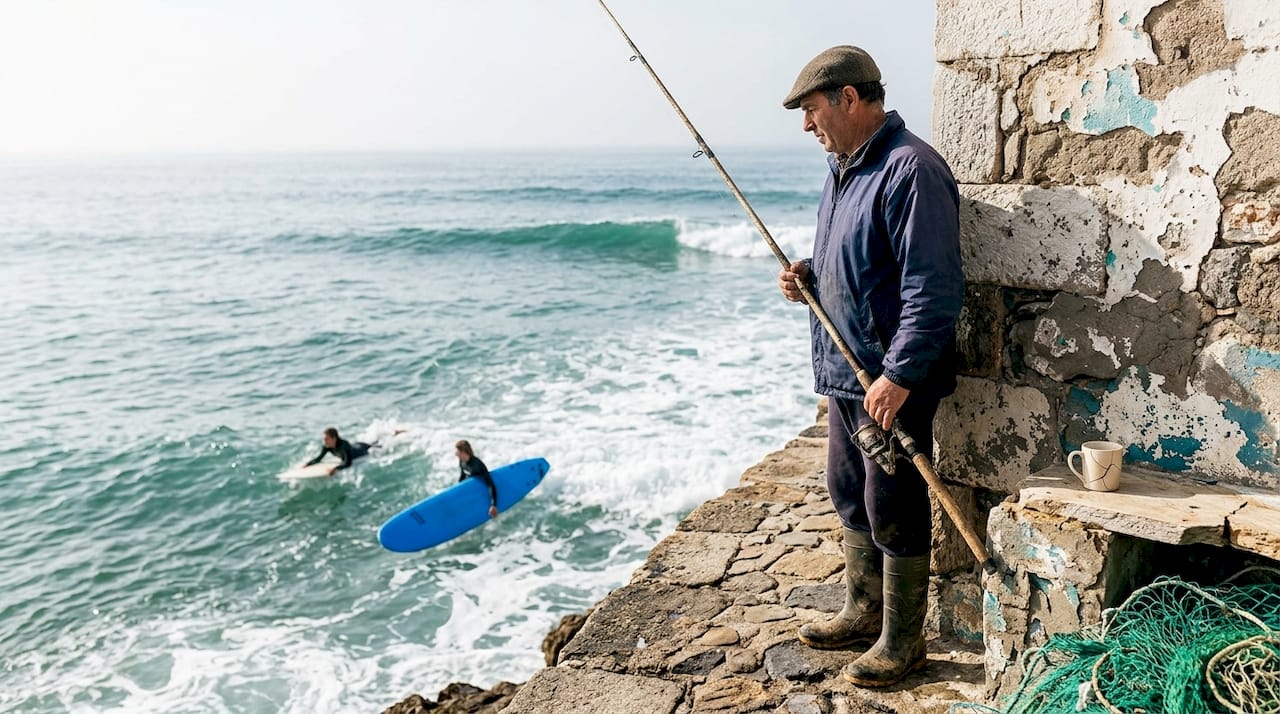
To understand why village surf culture feels so different in Portugal, you have to start with the people who built these coastlines long before anyone owned a surfboard. Fishing communities settled along the Atlantic coast centuries ago, reading tides and swells not for sport but for survival. That deep relationship with the ocean is baked into the fabric of these places. When surfing arrived, it didn’t erase local identity. It layered on top of it, blending with the rhythms, language, and habits that were already there.
Authentic Portugal surf culture is inseparable from this fishing heritage. Villages like Ericeira, Sagres, Aljezur, Milfontes, and Maceda have each developed their own distinct surf character, but they all share a common foundation: respect for the sea rooted in generations of maritime tradition. As tourism attractions research confirms, these villages offer authentic surf culture through preserved fishing village heritage blended with vibrant community surf scenes.
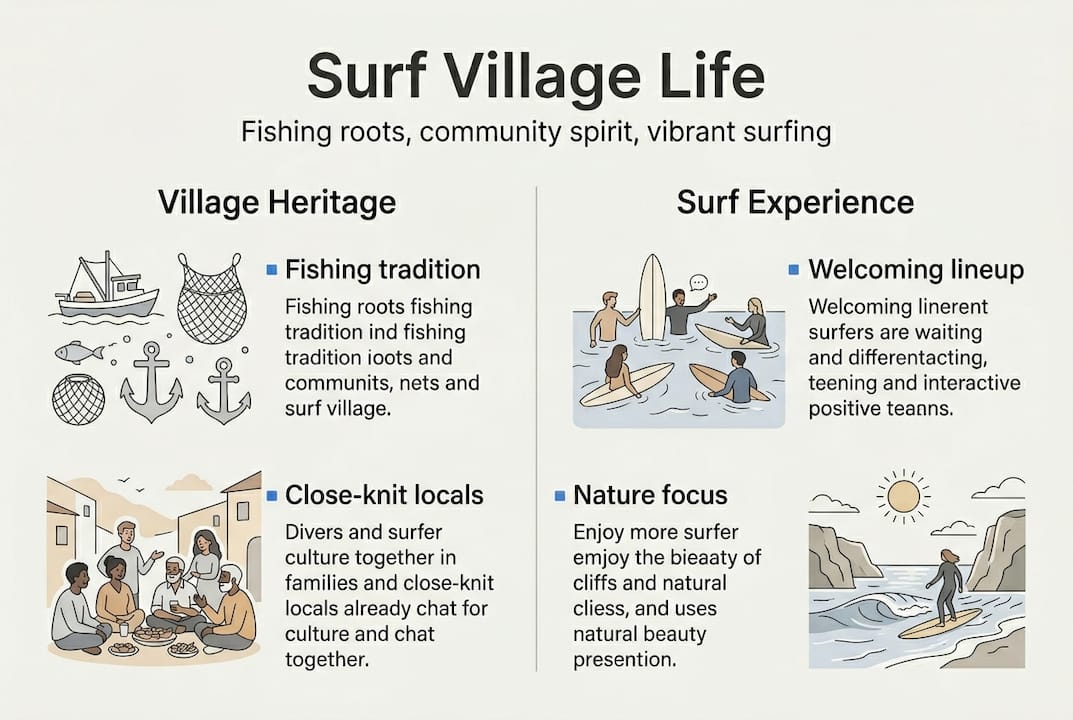
Here is a quick comparison of five key Portuguese surf villages and what makes each one distinct:
Village | Key character | Best for |
Ericeira | World Surfing Reserve, tight community | All levels, culture seekers |
Sagres | Raw, windswept, end-of-the-world feel | Experienced surfers, solitude |
Aljezur | Algarve wilderness, uncrowded breaks | Intermediate surfers, nature lovers |
Milfontes | River meets sea, chilled vibe | Families, beginner surfers |
Maceda | Remote, undiscovered beaches | Advanced surfers, off-grid travelers |
What makes this blend so compelling is that the local customs did not get bulldozed by surf tourism. Instead, they adapted. You still find fishermen mending nets at the harbor in Ericeira while surfers wax boards on the same seafront. The morning coffee ritual at the village cafe, the communal evening meals, the neighborly way locals greet each other regardless of whether they surf or fish, all of this persists. Surfing entered the culture and found its place rather than replacing everything else.
The surf lifestyle in Portugal reflects this balance clearly. Surf shops exist alongside bakeries. Surf schools operate out of modest setups, not corporate resort complexes. Instructors are often the same people who grew up in the village, whose parents surfed or fished these same stretches of coastline. That local continuity gives everything a texture you cannot manufacture.
Key features that define the heritage behind Portugal’s village surf culture:
Multi-generational ocean knowledge passed down through families
Strong Catholic and fishing traditions that shape community values
Village festivals that celebrate both maritime and surf culture together
Architecture and infrastructure that remain deliberately small-scale
Locals who view the ocean as a communal resource, not a commodity
This combination is genuinely rare. In many of the world’s most famous surf destinations, the original community has been priced out or pushed aside. In Portugal’s villages, they are still front and center.
“The ocean here belongs to everyone. It always has. The surfers just joined the conversation.” This sentiment, common among older Ericeira locals, captures exactly why these villages feel so different.
Community-driven surf culture: Inside village life
We’ve explored the heritage now discover how community-driven values shape village surf life from one morning to the next. Because the real magic isn’t in the archives. It’s in the daily texture of village surf existence.
Walk down to the beach at Ericeira at 7 a.m. and you’ll see something that doesn’t happen in Bali or Byron Bay. Experienced local surfers sit with complete beginners from Germany or Brazil, discussing which break is working best, which tide to time it for, and which section of the reef to avoid. There’s no ego, no gatekeeping. As wavelength magazine reports, community-driven culture in Ericeira fosters welcoming atmospheres where locals and global surfers share respect, stories, and meals, with the watchwords being respect, preserve, enjoy.
This isn’t just feel-good marketing. It plays out practically every single day. Here’s how the three pillars work in real life:
Respect means acknowledging that you are a guest in someone’s home break. It means waiting your turn in the lineup, not dropping in on waves, and asking questions before assuming. In villages, this unwritten code is enforced gently through social norms rather than confrontation.
Preserve means caring about the beach you’re surfing on. Village surfers regularly organize beach cleanups, lobby against development near sensitive dunes, and actively educate visiting tourists about ocean etiquette and environmental responsibility.
Enjoy means exactly that. The culture is joyful. Post-surf gatherings at the local cafe, shared meals where someone’s grandmother has cooked açorda (a traditional Portuguese bread soup), evening sessions watching the sunset together. Community is built through shared pleasure, not just shared ideology.
Compare this to the experience in larger surf cities:
Factor | Village surf culture | Big surf city culture |
Lineup attitude | Welcoming, explanatory | Competitive, territorial |
Local involvement | Deep, daily, generational | Surface-level, transactional |
Post-surf social life | Communal meals, village cafes | Commercial bars, tourist strips |
Environmental awareness | Embedded in daily practice | Often performative or inconsistent |
Instruction style | Personal, story-driven | Standardized, volume-focused |
Pro Tip: Before paddling out at any Portuguese village break for the first time, spend 20 minutes watching from the beach. Notice who the natural regulars are, how the lineup organizes itself, and where beginners are positioning. This observation pays off immediately once you’re in the water and signals respect to locals.
The community surf culture that thrives in these villages is also deeply connected to nature-connected surf holidays, where your experience extends far beyond just riding waves. Evenings might include a coastal walk, a village market, or simply sitting on a clifftop watching the Atlantic turn gold. The surfing is the activity but the village is the experience.
Sustainable progression: Surfing reserves and authentic growth
Community flourishes but how do surf villages protect their unique character as popularity grows? This is where Portugal offers a genuinely instructive case study for the rest of the surf world.
Ericeira became Europe’s first and only World Surfing Reserve in 2011. The designation, awarded by Save The Waves Coalition, recognizes stretches of coastline that have exceptional surf quality and cultural significance worth protecting permanently. The reserve covers a 4km coastline with multiple world-class breaks, including Ribeira d’Ilhas, Coxos, Reef, and Pedra Branca, all protected under strict no-development rules.
The results have been remarkable. Since 2011, Ericeira has seen a 40% rise in international surf tourism while maintaining the raw, uncommercialized quality of its breaks. That’s an extraordinary combination. Most surf destinations face an inverse relationship: more tourists usually means more development, more crowds, more degradation. Ericeira bucked that trend deliberately.
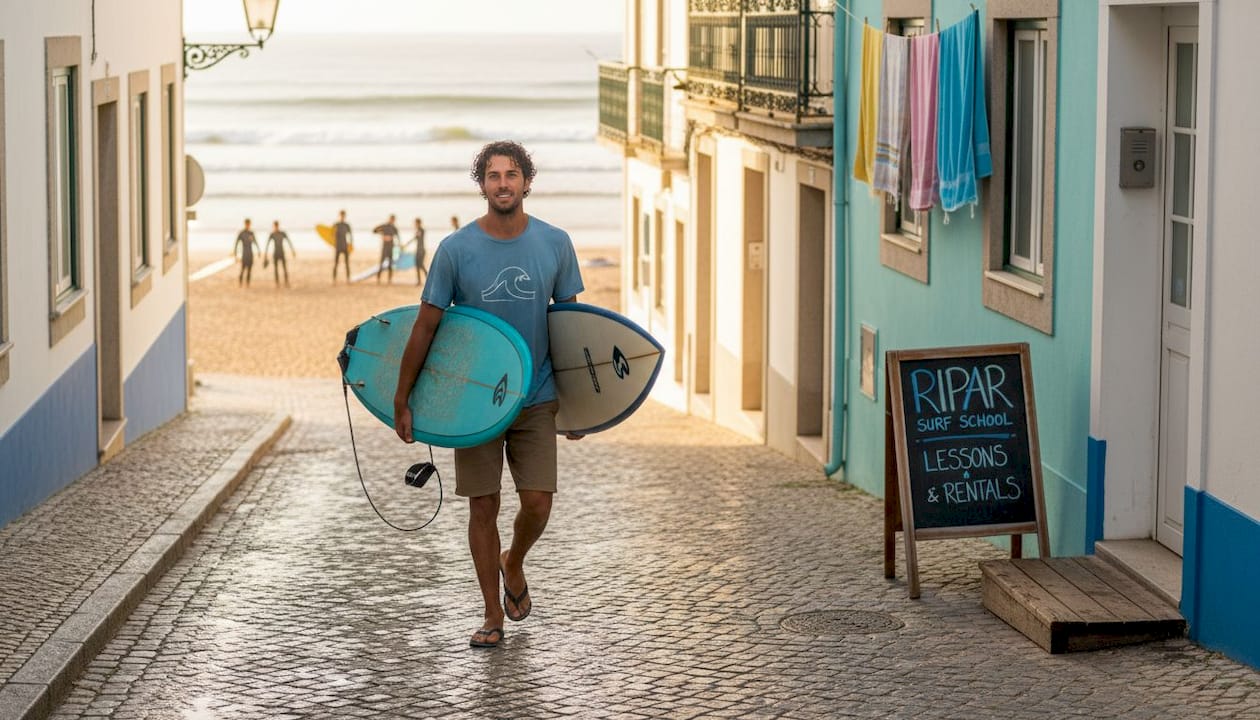
How? Through a combination of strict zoning regulations, active local government support, and a community that genuinely wanted to protect what they had. No large hotel complexes were allowed near the breaks. Surf schools operate with permits tied to environmental standards. The village center kept its whitewashed buildings and narrow cobblestone streets rather than being redeveloped for tourist infrastructure.
Key lessons from Ericeira that other villages are now beginning to apply:
Limit the number of surf school permits to prevent beach congestion
Enforce gear storage and rinse station rules to keep beach areas clean
Use surf tourism revenue to fund coastal monitoring and cleanup programs
Maintain architectural heritage rules so the village aesthetic stays intact
Involve local surf clubs in decision-making about tourism policy
Pro Tip: If you’re choosing between surf destinations in Portugal, look for villages with active local surf clubs. These clubs are usually the best indicator of healthy, community-led governance. A strong surf club means locals have organized themselves to protect their breaks and welcome visitors responsibly.
The sustainable surf holidays model that Ericeira represents has real consequences for the experience you have as a visitor. Your accommodation choices, surf accommodation tips from locals, and even the cafe you choose for your morning coffee all feed back into whether the village stays authentic or tips toward mass tourism. Conscious choices genuinely matter here in a way they often don’t in larger resort towns.
Learning and connecting: Surf lessons and village hospitality
Sustainable growth is key but now see how personalized lessons and hospitality turn village surf trips into lasting journeys rather than quick Instagram moments.
The way surf instruction works in Portugal’s villages is fundamentally different from what you experience at a resort surf school. Local instructors aren’t reading from a standardized curriculum. They’re sharing a lifetime of knowledge about specific breaks, specific tides, and specific wave behaviors that took them years to accumulate. As documented at Wavelength Magazine, local instructors build lasting skills through insider stories and methods, emphasizing wave reading over quick pop-up techniques and fast results.
Here’s what that looks like in practice:
Session briefings go deep. Before entering the water, a local instructor will explain the specific history of the break you’re surfing, including seasonal changes, how swell direction affects wave shape, and the quirks that regular tourists never figure out on their own.
Feedback is contextual. Rather than generic corrections like “bend your knees more,” local instructors tie feedback to what the wave is doing and why. This builds understanding, not just muscle memory.
Progression is tracked honestly. Village instructors see you as a longer-term student, not a one-time customer. They remember where you left off, what clicked, and what still needs work.
Village hospitality amplifies everything about the learning experience. When you’re staying in a small guest house run by someone whose family has lived in the village for decades, you get recommendations that no travel app could offer. The fisherman who sells fresh catch near the harbor will tell you which mornings the swell is too messy to bother. The cafe owner knows which local surfer gives the best impromptu lessons if you buy them a coffee first.
Beginner surf tips for Portugal consistently emphasize one point above all others: the quality of your progression depends heavily on who is teaching you and whether they know the specific coast you’re surfing. Generic instructors on generic beaches produce generic surfers. Local instructors on specific village breaks produce people who actually understand the ocean.
What you gain from village surf lessons that standard lessons rarely deliver:
Real understanding of how to read a local swell forecast and translate it to your session
Personal relationships with instructors who invest in your long-term progress
Access to off-the-beaten-path breaks that never appear in tourist guides
Cultural immersion that makes the surfing feel meaningful beyond the sport itself
Confidence built through genuine progression rather than just counting waves ridden
Pro Tip: When planning your surf holiday, contact the surf school directly and ask which instructor grew up surfing the local break. Request that person specifically. The difference in depth of knowledge and genuine enthusiasm is immediately noticeable.
What most surfers miss about Portugal’s village culture
Here’s the take that most surf travel content avoids entirely: Portugal’s village surf culture isn’t a charming relic of how surfing used to be. It’s actually a blueprint for how surfing should develop everywhere.
The mainstream surf industry keeps chasing growth. More resorts, more events, more branded content, more crowds funneled into the same famous breaks. The underlying assumption is that surf culture scales upward like any other tourism product. Portugal’s villages prove that assumption wrong. The very things that make Ericeira, Aljezur, and Sagres extraordinary are the things that resist scaling. The community trust, the generational knowledge, the unwritten codes of lineup respect, these cannot be franchised.
What surfers miss when they skip the villages is not just a quieter beach. They miss an entire philosophy of how humans and ocean ecosystems can coexist sustainably over generations. They miss the proof that tourism without massification is actually achievable when communities lead the process rather than react to it.
The Portugal surf culture guide makes clear that authenticity here isn’t an aesthetic choice. It’s a deeply practical commitment. When locals control the narrative of how their coastline is used, the result is better waves, better community, and better visitor experiences simultaneously. Most surf travelers discover this only after they’ve already wasted time chasing crowds elsewhere.
How to dive into Portugal’s surf villages
Ready to experience Portugal’s surf villages firsthand? Ripar Surf School and Surfcamp Portugal has been based in Praia Areia Branca, near both Peniche and Ericeira, since 2001. That’s over two decades of local knowledge, certified instruction, and authentic village-based surf experiences at some of Portugal’s most consistent Atlantic breaks.

Whether you’re a first-time surfer wanting to learn properly or an experienced rider looking to deepen your connection to a specific coastline, the team here delivers exactly the personalized, community-rooted experience this article has described. You can book online directly, explore private surf lessons tailored to your level, or go all-in with a full book surf camp package that puts you right inside the village lifestyle from morning sessions to sunset evenings.
Frequently asked questions
Which Portuguese villages are most renowned for authentic surf culture?
Ericeira, Sagres, Aljezur, Milfontes, and Maceda are especially well-known for their preserved fishing heritage and vibrant surf communities, each offering a distinct flavor of authentic Atlantic surf culture.
What makes village surf culture different from big surf cities?
Village surf culture is grounded in community, respect, and preservation, creating a welcoming environment with fewer crowds and deeper local connection. As Wavelength Magazine notes, the watchwords in Ericeira are respect, preserve, enjoy, values that permeate every aspect of daily surf life.
How has tourism affected Portugal’s surf villages?
Tourism has grown considerably, with Ericeira seeing a 40% tourism increase since gaining World Surfing Reserve status in 2011, but strict coastal protections have kept the breaks raw and the culture uncommercialized.
Do surf lessons in villages offer advantages over standard lessons?
Village surf lessons emphasize local wave knowledge, story-driven instruction, and real skill progression. Local instructors build lasting abilities through insider methods rather than focusing on quick results, which makes a measurable difference in how fast students develop genuine ocean awareness.
Recommended
Comments