

How to build surf confidence: Steps for beginners

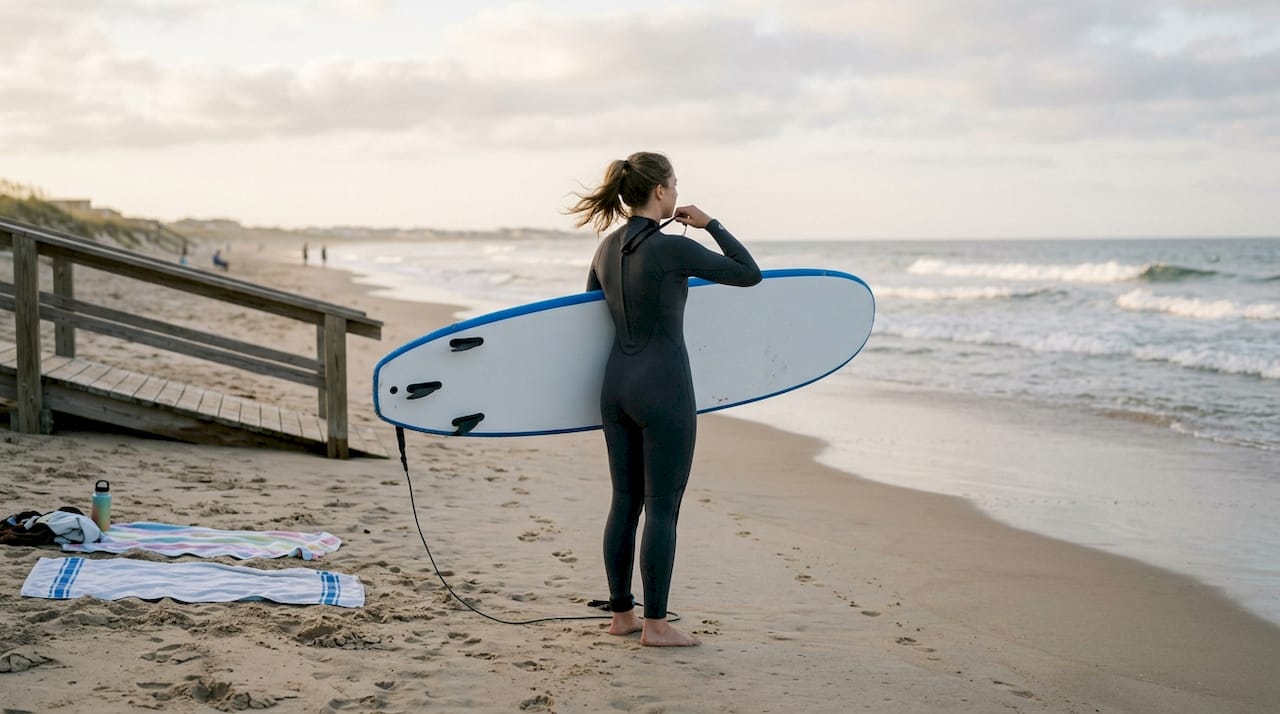
That moment when you’re standing at the water’s edge, board under your arm, watching a set roll in — and your stomach drops. You know the feeling. Whether you’re paddling out for the first time or trying to push past a plateau as an intermediate surfer, confidence in the water is the one thing that separates a frustrating session from a breakthrough one. This guide walks you through exactly how to build that confidence, from the mental side of surfing to the practical steps you can take every single session at Portugal’s incredible breaks.
Table of Contents
Key Takeaways
Point | Details |
Confidence blends skill and mindset | Both physical techniques and mental strategies are needed for lasting surf confidence. |
Preparation is key | Warm-up, gear check, and mental focus lay the foundation for a successful surf session. |
Actionable steps accelerate progress | Following step-by-step routines and tracking improvements leads to measurable confidence in surfing. |
Community and expert support matter | Surf camps, group lessons, and professional instructors provide crucial guidance and encouragement. |
Understanding surf confidence: What it is and why it matters
Surf confidence isn’t just about being fearless. It’s the combination of knowing what your body can do on a board and trusting your ability to read and react to the ocean. Think of it as two wheels on the same bike: technical skill and mental readiness. If one is flat, you’re not going anywhere fast.
Both mechanics and mindset play complementary roles in surf progression. You can have perfect pop-up technique but freeze when a bigger set rolls in. Equally, a calm, focused mindset won’t help much if your paddling is inefficient. Real confidence grows when both sides develop together.
Here’s a quick comparison of what low versus high surf confidence looks like in practice:
Situation | Low confidence | High confidence |
Bigger wave approaches | Pulls back, hesitates | Commits and paddles hard |
Wipeout happens | Avoids water for rest of session | Paddles back out immediately |
Crowded lineup | Stays on the edge, doesn’t compete | Reads the lineup and positions well |
Slow progress day | Feels defeated, quits early | Adjusts approach and keeps going |
The benefits of a structured surf school environment become clear here. Having a coach who addresses both your technique and your mental game accelerates progress far faster than solo practice. And the community atmosphere at surf camps in Portugal adds another layer: seeing others work through the same challenges normalizes the struggle and keeps motivation high.
Key traits of a confident surfer:
Reads wave patterns before paddling out
Commits fully to takeoffs without second-guessing
Recovers quickly from wipeouts without losing focus
Adjusts positioning based on conditions, not fear
Celebrates small wins rather than fixating on mistakes
Preparing for success: Key prerequisites to build surf confidence
Once you’ve grasped surf confidence’s dual pillars, it’s time to prepare before heading for the waves. Preparation isn’t just about waxing your board. It’s a full routine that sets your mind and body up to perform.
Paddle efficiency and wave reading are crucial for intermediate progression, and both start before you even hit the water. Watching the ocean for 10 minutes before paddling out tells you where the peaks are, how the current moves, and what the wave interval looks like. That information alone reduces anxiety significantly.
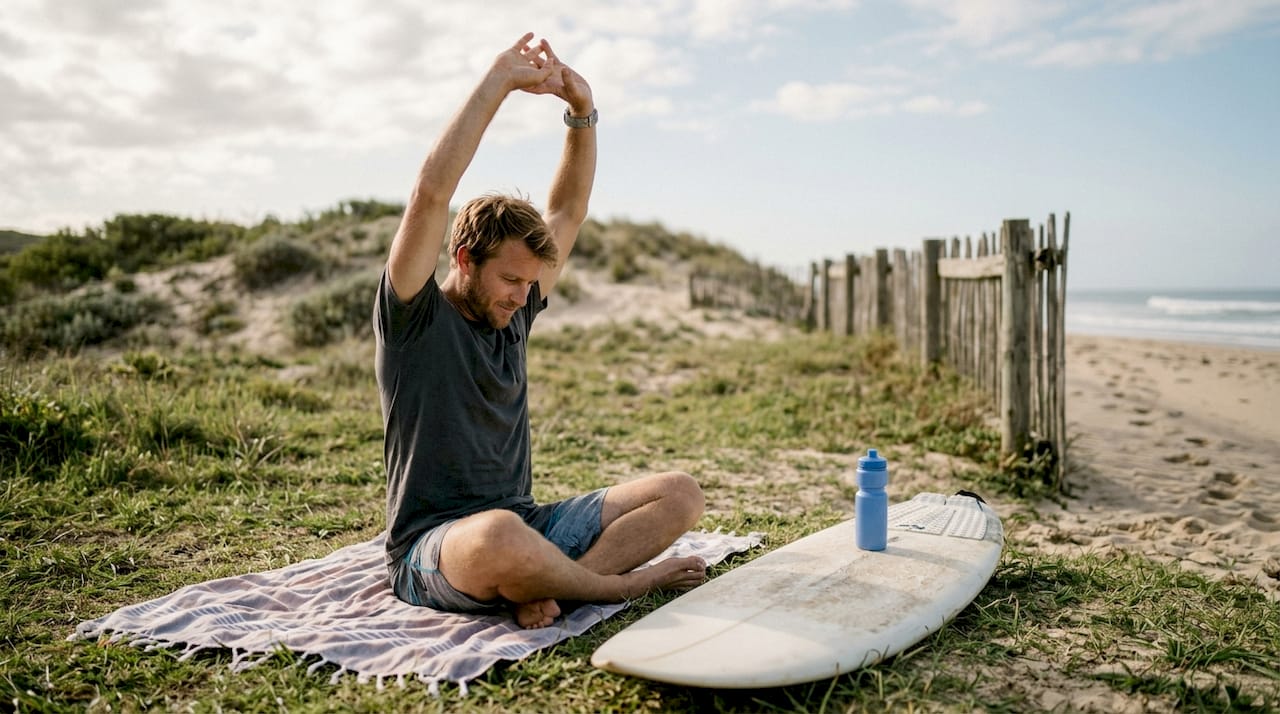
Here’s a pre-session preparation checklist:
Preparation area | What to do | Why it matters |
Mental focus | 5-minute visualization of your session | Primes your brain for positive execution |
Equipment check | Leash, fins, wax, wetsuit condition | Prevents mid-session gear failures |
Safety awareness | Check flags, rips, and crowd levels | Reduces risk and builds situational confidence |
Physical warm-up | Dynamic stretching and shoulder rolls | Prevents injury and improves paddle power |
Breathing routine | 3 deep breaths before paddling out | Lowers cortisol and sharpens focus |
Working with a skilled surf instructor who understands both the physical and mental sides of surfing makes this preparation phase much more effective. They can spot what’s holding you back before you even catch a wave.
Pro Tip: Try adding surf yoga sessions to your routine before surf days. Even 20 minutes of yoga improves balance, breathing control, and body awareness — three things that directly translate to better surfing and calmer nerves in the lineup.
Step-by-step guide: How to build surf confidence in the water
With preparation completed, let’s explore how you can strengthen confidence during your time in the water. These steps work for beginners catching their first waves and intermediates pushing into more challenging conditions.
Start with smaller waves and build up. Matching your skill level to the conditions is not playing it safe — it’s smart training. Smaller waves let you repeat the fundamentals cleanly and build a library of successful rides in your memory.
Practice balanced paddling and positioning. Spend the first 10 minutes of every session just paddling. Get your body warm, find your balance point on the board, and settle into the rhythm of the ocean before you start chasing waves.
Use visualization and positive self-talk. Before each wave, picture yourself standing up cleanly. Both technical execution and mental strategies enhance surf confidence, and this simple habit rewires how your brain responds under pressure.
Celebrate small wins each session. Caught two waves instead of one? Stayed on your feet a second longer? That counts. Write it down after your session. Progress in surfing is rarely dramatic — it’s built in tiny, consistent steps.
Ask for feedback. After your session, talk to your instructor or a more experienced surfer. Specific, actionable feedback is worth more than hours of unguided practice.
Pro Tip: Joining a group surf lesson puts you alongside other surfers at your level. Watching someone else nail a wave you’ve been struggling with is one of the most powerful confidence triggers there is.
“The surfers who progress fastest aren’t the most talented — they’re the ones who stay consistent, stay curious, and stay in the water even when it’s hard.”
If you’re unsure where to start, an all levels surf class gives you structured progression without the pressure of keeping up with advanced surfers. Your surf instructor will tailor feedback to exactly where you are right now.
Safety note: Always stay aware of changing ocean conditions. Tides shift, winds pick up, and currents move. Check in with the environment every 20 minutes during your session.
Troubleshooting: Overcoming common confidence barriers while surfing
After you’ve practiced building confidence, you might face common hurdles. Here’s how to overcome them without losing momentum.
Mental strategies complement mechanical skill for overcoming confidence barriers, and the most common ones are surprisingly predictable. Knowing they’re coming makes them easier to handle.
Common confidence barriers and how to fix them:
Fear of wipeouts. Wipeouts are not failures. They are data. Every wipeout teaches you something about your positioning, timing, or commitment. Practice falling safely in shallow water so it stops feeling like a threat.
Peer judgment. Everyone in the lineup was a beginner once. Most surfers are too focused on their own waves to notice yours. Shift your attention inward.
Crowded breaks. Move to a less crowded section of the beach. Fewer people means more waves for you and less social pressure. Portugal’s coastline has plenty of options.
Slow progress. Progress in surfing is not linear. Plateaus are normal and often precede breakthroughs. Keep showing up.
Setbacks after a bad session. One rough day does not erase weeks of progress. Rest, reflect, and come back.
“Resilience in surfing is built the same way as skill — through repetition, reflection, and refusing to quit after a hard session.”
The community support at surf camps in Portugal is genuinely one of the best tools for overcoming these barriers. Sharing your frustrations with people who get it — and celebrating their wins alongside yours — builds the kind of resilience that carries you through tough sessions. All levels group lessons create exactly that kind of environment.
Verifying progress: How to measure your surf confidence
Once you overcome obstacles, it’s important to recognize your progress and keep improving. Measuring confidence isn’t as straightforward as counting waves, but there are clear signals to watch for.
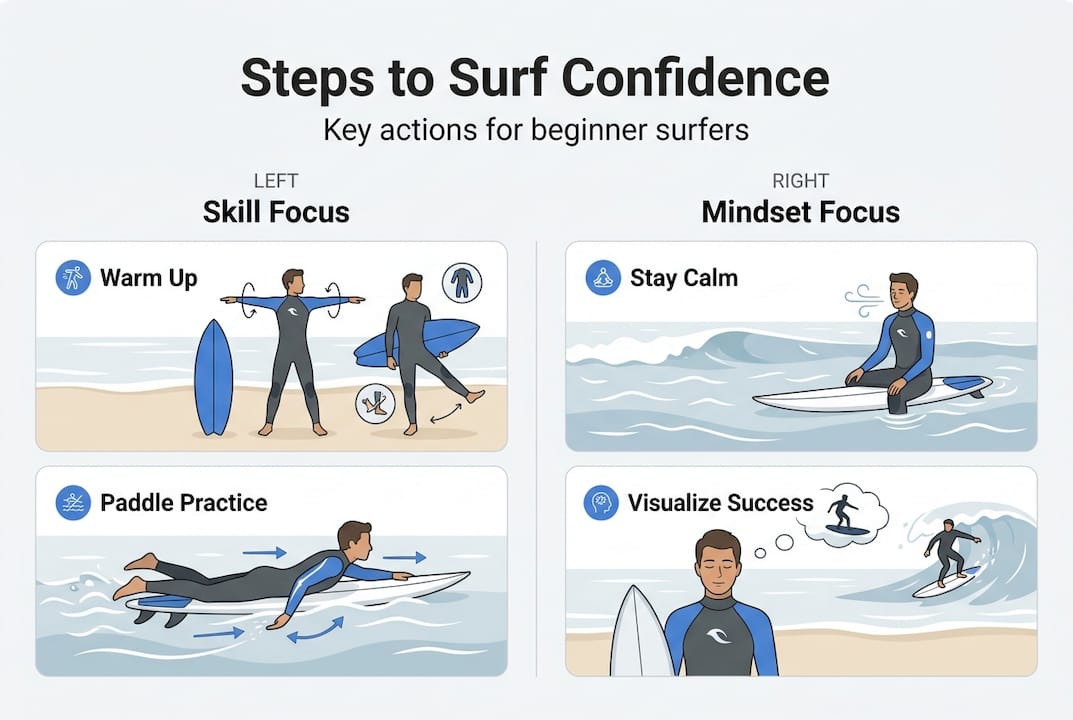
Skill progression is best measured through both physical and mental benchmarks. Tracking both gives you a complete picture of where you are and where you’re headed.
Signs your surf confidence is growing:
You paddle out without hesitation, even when the waves look bigger than usual
You recover from wipeouts faster and paddle back out with energy
You start reading the lineup and positioning yourself more strategically
You feel calm rather than anxious during the paddle-out
You attempt waves you would have avoided a month ago
Confidence checkpoints to track your progress:
Checkpoint | Beginner milestone | Intermediate milestone |
Wave selection | Catching any wave consistently | Choosing waves based on shape and size |
Wipeout recovery | Getting back on the board calmly | Immediately repositioning for the next wave |
Lineup behavior | Staying in the whitewash | Reading and joining the main peak |
Mental state | Finishing sessions without panic | Feeling energized and focused throughout |
Goal setting | Catching 5 waves per session | Riding 3 waves to the beach cleanly |
Keeping a short confidence journal after each session is one of the most underrated tools in surfing. Two or three sentences about what went well and what you want to work on next creates a feedback loop that accelerates growth. Pair this with regular feedback from instructors at surf lessons in Portugal and your progress becomes measurable, not just felt.
Boost your surf confidence with expert lessons in Portugal
Building surf confidence is a process, and having the right environment makes all the difference. At Ripar Surf School and Surfcamp Portugal, based in the charming village of Praia Areia Branca near Peniche and Ericeira, we’ve been helping beginners and intermediates find their confidence in the water since 2001.

Our all levels group surf lessons are designed to meet you exactly where you are, with certified local instructors who focus on both your technique and your mindset. Add yoga for surfers to your program for mental focus and physical preparation that carries directly into the water. Stay in our surf house Portugal for a fully immersive experience, or join a full surf camp Portugal package that combines lessons, accommodation, and a community of like-minded surfers. This is where confidence gets built, one wave at a time.
Frequently asked questions
What should I do if I freeze up in the water?
Pause, take three slow deep breaths, and use visualization to regain composure before resuming. Giving yourself 30 seconds to reset is far more effective than pushing through panic.
How long does it take to build surf confidence?
Most surfers notice real improvement after several focused sessions that combine skill practice with mental techniques. Mechanical and mental strategies practiced together consistently produce the fastest results.
Do group lessons actually help with surf confidence?
Absolutely. Peer support in group lessons boosts emotional readiness and skill development simultaneously, making group settings one of the most effective confidence-building environments available.
Can yoga or mindfulness improve my surf confidence?
Yes. Mindfulness complements technical surf training by reducing anxiety and sharpening focus, both of which translate directly into calmer, more committed surfing in the water.
Recommended
Comments