

The Ideal Tide for Praia Da Areia Branca Surf Sessions

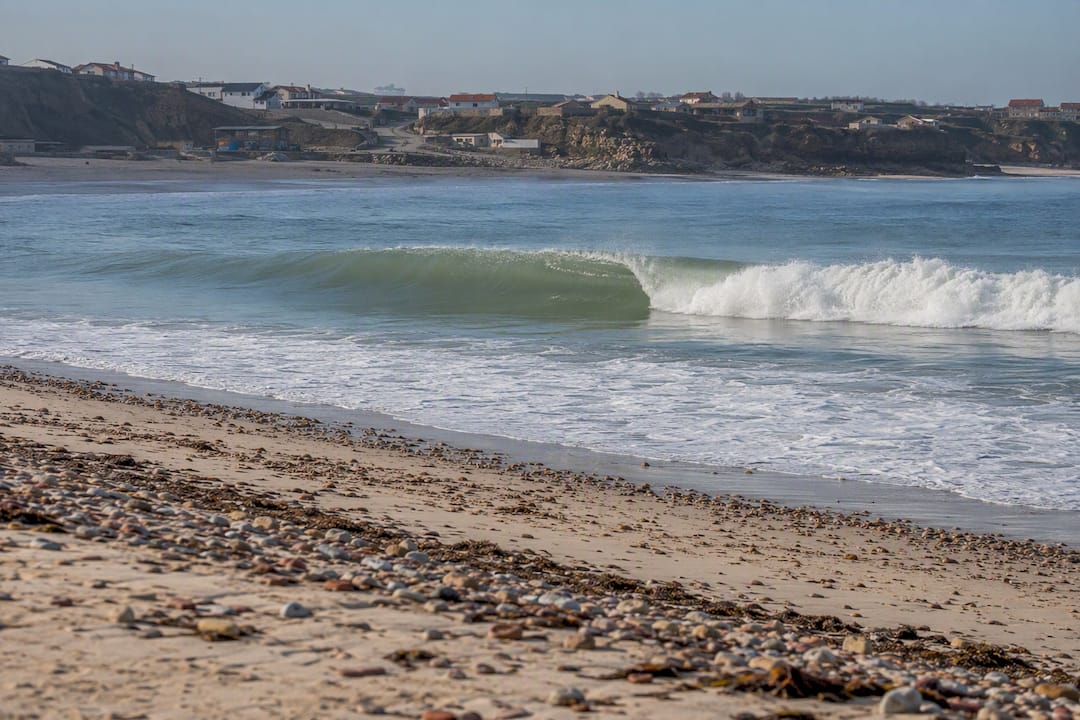
For most sessions at Praia da Areia Branca, aim for mid-tide with a west or northwest swell and light offshore winds from the east or southeast. That combination gives you the cleanest peaks the beach produces. Outside that window, the break still works, but you’ll fight more mush at extreme low tide or a washed-out face at high tide.
Best tide: mid-tide (rising or falling)
Best swell: W or NW
Best wind: light offshore, E or SE
Best season for size: October through March
Quick stat: Sea temperatures at Areia Branca swing from roughly 14 to 20°C across the year, so what you wear matters almost as much as when you paddle out. Ripar Surf School has run lessons on this stretch of the Oeste coast since 2001 and builds every session around this exact tide and swell math.
Key Takeaways
Mid-tide with a west or northwest swell and light offshore wind from the east delivers the cleanest, most consistent waves at Praia da Areia Branca year-round.
Point | Details |
Ideal conditions | Mid-tide, W/NW swell, light offshore wind from E or SE, produces the cleanest peaks. |
Swell period matters most | Long-period groundswell beats short-period windswell for wave power and shape. |
Season sets the size | October through March brings bigger, more consistent swells; summer suits beginners. |
Wetsuit tracks temperature | Sea temps swing from about 14 to 22°C, so gear ranges from a 2mm shorty to a 5/3mm suit. |
Local hazards shift with tide | Rocks and urchins near the river mouth and southern tip are more exposed at low tide. |
Local timing beats guesswork | Riparsurfschool schedules lessons and camps around tide, wind, and swell period checks each morning. |
Table of Contents
How Tide, Swell, and Period Shape Areia Branca’s Waves
Mid-tide works because it keeps enough water over the sandbanks to prevent close-outs, without burying the banks so deep that the swell loses its punch. At dead low, the sandbars can throw up sudden, sucky sections that catch inexperienced surfers off guard. At high tide, a lot of that same energy just rolls through as soft, fat mush.
Swell direction does the rest of the work. A west or northwest swell hitting alongside light offshore wind from the east lines up cleanly with the beach’s natural orientation, which is why local forecast data keeps pointing to that pairing as the standout combination.
Period matters just as much as direction, and it’s the detail most visiting surfers skip. Long-period groundswell, the kind rolling in from distant Atlantic storms, arrives with more organized power and produces the sort of shape that lets you actually turn. Short-period windswell, common in summer, tends to show up choppier and less defined, according to local forecast analysis.
Long-period swell (12+ seconds): cleaner faces, more push
Short-period swell (under 10 seconds): choppier, weaker walls
River mouth nearby shifts sand and creates shifting peaks with both left and right options
The river mouth close to Areia Branca constantly redraws the sandbank layout, which is exactly why the same tide can produce a different wave shape from one month to the next.
When Areia Branca Performs Best Through the Year
Winter is when Areia Branca shows its teeth. From October through March, the coast sees more consistent, larger groundswells, better suited to intermediate and advanced surfers who want size and power. Summer flips the script: waves shrink, but they get friendlier, often driven by local windswell rather than long-distance groundswell, which makes June through September the more forgiving stretch for anyone still finding their feet.
Season | Typical Wave Size | Sea Temp Range | Wetsuit |
Winter (Dec–Feb) | Larger, powerful | ~14–16°C | 4/3mm or 5/3mm |
Spring/Fall (Mar–May, Sep–Nov) | Moderate, mixed | 16°C | 3/2mm |
Summer (Jun–Aug) | Smaller, playful | Up to ~20–22°C | 2mm shorty or boardshorts |
Temperature snapshot: sea temps peak around 20 to 22°C in mid-August and drop to roughly 14 to 16°C by late February, a swing wide enough that packing the wrong wetsuit can genuinely wreck a session.
What Wetsuit and Board to Bring for Areia Branca
Match your rubber to the calendar, not to what you wore at your last beach. A 2mm shorty works fine for August sessions when the water is at its warmest, but come January you’ll want a 4/3mm or even a 5/3mm to stay in the water longer than twenty minutes.
Summer (Jun–Aug): 2mm shorty, boardshorts on the warmest days
Shoulder months (Mar–May, Sep–Nov): 3/2mm full suit
Winter (Dec–Feb): 4/3mm or 5/3mm full suit, booties recommended
Board: foamboard or longboard for small summer days; short or mid-length for winter power
Booties earn their place in your bag once water temps drop below about 16°C, and they double as protection if you end up walking over rocky patches near the river mouth. Check your leash for wear before a winter session. Bigger swell means more strain, and a snapped leash in cold water is a bad afternoon.
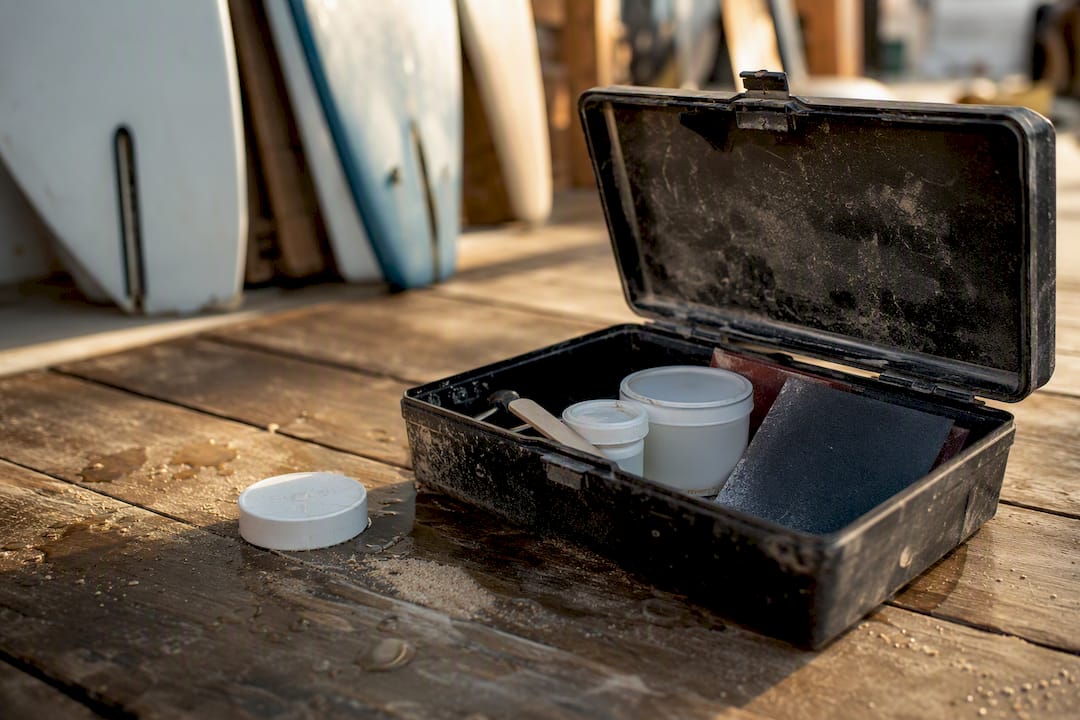
Pro Tip: Pack a small ding-repair kit if you’re bringing your own board for more than a few days. Sandbank sections here can be punchy enough to put a crack in soft foam gear.
Local Hazards and How Tide Changes What You Can’t See
Areia Branca is a genuinely forgiving beach break, but it isn’t hazard-free. Rocks and urchins tend to cluster near the river mouth and around the southern tip, and low tide is exactly when they become a problem, since falling water exposes what the swell normally covers.
Walk the promenade before paddling out and scan the entry points at the current tide.
Note where the sandbanks look deepest. That’s usually your safest way in.
Surf with a buddy, especially on a bigger winter day.
Ask a local instructor or check for flags if lifeguards are posted.
Pro Tip: If you can’t tell whether a dark patch in the water is rock or just shadow, treat it as rock until you’ve watched a set roll over it.
Your Pre-Session Checklist: What to Check This Morning
Three numbers decide whether today is worth the drive: swell, wind, and tide. Check them in that order.
Swell — direction (W/NW is the target), period (long-period groundswell beats short-period windswell), and size.
Wind — direction first, speed second. Light offshore wind from the east or southeast cleans up the face; onshore wind from the west flattens and chops it up fast.
Tide — confirm the phase and the time of the next high or low against your planned session window.
Reliable places to check: the Areia Branca surf forecast page for swell and wind, Portuguese tide tables for exact timing, and national weather services for a broader wind outlook.
When the numbers conflict, tide usually wins the tiebreaker. A good W swell paired with light onshore wind at mid-tide is still often worth paddling out for. The same swell with strong onshore wind at low tide, skip it and check back at the next tide change.
Ripar Surf School’s Local Knowledge Behind Every Session
Ripar Surf School has operated out of Praia Areia Branca since 2001, which means two decades of watching this exact sandbank system shift with every storm and every season. Fernando and the instructor team don’t guess at conditions; they check the same three variables covered above, tide window, wind direction, and swell period, before deciding how to schedule a lesson or camp day.
Tide window checked 2 to 3 hours ahead of sessions to time the sandbank shape
Wind and swell period cross-checked against forecast data before groups head out
Entry points adjusted around known rock and urchin zones near the river mouth
Areia Branca’s multiple peaks and long stretch of beach spread crowds out naturally, which is part of why it works so well for lessons even on a busy weekend.
The full breakdown of spots and conditions lives in Ripar’s own Areia Branca surf guide, useful reading before your first session.
Why Generic Tide Charts Miss What Matters Here
Most surf advice treats tide like a universal rule: mid-tide good, extremes bad, done. That’s lazy, and it ignores how much a single beach’s sandbank geometry changes that math. Areia Branca’s river mouth reshapes its banks often enough that the “ideal” tide window can shift by an hour or more between visits, which generic forecasting apps simply can’t account for.
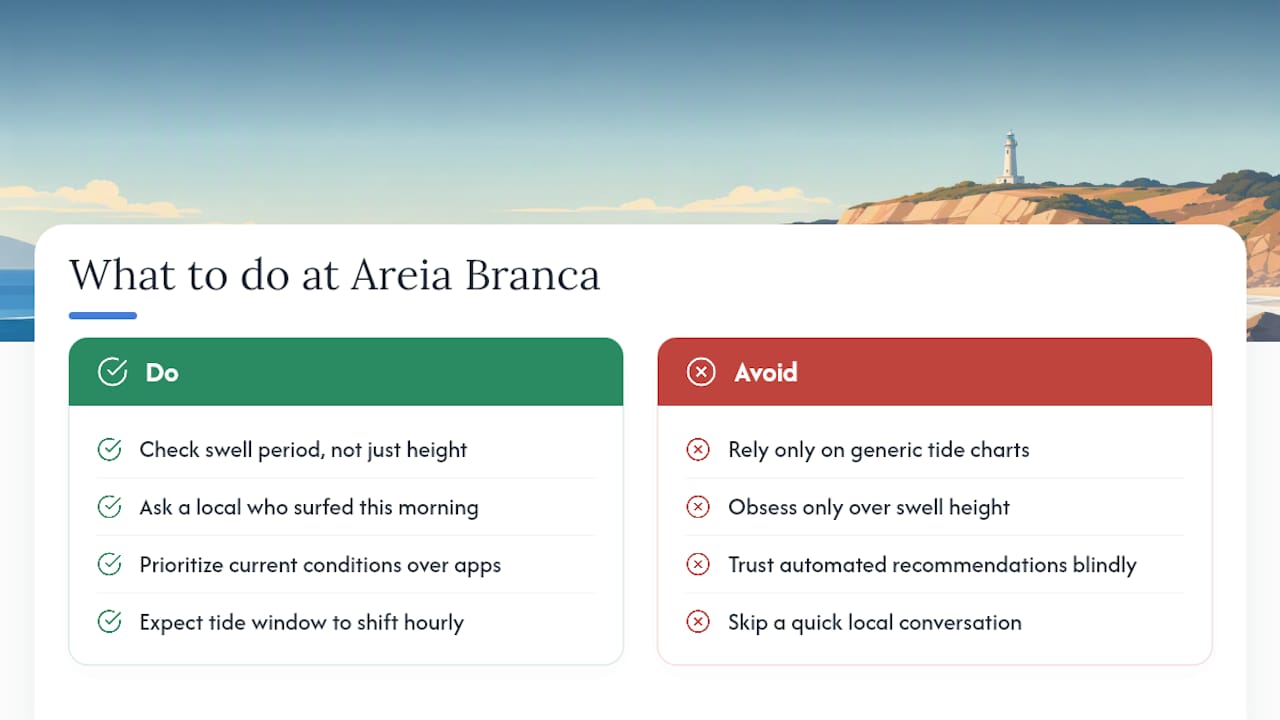
What gets underrated is swell period. Surfers obsess over swell height on a forecast app and ignore the period number sitting right next to it, yet a 1.2 meter swell at 14 seconds will outsurf a 1.8 meter swell at 8 seconds nearly every time here. That single number tells you more about wave quality than height ever will.
If you’re new to this beach, prioritize local, current-conditions knowledge over any app’s automated recommendation. A five-minute conversation with someone who surfed it that morning beats twenty minutes scrolling forecast graphs. That’s the gap between generic advice and what actually gets you a good session.
— Fernando
Book a Session Timed to Areia Branca’s Real Conditions
Reading swell charts is one thing. Knowing exactly when Areia Branca’s sandbanks are firing is another, and that’s the gap Riparsurfschool closes for visiting surfers. Rather than guessing at tide tables alone, you get local instructors who check the tide window, wind direction, and swell period before every lesson, then adjust timing and entry points accordingly.
Whether you want a single group lesson to learn the basics or a private session focused on reading this specific beach break, Riparsurfschool schedules around the conditions rather than a fixed clock. Multi-day visitors get more value from a surf camp package built around the week’s forecast, with accommodation and gear sorted so the only decision left is which tide window to paddle out on — see our Guide to Beachfront House Rentals to plan your stay accordingly. Ready to lock in dates? Book your lesson online and tell the team your experience level so they can time your session to the swell.
Live Forecasts and Local Resources Worth Bookmarking
Areia Branca surf forecast for swell direction, period, and size
Sea temperature guide for wetsuit planning
Areia Branca spot guide for local vibe and layout
Ripar’s own Areia Branca surf guide for planning your visit
Sources
Recommended
Comments