

Why Surf Camps Are the Perfect Family Adventure

TL;DR:
Surf camps in Portugal provide safe, structured, and confidence-building surf experiences for families.
Children develop physical, emotional, social, and ocean literacy skills through surfing and community activities.
Off-season visits offer lower costs, fewer crowds, and ideal conditions for family surf adventures.
Most families picture the beach as a place to relax, read, and do very little. But hand your kids a surfboard, point them toward the Atlantic, and something unexpected happens: they grow. Surf camps in Portugal are flipping the script on what a family vacation can look like, turning passive beach days into action-packed, confidence-building adventures where parents and children learn side by side. If you’ve been telling yourself that surf camps are just for solo travelers or seasoned wave-riders, it’s time to reconsider. What you’ll find here might completely change how you plan your next trip.
Table of Contents
Key Takeaways
Point | Details |
Structure and safety | Surf camps for families in Portugal have trained staff, small groups, and child-focused safety protocols. |
Growth beyond surfing | Kids develop confidence, physical strength, teamwork, and ocean awareness at camp. |
Built-in bonding | Shared lessons and community activities bring families together for memorable adventures. |
Flexible booking | Families can choose between group and private lessons, and off-season travel makes quality camps more affordable. |
How surf camps design safe, structured experiences for kids
Having challenged the myth that surf camps aren’t for families, let’s see how these experiences are actually designed with children in mind from the very first moment they step onto the sand.
Safety is the foundation of every well-run kids’ surf program, and the structure that surrounds it is more thoughtful than most parents expect. Structured learning with qualified instructors using small group ratios like 1:4 for kids ensures that no child ever feels lost or unsupervised in the water. Our professional surf instructors at Ripar Surf School are locally trained, certified, and experienced with young learners who need both encouragement and clear technical guidance.
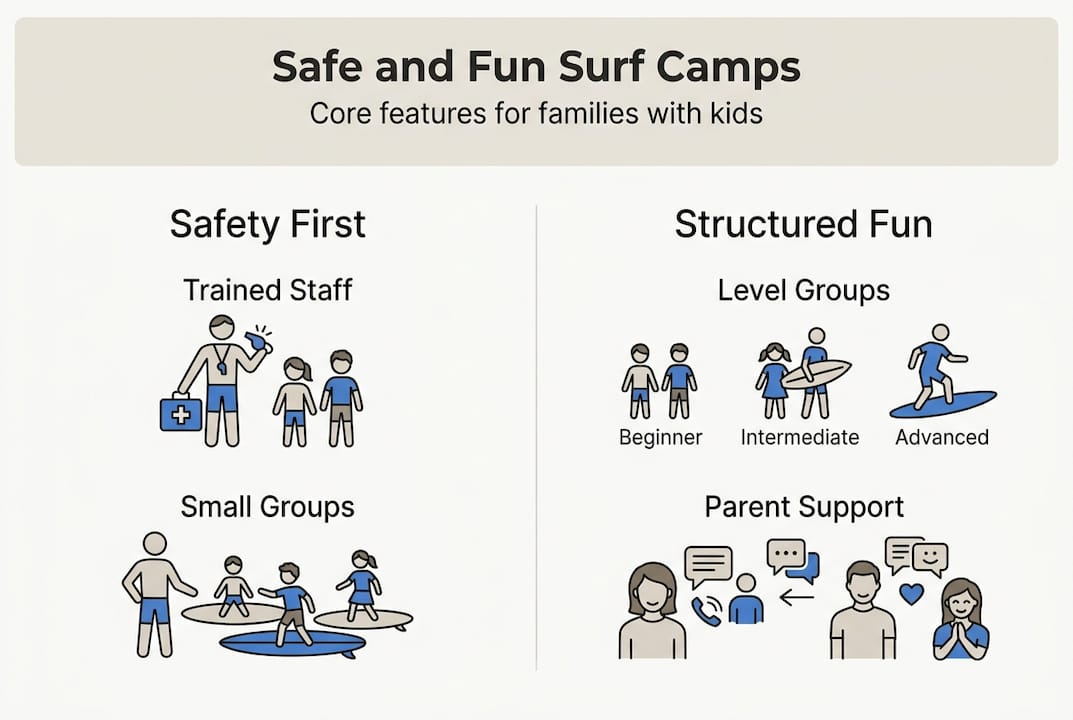
One of the smartest elements of a well-designed kids’ program is level-based grouping. Children are never thrown into a session beyond their ability. Beginners stay in shallow, gentle shore-break water, working on paddling and pop-ups before they even think about catching a real wave. More advanced kids get pushed appropriately. This tiered structure means a 7-year-old first-timer and a 10-year-old with two previous camps under their belt can both thrive within the same program on the same day.
Here’s a side-by-side look at what a typical family surf camp day offers compared to a standard leisure beach holiday:
Activity | Surf camp day | Standard beach holiday |
Morning | Beach warm-up, surf lesson | Slow breakfast, sunbathing |
Midday | Skill review, ocean safety talk | Pool time, napping |
Afternoon | Second session or free surf | Beach walk, ice cream |
Evening | Group dinner, storytelling | Hotel restaurant, screen time |
Skills gained | Balance, resilience, ocean respect | Relaxation only |
The sessions themselves are carefully sequenced. A typical kids’ session includes:
Safety briefing covering ocean rules, rip current awareness, and board etiquette
Equipment sizing to match board volume and wetsuit fit to each child’s weight and height
Beach warm-up with dynamic stretching focused on the shoulders, hips, and core
Swim assessment to confirm every child can handle the water conditions of the day
Progress check-ins where instructors give individual feedback after each wave attempt
“The best surf camps treat every session as a complete learning loop: brief, practice, review, repeat. That rhythm is exactly what builds confidence in young surfers faster than any other method.”
Pro Tip: When booking, always ask the camp specifically about instructor-to-child ratios and what certifications their coaches hold. A ratio of 1:4 or better is a strong indicator of a quality program. Our beginner surf lessons are designed with exactly this structure, ensuring every child gets personal attention from their very first paddle out.
Parental presence is also strongly encouraged, especially for children under 8. Watching your child catch their first wave from the shore is an experience no hotel pool can replicate.
Key life skills your kids gain at surf camp
Once you see how structured and safe surf camps are, it’s clear that kids gain much more than surfing technique. The lessons they take home go far deeper than how to pop up on a board.
Surfing at camps promotes holistic development: physical fitness, ocean awareness, resilience from wipeouts, and social skills developed in genuine community settings. These are things passive vacations simply cannot offer. When a child wipes out and paddles back out anyway, they’re practicing something rare: voluntary courage.
Here are the top five life skills children consistently develop at surf camp:
Physical strength and coordination built through paddling, balancing, and the full-body effort of riding a wave
Ocean literacy including reading wave sets, understanding tides, and respecting the power of the sea
Emotional resilience through repeatedly trying, failing, adjusting, and succeeding in real time
Social confidence from connecting with other kids in a shared challenge with no screens in sight
Self-regulation learning to manage fear, excitement, and frustration in a physically demanding environment
These skills transfer directly back to school and home life. Teachers and parents consistently report that children who attend active outdoor camps return with better focus, more patience, and higher self-esteem. The reason is straightforward: when a child conquers something genuinely hard, something real and physical and out in the open ocean, it recalibrates their sense of what they’re capable of.
“Active outdoor experiences like surf camps create developmental moments that structured classroom activities rarely match. The combination of physical challenge, natural environment, and peer community accelerates social and emotional growth in children at a remarkable rate.”
The social element deserves special attention. Group surf lessons pull kids out of their comfort zone in the best possible way. They cheer each other on during beach drills. They laugh together after wipeouts. By day two, children who arrived as strangers are sharing boards and high-fiving in the shallows. That kind of fast, genuine friendship is something screen-based entertainment cannot manufacture.
Pro Tip: After each session, ask your child one specific question: “What was the hardest moment today, and what did you do about it?” That small reflection habit turns a fun afternoon into a lasting lesson in problem-solving. For more on getting the most from your time on the water, check out our guide to maximizing your surf camp stay in Portugal.
Making the most of family time: Community and bonding
Beyond learning new skills, surf camps offer something families rarely find elsewhere: genuine camaraderie and shared adventure that doesn’t evaporate when the holiday ends.
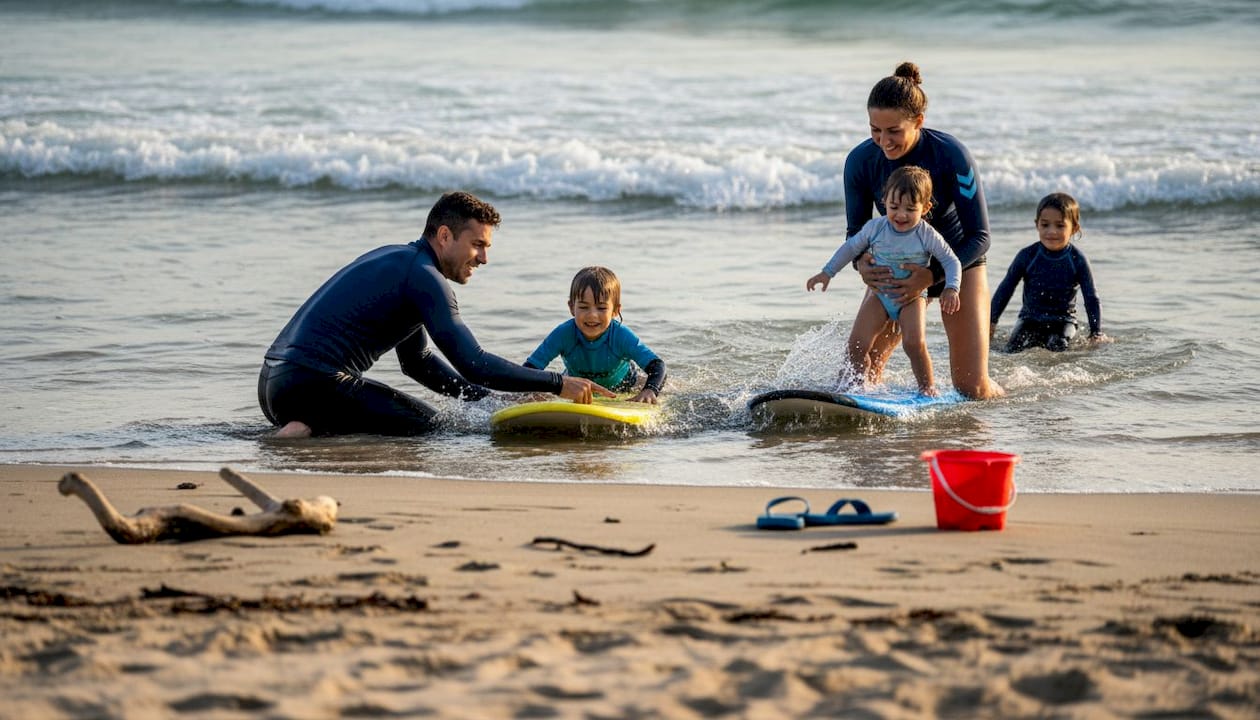
The structure of a surf camp naturally creates community. You’re not checking into separate rooms and nodding politely at strangers in a buffet line. You’re sharing a beach, a session, a victory. Parents meet other parents who value active experiences. Kids form friendships with peers who share their energy and curiosity. The shared challenge of learning to surf strips away the social awkwardness that can make travel feel isolating.
Family surf camps emphasize strong safety prerequisites for kids, including swimming ability, breath-holding confidence, and wave familiarity, with parental supervision recommended for younger children in group settings. These requirements aren’t barriers. They’re conversation starters. Parents naturally connect when discussing their child’s swimming progress or swapping notes on a kid-friendly local restaurant nearby.
Some of the most memorable family bonding moments at surf camp include:
Group beach challenges where teams of families compete in paddle relay races or beach flag games
Beach cleanups organized as morning activities that teach environmental stewardship while creating shared purpose
Evening storytelling circles where kids and parents share their best and worst wave of the day
Shared meal traditions at local cafes in the village, where the conversation is always better after a full day outdoors
Sunset paddling sessions for families who want a quieter, reflective end to an active day
“A surf camp isn’t just a place to learn surfing. It’s a ready-made community for families who want more from their vacation than a sunburn and a cocktail. The connections made on that beach last long after everyone goes home.”
The community atmosphere in surf camps at Praia Areia Branca is one of the things our guests mention most in their feedback. Our small-beach-village setting naturally encourages families to linger, explore, and connect rather than rushing between tourist attractions. And the group surf activities for bonding we organize are designed specifically to create those shared stories that become family legends over dinner years later.
Practical tips for choosing and booking your surf camp in Portugal
Now that you know the benefits and what to expect, let’s get practical about planning your perfect surf camp getaway. Portugal is a smart choice for families, but the details matter.
Timing your visit is one of the most impactful decisions you’ll make. The off-season offers fewer crowds and lower prices with plenty of sunshine, making it a genuinely excellent option for families with scheduling flexibility. Here’s how the seasons compare:
Factor | Off-season (Oct to Mar) | High season (Jun to Sep) |
Cost | 20 to 40% lower | Peak pricing |
Crowd size | Small, intimate groups | Busy beaches, larger groups |
Weather | Mild, occasional rain | Hot, sunny, consistent |
Lesson availability | High, flexible scheduling | Book early, limited spots |
Wave quality | Often excellent | Good, more variable |
Most surf camps recommend children be at least 6 years old and confident swimmers before joining group lessons. That confidence in the water is more important than age alone. A strong 6-year-old swimmer will almost always have a better experience than an anxious 9-year-old who isn’t comfortable in open water.
Choosing between group and private lessons is simpler than it sounds. Read our surf camp vs surf school comparison to understand the full difference, but the short answer is this: group lessons are perfect for introducing the basics and building social energy, while private lessons accelerate skill development for kids who want to focus on something specific.
Here are five practical steps to booking the right family surf camp:
Check instructor certifications and ask specifically about child-focused teaching experience
Confirm group sizes and ask whether siblings of different skill levels can be accommodated in the same session block
Review safety policies including swim assessments, emergency protocols, and instructor-to-child ratios
Compare seasonal pricing using the table above and book off-season if your schedule allows
Speak to the camp directly before booking to assess how they handle your children’s specific ages and abilities
Pro Tip: Many camps, including ours, can accommodate siblings of very different experience levels by placing them in separate groups during lessons but bringing them together for beach activities and meals. Always ask about this before assuming it’s impossible. When you’re ready, book your surf camp directly through our site to access the most current availability and family packages.
Our perspective: Why surf camp beats a traditional family vacation
With all the practicalities covered, here’s why we genuinely believe surf camp changes the nature of a family trip in a way that a resort stay simply cannot.
Traditional vacations are comfortable by design. Everything is managed, buffered, and delivered to you. There’s nothing wrong with comfort, but comfort rarely produces the kind of memories families talk about for decades. The moments that stick are the ones where something was genuinely hard and you did it anyway.
At Ripar Surf School, we’ve watched thousands of families arrive at Praia Areia Branca expecting a simple holiday and leave having experienced something that shifted their family dynamic in a real way. Kids who struggled on day one stood tall by day three. Parents who hadn’t done anything physically challenging in years rediscovered their own capability alongside their children.
The surf community itself plays a role that hotels cannot replicate. There is no division between guest and staff, adult and child. Everyone is working toward something, learning together, getting knocked down and getting back up. That shared vulnerability creates real Portuguese surf camp experiences that are far more meaningful than any curated resort activity.
Our honest take: a little discomfort, salty hair, and sand in unexpected places is exactly the price of the most rewarding family memories you’ll ever make.
Ready to surf together? Find your perfect camp
Inspired to plan a new family adventure? At Ripar Surf School and Surfcamp Portugal, we’ve built everything around families who want more from their vacation than sun loungers and room service.
From our family-friendly group surf lessons designed for different ages and skill levels to flexible scheduling that fits your family’s rhythm, we’re here to make your first surf camp experience unforgettable. Our local instructors know how to get kids excited, keep them safe, and send them home with real skills and serious confidence. Whether you’re ready to book surf lessons for the little ones or want to book surf camp for the whole family, we’ll make sure every wave counts.
Frequently asked questions
What age is best for kids to start surf camp in Portugal?
Most camps recommend age 6 and up, provided the child is already a confident swimmer. Strong swimming ability matters more than age alone when determining readiness.
How do surf camps keep young kids safe in the water?
Camps use small group ratios like 1:4 for children, with level-based grouping, swim assessments, and close parental involvement for younger participants. These layers of structure work together to keep every session safe and age-appropriate.
Are private surf lessons better for children than group sessions?
Group lessons suit beginners who benefit from the energy and motivation of learning alongside peers, while private lessons are better for kids working to master specific techniques or build individual confidence quickly.
When is the most budget-friendly time for families to visit surf camps in Portugal?
Off-season travel offers significantly lower prices and smaller crowds, making shoulder months like October through March ideal for families who have flexibility in their travel schedule.
Recommended
Comments