

Baleal, Portugal: Surf Guide for Travelers and Surfers

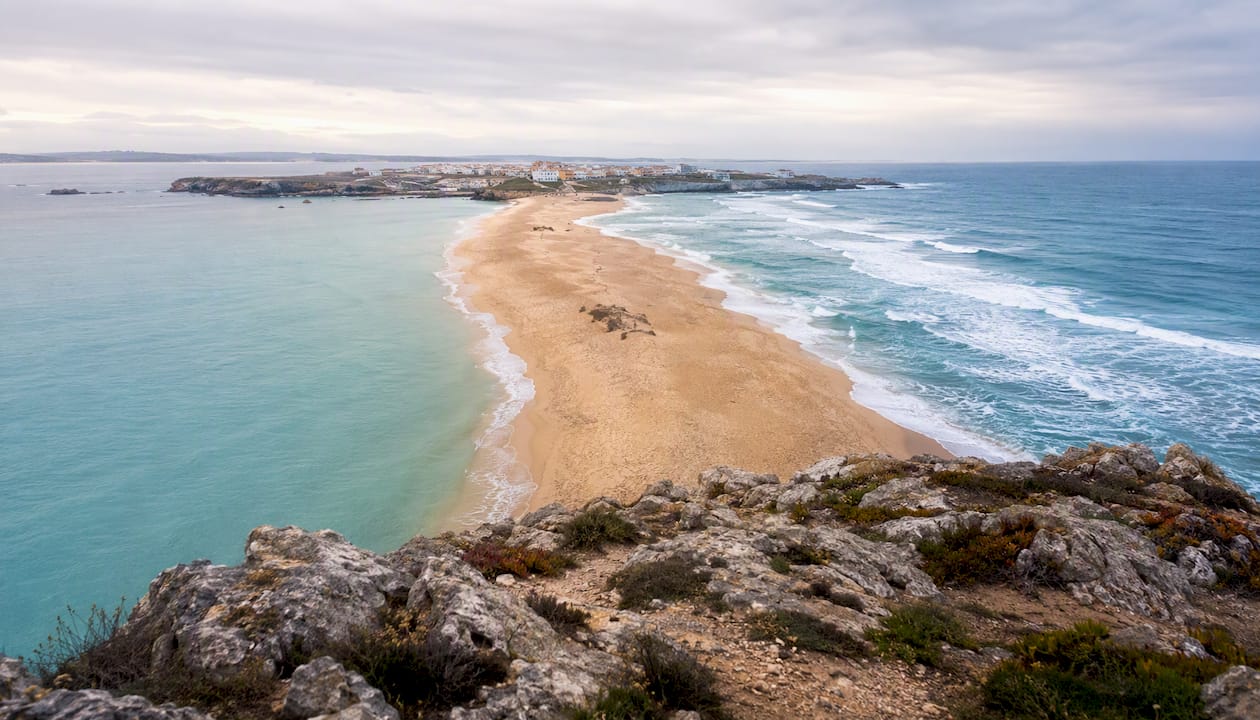
Baleal is a small peninsula jutting into the Atlantic just north of Peniche, north of Lisbon, and it delivers something rare: reliable surf on one side and a sheltered, calm bay on the other. If you want to learn to surf, the beach breaks at Prainha are forgiving and consistent. If you’re traveling with kids or non-surfers, the south-facing Baía is flat enough for swimming most of the summer. Riparsurfschool, based nearby at Praia Areia Branca, has been running lessons and surf camps in this stretch of coast since 2001 and knows these conditions as well as anyone. Getting here from Lisbon takes about an hour by car depending on traffic; buses run to Peniche with local connections onward to Baleal.
Surf-focused visit: book a lesson or multi-day camp, target the north-facing breaks
Family beach day: head straight to the Baía on the south side, calm water, easy parking
Mixed group: split the morning between a lesson at Prainha and lunch in the village, then walk the tombolo at low tide
Key Takeaways
Baleal’s combination of sheltered family bay and consistent Atlantic surf breaks makes it one of the most versatile coastal destinations in Portugal, and September through March delivers the best conditions for experienced surfers while summer suits beginners and families.
Point | Details |
Best time for surfers | September through March brings consistent Atlantic swells and fewer crowds. |
Best time for families | June through September; the Baía is calm and lifeguards are on duty through mid-September. |
Safety priority | Rip currents at Prainha and hidden rocks at Lajido; beginners should stay in white water. |
Choosing a surf school | Verify ISA certification, student-to-instructor ratio, and a clear cancellation policy before booking. |
Riparsurfschool option | Operating since 2001 near Peniche; small groups, local instructors, and full camp packages available. |
Table of Contents
What makes Baleal, Portugal such a good surf destination?
Baleal Island is technically a near-island connected to the mainland by a narrow sandbar called a tombolo. That geography is the whole story. The tombolo creates two completely different sea conditions within a few hundred meters of each other, and the peninsula’s exposure to multiple Atlantic swell directions means waves arrive from the northwest, west, and southwest without much interruption.
Named beaches and what each one is good for
The coastline packs several distinct spots into a short stretch of shore. Here is what each one offers:
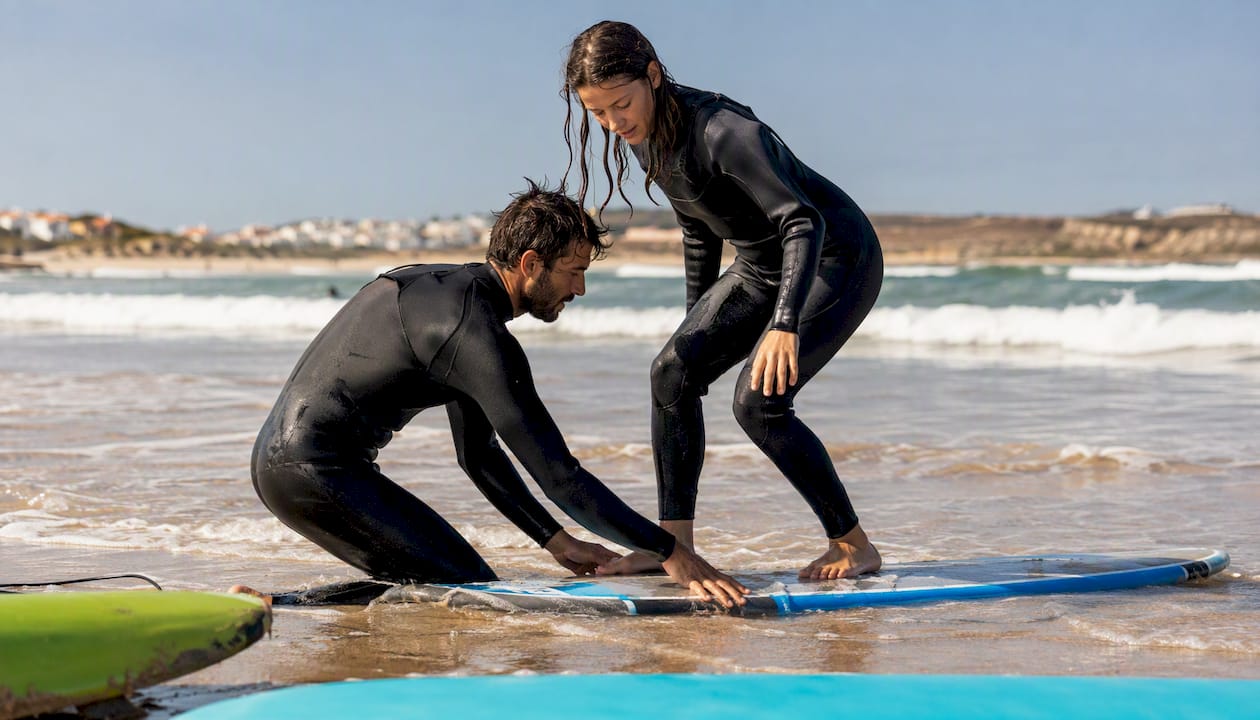
Prainha (north side): the main beginner and intermediate surf beach; sandy bottom, consistent beach break, most surf schools operate here
Baía (south side): sheltered, calm, ideal for families, swimming, paddleboarding, and windsurfing; Visit Ferrel describes it as the area’s go-to for recreational water sports in calmer conditions
Lajido / Lagide (northwest): rockier, more powerful reef break; experienced surfers only, hidden rocks make it dangerous for beginners
Cantinho da Baía: a small pocket between the two main sides, often glassy and protected, good for intermediate surfers on smaller days
Praia das Cebolas and Praia dos Barcos: quieter spots used mainly by locals for fishing and casual swimming
Ilha das Pombas and Ilhéu de Fora: small rocky islets visible from the beach, no public access, but they frame the view toward the Berlengas archipelago on clear days
The tombolo itself is worth watching. During heavy Atlantic storms, the sandbar can submerge entirely, temporarily turning Baleal back into an island until the water recedes. Walk across it at low tide on a calm day and you get the full picture of how the peninsula sits in the ocean.
Pro Tip: Walk from the Baía to Prainha in about ten minutes. If the surf looks too big on the north side, the south side is almost always manageable. Local instructors use this micro-geography daily to match students to the right conditions.
How did Baleal get its name?
The name comes from the Portuguese word baleia, meaning whale. Medieval fishing communities along this stretch of coast used the area to process whales caught on their Atlantic migratory routes, and the Freguesia de Ferrel records connect the name directly to that whaling economy.
A short timeline of the place:
Medieval period: whaling operations along the coast; Baleal functions as a working fishing and processing site
19th–early 20th century: fishing remains the dominant economy; the tombolo keeps the community semi-isolated
Late 20th century: surf tourism begins arriving from Europe, drawn by the consistent Atlantic swell and proximity to Peniche
2000s onward: surf schools and camps establish themselves on the sands; Baleal becomes one of Portugal’s recognized learn-to-surf destinations
The fishing culture never fully disappeared. Local restaurants still serve the day’s catch, and the village retains a small-town feel that larger surf destinations in Portugal have mostly lost. Peniche, five minutes south by car, has a working fishing port that supplies much of what ends up on the menus in Baleal.
What are the surf conditions like throughout the year?
Baleal’s multi-directional swell exposure makes it unusual in Europe. Most beach breaks go flat or blown-out when conditions shift; Baleal tends to find a workable angle. That consistency is why surf schools operate there year-round.
Spot-by-spot breakdown
Prainha: beach break, waist-to-head-high on average, northwest swell with light offshore winds in the morning; best for beginners and intermediates
Lajido / Lagide: reef break, more powerful and hollow, works best on northwest swells; experienced surfers only
Cantinho da Baía: sheltered, smaller waves, good for longboarding and first-time surfers on bigger swell days
Praia das Cebolas: exposed beach break, less crowded, works on west and southwest swells
When to go
Visit Portugal’s beach guide puts summer seawater temperatures are cool, requiring a wetsuit for extended sessions, even in July. Lifeguards are on duty roughly from June 1 through September 15.
September through March: the best swell window for experienced surfers; Atlantic storms push consistent overhead waves, offshore winds are more frequent, and crowds thin out considerably
June through September: smaller, cleaner waves most days; ideal for beginners and families; the Baía is at its calmest; water is at its warmest
April and May: a transitional window that often produces the best combination of manageable swell and mild weather, underrated for intermediate surfers
For a deeper look at how Portugal’s surf seasons break down month by month, the Portugal surf season guide on Riparsurfschool’s site covers the full picture.
Pro Tip: Morning sessions almost always offer cleaner conditions. The Atlantic sea breeze typically picks up by midday and chops the surface. Book early-morning lessons whenever possible.
Rip currents run along the edges of the Prainha beach break, especially after larger sets. Beginners should stay in the white water until they understand how to read the water. The lifeguard season covers the peak summer months, but outside that window, no lifeguard is on duty.
What do surf camps and accommodations look like in Baleal?
Lonely Planet lists Baleal as a surf destination with schools operating directly on the sand and food and drink options within walking distance. That description matches the reality: the village is compact, and most surf-related accommodation sits within a short walk of the water.
What a typical surf camp package includes
Daily surf lessons (usually 2 hours in the water)
Board and wetsuit rental
Airport or Lisbon transfers (varies by camp)
Shared or private accommodation
Breakfast and sometimes dinner
A social program: yoga, film nights, local excursions
Riparsurfschool’s surf camp packages are based at Praia Areia Branca, a quieter beach village between Peniche and Ericeira, which gives guests access to multiple surf spots without the crowds that concentrate at Baleal itself during peak summer. The camp has been running since 2001, and the instructors are local and certified. Accommodation options include surf houses with shared common areas, which tend to work well for solo travelers and small groups who want a social setup. Details on lodging are on the Riparsurfschool lodging page.
Baleal Surf Camp is one of the longer-established operations on the peninsula itself, with accommodation and lessons in the same location. TripAdvisor’s Baleal Beach listing aggregates traveler reviews for the area and is worth checking for current ratings on individual schools and guesthouses.
Accommodation types and rough price shapes
Surf camp packages (all-inclusive): the most common choice for first-time visitors; lessons, gear, and a bed in one booking; prices vary by season and room type, so check current rates directly with the camp
Surf houses (shared): social, budget-friendly, usually within walking distance of the beach; good for solo travelers
Local guesthouses and apartments: more privacy, self-catered; useful for families or couples who want flexibility
Hotels in Peniche: five minutes by car, more amenities, slightly removed from the surf scene
Prices shift significantly between July/August and the shoulder months. Booking at least six weeks ahead for summer is standard practice.
How do you get to Baleal and around once you’re there?
Baleal sits north of Lisbon, roughly an hour’s drive on the A8 motorway. Peniche is the nearest town, about 3 miles south.
Getting there
By car: the most flexible option; rental cars are widely available at Lisbon Airport (Humberto Delgado); parking at Baleal is free but fills quickly in July and August
By bus: Rede Expressos runs coaches from Lisbon’s Sete Rios terminal to Peniche; journey time is roughly 1.5 hours; local taxis or rideshares cover the final stretch to Baleal
From Porto: about 2.5 hours by car via the A1/A8; no direct bus service to Baleal
Nearest airports: Lisbon (primary, ~60 miles); Porto (secondary, ~2.5 hours)
Getting around locally
On foot: the village and most beaches are walkable from any accommodation in Baleal itself
Bike rentals: available in Peniche; the flat road between Peniche and Baleal is an easy 20-minute ride
Taxis and rideshares: Bolt operates in the Peniche area; taxis are available from the Peniche bus station
Surf camp shuttles: many camps, including Riparsurfschool, offer transfers from Lisbon or Peniche as part of their packages
Practical visitor data
Detail | Information |
Distance from Lisbon | ~60 miles (approx. 1 hour by car) |
Distance from Peniche | ~3 miles |
Summer seawater temperature | cool seawater temperatures |
Lifeguard season | Approximately June 1 – September 15 |
Tap water | Generally safe; meets EU standards |
On tap water: BeachAtlas notes that the Peniche and Baleal region generally meets EU drinking-water standards. Drinking from the tap reduces plastic waste. If your accommodation uses a private well or older pipes, bottled water is a reasonable precaution, but for most visitors tap water is fine.
How do you stay safe and surf responsibly at Baleal?
Safety checklist
Rip currents: present at Prainha, especially after larger sets; if caught in one, swim parallel to shore rather than fighting it
Hidden rocks: Lajido and Lagide have submerged rocks that are not visible at high tide; beginners should stay away from these breaks entirely
Lifeguard coverage: on duty approximately June 1 through September 15; outside that window, swim and surf with extra caution
Skill matching: Prainha and Cantinho da Baía for beginners; Lajido and Lagide for experienced surfers only
Tombolo flooding: during heavy storms, the sandbar road can flood; check conditions before driving or walking across
Pro Tip: Ask your surf instructor or accommodation host about current conditions before paddling out at any unfamiliar break. Local knowledge changes daily based on swell, tide, and wind.
Accessibility
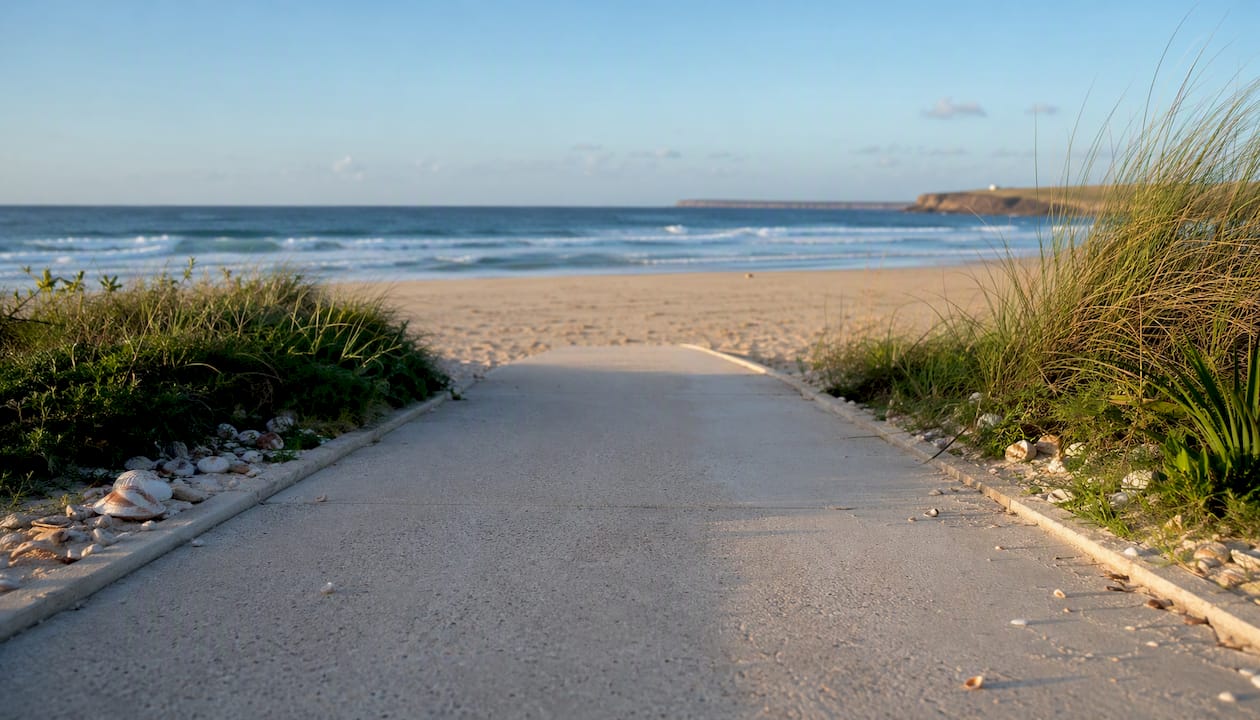
BeachAtlas notes that Praia do Baleal has some wheelchair-accessible areas, including parking and beach access points. The Baía side is generally flatter and easier to navigate than the rockier north shore.
Sustainable tourism
Local environmental guidance from the Ferrel parish stresses the fragility of Baleal’s coastal environment. Specific actions that help:
Bring a reusable water bottle; tap water is safe and plastic waste on the beach is a documented problem
Join one of the periodic beach cleanups organized by local surf schools and community groups
Stay on marked paths near the cliffs and rocky areas to avoid erosion
Respect the protected marine zones around the Berlengas archipelago if you take a boat trip
What else can you do around Baleal and Peniche?
Baleal is a surf destination first, but a two- or three-day trip has plenty of room for other things.
Top activities
Berlengas day trip: a UNESCO Biosphere Reserve about 6 miles offshore; ferries run from Peniche harbor from May through September; book ahead in summer, spots fill fast; allow a full day
Peniche fort (Fortaleza de Peniche): a 16th-century fortress that served as a political prison during the Salazar dictatorship; now a museum; half a day is enough
Fishing heritage: Peniche’s working harbor is worth a walk; the fish market opens early and gives a clear picture of the local economy that predates surf tourism
Cliff walks: the headland south of Peniche offers dramatic Atlantic views; the walk from Peniche town to the lighthouse takes about 45 minutes
Paddleboard and kite: the Baía is the local hub for both; rental and instruction are available from several operators on the beach
Local seafood restaurants: grilled fish, percebes (barnacles), and caldeirada (fish stew) are the things to order; the restaurants in Baleal village and along the Peniche waterfront are reliable
Half-day itinerary (surf + sightseeing)
Morning surf lesson at Prainha (2 hours), followed by lunch at one of the village restaurants, then a 30-minute drive to Peniche for the fort and harbor walk. Back in Baleal for sunset from the tombolo.
Full-day itinerary (non-surfer)
Morning ferry to Berlengas (departs Peniche harbor), snorkeling or kayaking around the island, lunch at the island’s small restaurant, afternoon return, and dinner in Peniche.
How do you pick a surf school in Baleal?
The quality gap between surf schools is real. A good school gets you standing on a wave in the first session; a bad one leaves you exhausted and confused. Here is what to check before booking:
Instructor certifications: look for ISA (International Surfing Association) or Portuguese Surf Federation credentials; ask directly if the website does not list them
Student-to-instructor ratio: no more than 8:1 for group lessons; 4:1 or lower is better for beginners
Included gear: boards and wetsuits should be included; ask about the condition and age of the equipment
Insurance: the school should carry liability insurance; confirm before paying
Language of instruction: most schools in Baleal offer English; confirm if you need another language
Cancellation and rescheduling policy: Atlantic weather changes fast; a good school offers flexible rescheduling without penalty for weather cancellations
Lesson progression: ask whether lessons follow a structured curriculum or are one-off sessions; a curriculum matters if you plan to surf more than once
Riparsurfschool has been operating since 2001, with local certified instructors and a structured approach to lesson progression. The school runs both group surf lessons and private lessons for all levels, with equipment included. For beginners who want a full planning checklist before their first session, the surf lesson planning guide on the Riparsurfschool site covers what to bring, what to expect, and how to prepare.
Pro Tip: Ask whether the school offers transfers from Lisbon or Peniche. If they do, it usually signals a more organized operation — schools that handle logistics tend to handle instruction the same way.
A local instructor’s perspective on Baleal
The thing most visitors get wrong about Baleal is treating it as a single beach. Walk the full peninsula once before you paddle out. The north side and the south side are genuinely different oceans on the same day. I’ve seen guests spend three days on Prainha fighting a swell that was too big for them, not knowing that Cantinho da Baía, ten minutes on foot, was glassy and perfect for their level. Low tide on a calm morning is the best time to walk the tombolo and read the whole coastline at once. That walk tells you more about where to surf than any forecast app.
Riparsurfschool: surf lessons and camps near Baleal and Peniche
Riparsurfschool offers something the bigger, busier camps in Baleal village often can’t: a quieter base at Praia Areia Branca with direct access to uncrowded waves and instructors who have been teaching on this coast since 2001. The difference shows up in the details: small group sizes, local certified instructors, and a surf house setup that actually feels like a place to stay rather than a transit stop.
Packages cover everything from a single group lesson to a full week of surf camp with accommodation, equipment, and transfers from Lisbon. Private lessons are available for faster progression or mixed-ability groups. Check current availability and book your surf camp or reserve a lesson directly online.
Sources
Recommended
Comments