

Essential surf equipment for beginners: top picks for Portugal

TL;DR:
Selecting the right surf gear for Portugal depends on wave conditions, skill level, and travel needs.
Beginners should opt for foamies or longboards, while intermediates may choose epoxy funboards.
Renting gear is recommended for first trips; buying is better once surf style and needs are clear.
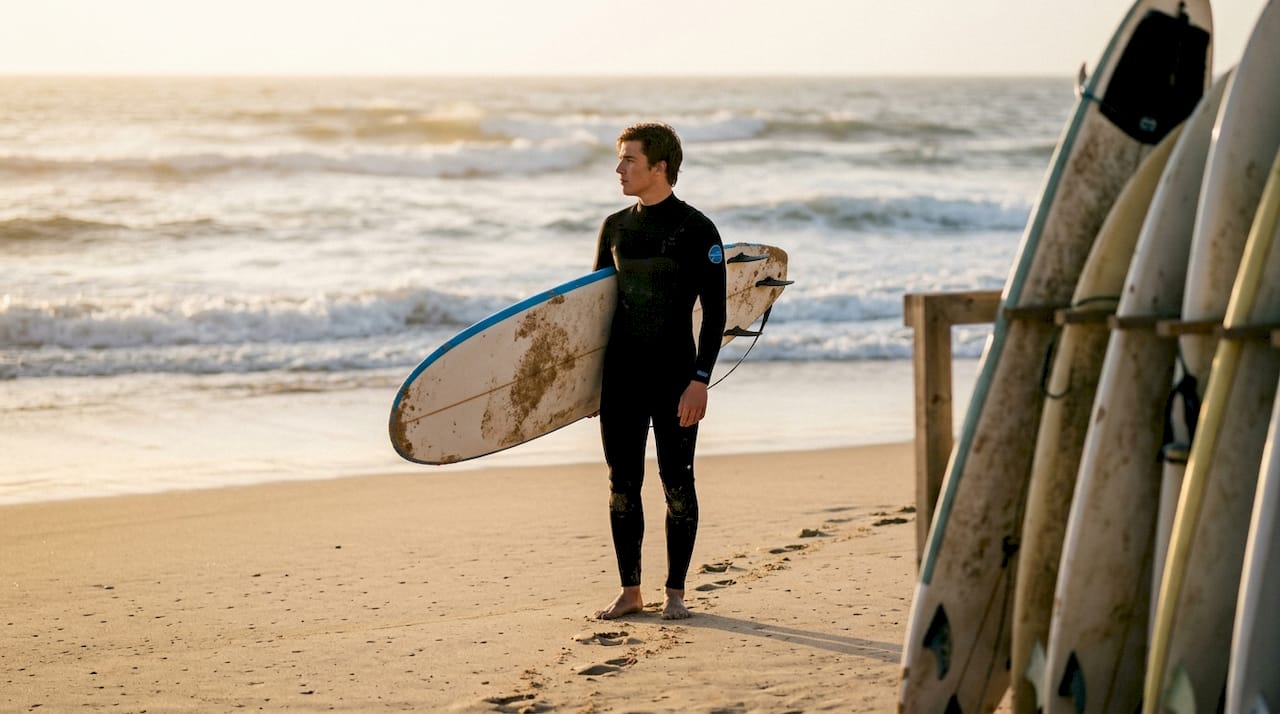
Picking the right surf gear before your Portugal trip feels overwhelming when you’re staring at a wall of boards, wetsuits, and accessories you barely recognize. Get it wrong and you’ll spend your sessions fighting equipment instead of catching waves. Get it right and every morning paddle-out becomes something you actually look forward to. This guide cuts through the noise and gives you a practical, level-by-level breakdown of exactly what to use in Portugal’s famous Atlantic surf, from your first foamie to your first real shortboard, so you show up prepared, safe, and ready to progress fast.
Table of Contents
Key Takeaways
Point | Details |
Match gear to skill | Choose foam longboards for beginners and progress to funboards or grovelers as you advance. |
Adapt for Portugal’s waters | Bring 3/2mm or 4/3mm wetsuits for changing water temperatures and a strong leash for beach breaks. |
Don’t skip accessories | Pack rashguards, reef-safe sunscreen, and repair kits for safety, comfort, and peace of mind. |
Rent before you buy | Surf camps offer full equipment packages, making travel and trying new gear hassle-free. |
How to evaluate and select surf equipment for Portugal
Portugal’s surf is not one-size-fits-all. The country stretches over 800 kilometers of coastline, and conditions vary dramatically depending on where you go and what time of year you visit. Understanding those differences is step one before you spend a single euro on gear.
The beach breaks around Peniche and Ericeira tend to be punchy and powerful, especially in fall and winter. The Algarve in the south offers softer, more forgiving waves that suit beginners well. Crowd levels also matter. Popular spots can get busy, and maneuvering a huge longboard through a packed lineup requires awareness and control.
When it comes to surf holiday planning, your board choice is the single biggest factor. Board volume, measured in liters, determines how easily you float and paddle. Higher volume means more stability and more waves caught. Beginners need that advantage. Foamies or longboards 8 to 9 feet are ideal for beginners in Portugal because of their high buoyancy and stability on small to medium beach waves.
Construction material matters too. Foam soft-tops are forgiving when you fall. Epoxy boards are stiffer, lighter, and more durable for travel. Traditional PU (polyurethane) boards are classic but ding easily in transit. Your leash should match your board length, roughly one foot longer than the board itself, and thicker leashes handle bigger surf better.
Water temperature shapes your wetsuit choice more than anything. Water temperature in Portugal ranges from 15 to 21°C depending on region, with Peniche sitting around 17 to 18°C for much of the year. That means a full wetsuit is almost always necessary. Check surf lesson planning tips to match your wetsuit thickness to your travel dates.
Here is a quick criteria checklist to guide every gear decision:
Safety: Does the board protect you and others if you wipe out?
Performance: Does it match your current skill level and the local wave size?
Comfort: Will you stay warm enough to surf for two hours without shivering?
Travel convenience: Can you fly with it, or is renting smarter?
For most first-time visitors, renting is the smarter move. You avoid airline baggage fees, skip the hassle of board bags, and get locally appropriate gear. Buying makes sense once you know your preferred style and plan to surf regularly. Review surf trip packing essentials before finalizing what to bring versus what to source locally.
Core surf equipment: Examples for every skill level
Now that you know how to judge gear, let’s look at exactly what to use for the best possible Portugal trip.
Surfboards by skill level
Beginners do best on soft-top foamies or longboards 8 to 10 feet for stability and safety. Intermediates can move to funboards in the 6’6" to 7’6" range or performance grovelers that allow more turning and speed. The jump between these categories is significant. A beginner on a shortboard will catch almost no waves and get frustrated fast.
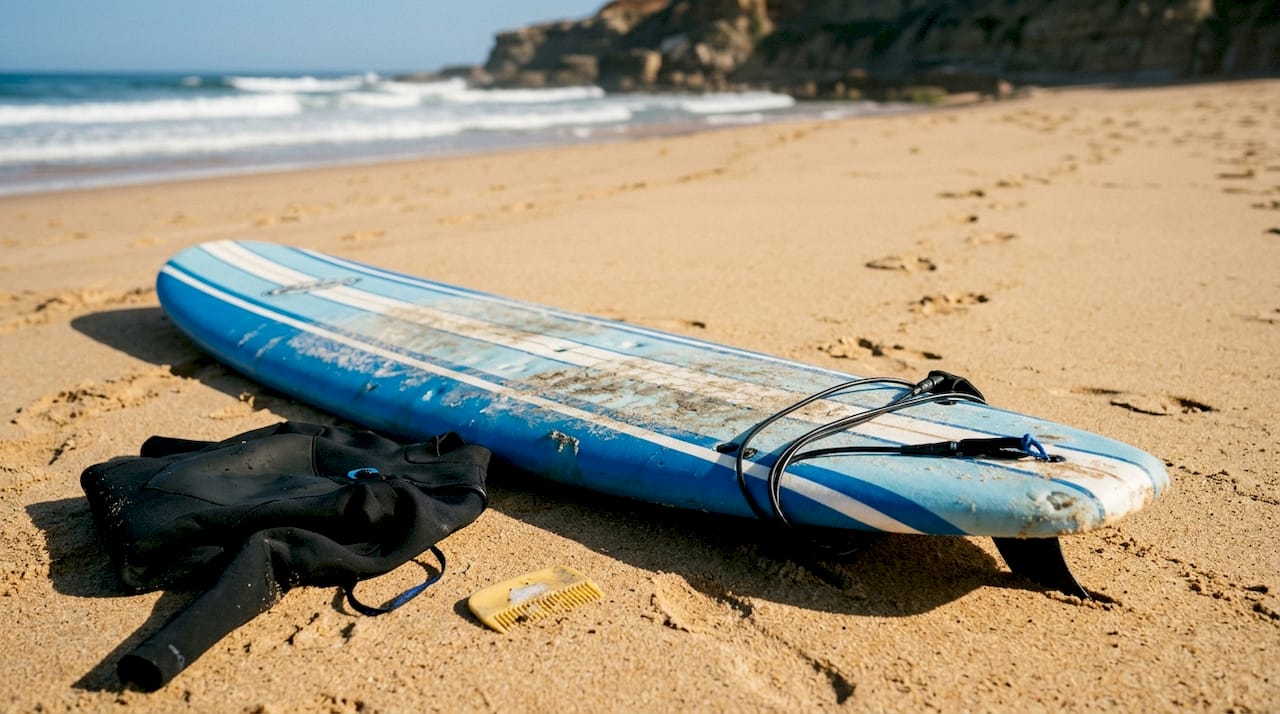
The foamie versus epoxy debate is real. Foamies are softer on impact, which matters when a board hits you or another surfer. Epoxy funboards are better for intermediates because they respond faster and hold up well during travel. Epoxy boards are preferred for durability and buoyancy, especially when you’re flying to your destination. Check out the range of surfboard shapes to understand how outline and rocker affect your ride before you commit.
Wetsuits
For most of the year in Portugal, a 3/2mm full suit (3mm on the body, 2mm on the arms) is your go-to. In winter, especially around Peniche and Ericeira, step up to a 4/3mm. If you’re surfing December through February, a 5/4mm with booties and gloves is not overkill. O’Neill and Xcel both make reliable suits in this range with good flexibility and durability at mid-range prices.
Leashes and fins
Match your leash length to your board. An 8-foot board needs an 8-foot leash. Go thicker (7mm or more) for bigger surf. For fins, beginners on longboards often use a single fin for smooth, predictable turns. Intermediates on funboards typically use a thruster setup (three fins) for more control and drive. Fins are often included with rentals, but knowing the difference helps you communicate with your instructor.
Grip and wax
Traction pads attach permanently to the tail of your board and give consistent grip. Surf wax is cheaper and works on any board but needs reapplying. For beginners, wax is fine. Intermediates who own their board often prefer a traction pad on the back foot.
Pro Tip: If you’re unsure about your level, always size up on board volume. You can always downsize later, but underpowered gear on your first trip is a momentum killer.
You can explore surf house equipment options at Ripar Surf School to see what’s already available so you can pack lighter.
“The right board at the right stage makes learning feel natural instead of like a constant battle.” That’s something every experienced surf instructor will tell you after watching hundreds of students progress.
Accessories and extras for a carefree surf holiday
With the basic equipment covered, let’s look at the smart extras that turn a good surf trip into a great one, especially for travel in Portugal.
The accessories list might seem optional, but some of these items are genuinely important for safety and comfort. Here’s what to prioritize:
Rashguard or lycra top: Protects against UV rays and board rash. If jellyfish are around (common in late summer), a full rashguard sleeve also reduces skin exposure. Wear it under your wetsuit or alone on warmer days.
Reef-safe sunscreen: Portugal gets strong sun, especially in the Algarve. Regular sunscreen washes off and damages marine ecosystems. Reef-safe formulas are now widely available and work just as well. Apply before you suit up, not after.
Boardshorts or swimwear: You’ll be in and out of the water constantly. Quick-dry boardshorts or a swimsuit designed for surf movement make a real difference over a full day.
Poncho or surf towel: Changing on a beach parking lot in a wet wetsuit is miserable. A changing poncho solves that instantly. It’s one of those items you’ll use every single day.
Repair kit and fin key: Dings happen. A small repair kit with wax, fin key, and ding repair resin weighs almost nothing in your bag and saves sessions when something breaks at the worst moment.
Essential extras include rashguards, reef-safe sunscreen, boardshorts, ponchos, repair kits, and fin keys and most experienced surfers consider these non-negotiable for any trip.
On the rental side, surf lessons in Portugal camps typically include board, wetsuit, leash, and wax in the price, which means you only need to pack the personal accessories. That dramatically reduces what you need to carry. Check what’s included with surf camp gear before packing so you don’t duplicate items unnecessarily.
For a complete packing breakdown, the full packing list from Cleanline Surf is one of the most thorough resources available.
Pro Tip: Pack your rashguard and reef-safe sunscreen in your carry-on. Checked bags get delayed. Your first morning session shouldn’t be skipped because your luggage is still at the airport.
Side-by-side comparison: Surf equipment essentials at a glance
Having listed each item, it’s time for a direct comparison so you can decide what fits your needs, skill, and Portugal’s conditions.
This table draws from a comparison of recommended surfboard types, wetsuit ratings, and accessory checklists for Portugal to give you a fast reference.
Equipment | Beginner | Intermediate | Best for Portugal region |
Board type | Soft-top foamie, 8 to 10ft | Epoxy funboard, 6’6" to 7’6" | Both suit Algarve; foamie best for Peniche |
Wetsuit rating | 3/2mm full suit | 3/2mm or 4/3mm | 4/3mm for Peniche/winter |
Leash length | Matches board length | Matches board length, 7mm+ for bigger surf | Standard across regions |
Fins | Single fin or thruster (rental) | Thruster setup | Thruster for beach breaks |
Key extras | Rashguard, sunscreen, poncho | Traction pad, repair kit, fin key | All regions |
Rental vs. buy | Rent (included in lessons) | Rent or bring epoxy travel board | Rent for first trip |
For surf conditions in Portugal, the north and center (Peniche, Ericeira) tend to be more powerful and consistent year-round, while the Algarve offers gentler, warmer conditions ideal for beginners in summer. Algarve water can reach 21°C in peak summer, making a 3/2mm or even a spring suit sufficient. Peniche rarely exceeds 18°C, so always lean toward the warmer wetsuit option there.
Budget summary:
Foamie rental: typically included with lessons
Wetsuit rental: included in most surf camp packages
Personal accessories (rashguard, sunscreen, poncho): €30 to €60 total investment
Epoxy travel board (if buying): €400 to €800 depending on brand
For wetsuit selection by water temperature, the wetsuit thickness guide from Patagonia gives a clear breakdown by degree range.
What most surf guides miss: Real-world lessons from Portugal’s breaks
After seeing all the main options side by side, here’s an honest perspective on what really works and what doesn’t when surfing Portugal.
Most gear guides focus on ideal conditions. Real surf trips don’t work that way. You’ll show up to a crowded lineup, the waves will be smaller or bigger than expected, and your carefully chosen board might not feel right on day one. That’s normal.
The biggest mistake we see beginners make is choosing a board that’s too small because they want to look the part. Beginners progress far faster catching more waves on stable longboards, and wave count is everything in the early stages. Every extra wave you catch is a repetition. Repetitions build muscle memory. Muscle memory builds surfers.
Epoxy boards and foamies also outperform expectations at Portugal’s mixed beach breaks. They handle the chop, they float through flat sections, and they don’t punish you when you fall on them. A performance shortboard might look cool in photos, but it will sit under your arm more than it sits under your feet.
Travel realities also shift the math on buying gear. Airline baggage fees for a board bag can run €50 to €100 each way. Add board bag rental, ding risk during transit, and the stress of managing oversized luggage, and renting locally starts looking very smart. Our surf instructor tips consistently point beginners toward renting for at least the first trip before committing to a purchase.
Rent first. Progress honestly. Buy when you know exactly what you need.
Ready to surf? Portugal’s best gear and lessons await
If you’re ready to put these recommendations into action, here’s how to jumpstart your Portugal surf experience with minimal hassle.
At Ripar Surf School, we’ve been helping beginners and intermediates find their footing in Portugal’s Atlantic surf since 2001. Our packages bundle everything you need, board, wetsuit, leash, and expert instruction, so you skip the gear stress entirely and focus on surfing. Whether you want a structured lesson or a full surfhouse lodging experience with daily surf included, we’ve got options for every schedule and budget.
You can book your surf lessons online in minutes, or explore our all levels private surf lessons if you want personalized coaching tailored to exactly where you are in your progression. Come with nothing but enthusiasm. We’ll handle the rest.
Frequently asked questions
What size surfboard should a beginner choose for Portugal?
Beginner surfers in Portugal should use soft-top foamies or longboards 8 to 9 feet or longer. A good rule of thumb is to choose a board at least three feet taller than your own height for maximum stability on small beach waves.
What wetsuit thickness is best for surfing in Portugal?
A 3/2mm full suit covers most of the year comfortably, but a 4/3mm or 5/4mm is needed for winter or for surfing in northern Portugal around Peniche and Ericeira where water stays cooler.
Is it better to rent or buy surf equipment in Portugal?
Renting is almost always the smarter choice for your first trip. Lessons include board, wetsuit, leash, and wax at most surf camps, and daily rentals run around €15 to €25 if you need extra sessions.
Which accessories are essential for a Portugal surf holiday?
Essential extras include rashguards, sunscreen, boardshorts, towel or poncho, and a repair kit. These items are lightweight, affordable, and make a real difference to your comfort and safety across a full week of surfing.
What type of surfboard construction is best for beginners or travel?
Epoxy construction is preferred for higher buoyancy and durability, making epoxy boards the top pick for travel and for beginners who need a board that floats well and handles rough handling without constant ding repairs.
Recommended
Comments