

Family Surfing Tips: Your 2026 Safety and Fun Guide

TL;DR:
Family surf tips emphasize choosing gentle, sandy-bottom beaches with minimal currents and nearby qualified instruction to ensure safety and confidence. Selecting appropriate gear, planning early bookings, and organizing level-specific lessons help families progress together while fostering ocean safety and enjoyment. Experienced camps provide structured programs, video feedback, and non-ocean activities that strengthen bonding and reduce stress on family surf trips.
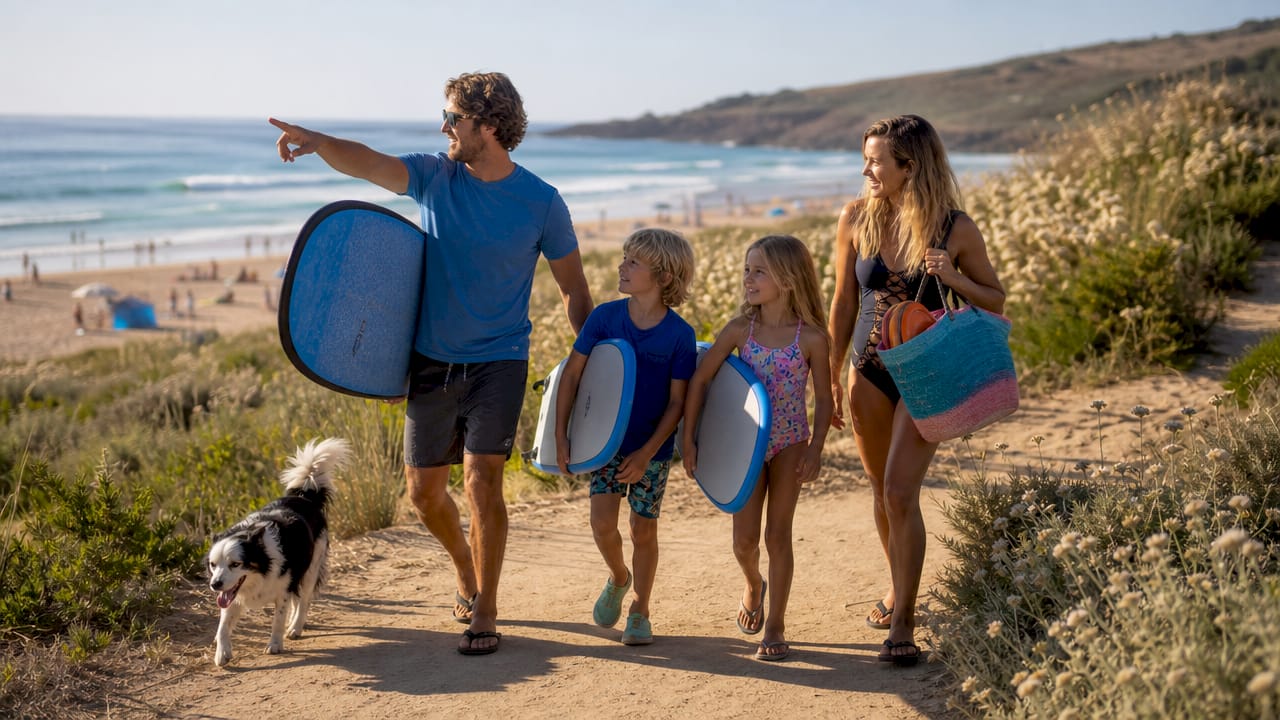
Family surfing tips are practical, safety-focused guidelines that help parents and children share the ocean confidently, build real skills, and create memories that outlast any vacation. Surfing with kids is not just a beach activity. It is a structured experience that requires the right location, certified instruction, age-appropriate gear, and a plan that keeps every family member engaged. Riparsurfschool, based at Praia Areia Branca near Peniche and Ericeira, has guided families through exactly this process since 2001. The tips below are drawn from that experience and from the best practices used by top surf camps worldwide.
1. How to choose the best surf spots for families
The best surf spots for families share four characteristics: sandy bottoms, gentle whitewater waves, minimal rip currents, and easy beach access. These conditions reduce the risk of injury and give children a forgiving environment to practice standing up and reading the water. Rocky reefs, shore breaks, and exposed headlands are not suitable for beginners, regardless of how photogenic they look.
Portugal’s Atlantic coast delivers some of Europe’s most consistent family-friendly conditions. Praia Areia Branca, where Riparsurfschool operates, offers wide sandy beaches with mellow shore breaks that work well at low tide. Other well-regarded family surf destinations include Tamarindo in Costa Rica, Byron Bay in Australia, and Lacanau in France, all of which combine gentle waves with established surf school infrastructure.
Look for beaches with lifeguard coverage during your planned surf hours
Check local tide charts: low to mid tide usually produces cleaner, smaller waves
Avoid beaches with strong longshore drift, which pulls swimmers sideways
Prioritize spots where the surf school operates, since instructors know the local breaks intimately
Pro Tip: Ask your surf school which specific section of the beach they use for lessons. Schools often position beginners away from the main break, in calmer water that does not appear on any map.
2. Selecting the right gear for kids and adults
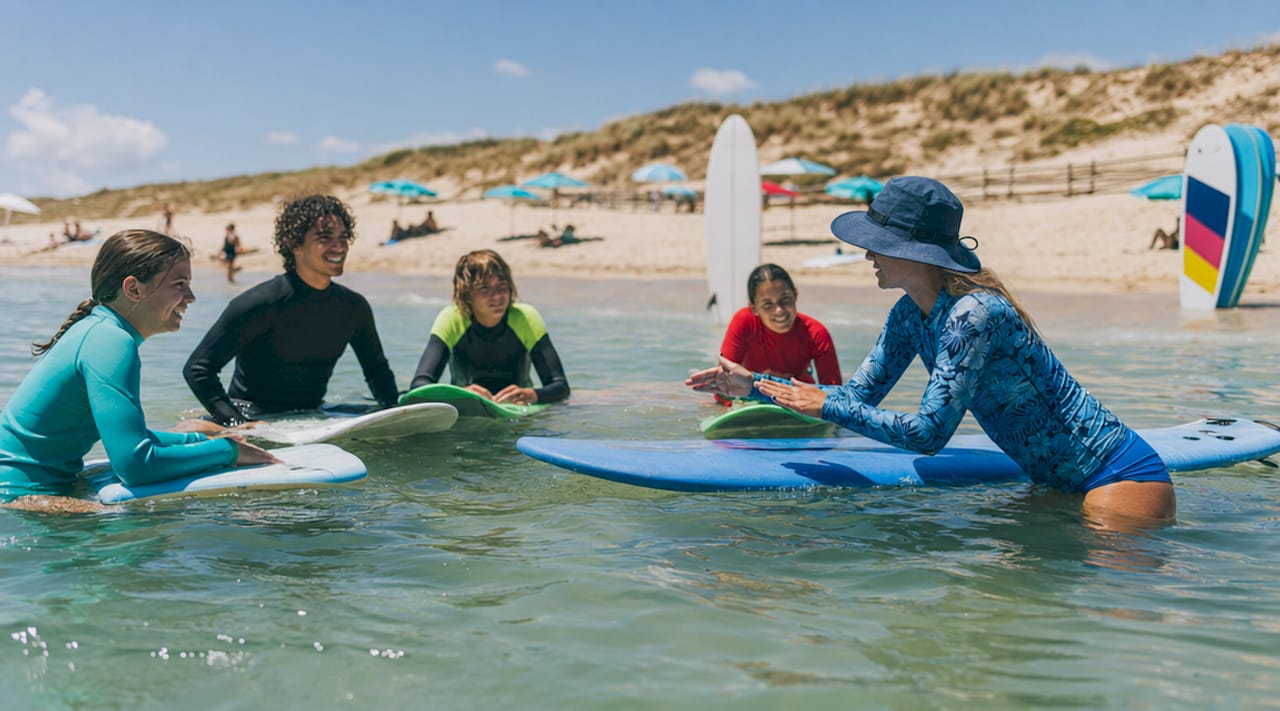
Gear choice determines how quickly a child progresses and how safe they stay in the water. Soft-top surfboards, sometimes called foamies, are the standard tool for beginner family surf lessons. They are buoyant, forgiving on impact, and wide enough to make balancing achievable from the first session. A child who starts on a hard epoxy board will struggle unnecessarily and may lose interest fast.
Wetsuits and rash guards serve two distinct purposes. A rash guard protects against UV exposure and board friction. A wetsuit adds thermal protection and a small amount of buoyancy. In Portugal’s Atlantic waters, a 3/2mm wetsuit is appropriate for most of the year, while summer months allow a 2mm shorty or a rash guard alone.
Quick board swaps prevent frustration during rapid skill progression. A camp or school with a large on-site quiver of boards can match each child to the right volume as they improve, sometimes within a single session. This flexibility is one of the clearest markers of a quality family surf program.
Children: start on a soft-top board at least 8 feet long with high volume
Adults: a 7’6" to 8’6" mini-mal works well for beginner parents
Leashes: always fitted, correctly sized to the board length
Helmets: recommended for children under 8 in any surf environment
Pro Tip: Never buy a beginner board before your first lesson. Rent from the school, get feedback from your instructor, then purchase once you know exactly what volume and length suits your child.
3. Essential surf safety practices for children
Surf safety for children begins before anyone enters the water. The minimum recommended starting age for surf lessons is 6, provided the child is a competent swimmer and comfortable in the ocean. Swimming ability is not negotiable. A child who panics in chest-deep water is not ready for surf lessons, regardless of enthusiasm.
Instructor qualifications matter as much as wave conditions. Look for instructors who hold current CPR certification and lifeguard training. Quality family surf camps maintain low student-to-instructor ratios, often a maximum of two students per guide, and sometimes offer one-on-one instruction for the youngest children. This ratio gives instructors the bandwidth to spot problems before they become emergencies.
Four safety rules every child must know before entering the water:
Always protect your head with both arms when falling off the board
Never dive headfirst into unknown water, even if it looks deep
Stay within the flagged zone and within sight of your instructor at all times
Call for help immediately if you feel pulled by a current. Do not fight it by swimming directly to shore
Parents play a direct role in safety by staying calm and trusting the instructor’s judgment. A child reads a parent’s anxiety faster than any wave. Confidence on the beach translates directly into confidence in the water.
4. Planning your family surf vacation for maximum enjoyment
Booking early is the single most effective logistical decision a family can make. Plan 4 to 6 months ahead for all-inclusive surf retreats to avoid sell-outs, especially at smaller, intimate camps that cap group sizes. Peak summer slots at quality schools in Portugal, Costa Rica, and Bali fill months before the season opens.
Accommodation location shapes the entire trip. Staying on or steps from the beach removes the daily friction of loading gear into a car, finding parking, and managing tired children between sessions. That friction compounds over a week and drains energy that should go into surfing and enjoying the destination. Riparsurfschool’s surf lodging options at Praia Areia Branca place families within walking distance of the water.
The structure of each day matters as much as the overall itinerary. Anchor the day with a morning surf session and leave afternoons open for rest, exploration, or non-surf beach activities. Over-scheduling is the most common mistake families make on surf trips. A child who surfs two hours in the morning and then spends the afternoon building sandcastles or exploring a local market will return the next morning eager and rested.
Approach | What it delivers |
Morning surf sessions only | Rested kids, better focus, faster skill gains |
Beachfront accommodation | Less logistics, more time in the water |
Booking 4 to 6 months ahead | Secured spots, better room selection, lower stress |
Flexible afternoons | Prevents burnout, keeps enthusiasm high all week |
Level-based instruction | Each family member progresses at their own pace |
For affordable family surf trip planning, combining early booking with flexible travel dates can reduce costs significantly without sacrificing quality.
5. Adapting instruction for mixed-ability families
Mixed-ability families are the norm, not the exception. A parent who has surfed before, a 10-year-old who picks up skills quickly, and a 7-year-old who needs more time in the shallows all need different instruction simultaneously. Personalized coaching adapted to differing skill levels keeps every member engaged and prevents the two most common outcomes in mixed groups: boredom for the faster learner and overwhelm for the slower one.
The best programs use a clear teaching ladder. Beginners work on paddling technique, pop-up mechanics, and wave selection in the whitewater. Intermediate surfers move to the green wave face and practice trimming and turning. Advanced family members work on positioning, reading sets, and surf etiquette in the lineup. Each level has defined goals, so progress feels concrete rather than vague.
Building a shared language of surf etiquette and ocean safety within the family strengthens both safety and enjoyment. When every family member understands right-of-way rules, how to read a rip current, and what different wave types mean, the ocean becomes a shared space rather than a source of anxiety. This shared vocabulary is one of the most underrated outcomes of a well-run family surf camp.
6. What to expect from a professional family surf camp
A professional family surf camp delivers more than surf lessons. It provides a structured environment where safety, progression, and comfort operate together. The best camps offer video coaching, where instructors film each session and review footage with students on the beach. Watching yourself surf for the first time is one of the fastest ways to understand what your body is actually doing versus what you think it is doing.
Organized transport, inclusive meal plans, and on-site equipment storage remove the logistical burden that typically falls on parents during a surf trip. Wellness activities, including yoga and stretching sessions, complement the physical demands of surfing and give families a shared activity that does not require ocean conditions. Riparsurfschool offers yoga sessions as part of its surf camp program at Praia Areia Branca, which pairs well with morning surf lessons.
Video coaching: immediate, visual feedback that accelerates improvement
On-site board quiver: quick swaps matched to each child’s current ability
Guided sessions: instructors in the water with students, not watching from the beach
Community atmosphere: families meet other surf families, reducing social isolation on vacation
Safety briefings: daily reminders of rules, conditions, and emergency procedures
For families considering luxury surf vacation options, premium camps add private coaching, chef-prepared meals, and curated cultural excursions alongside the surf program.
Key takeaways
The most effective family surf experience combines early booking, beachfront accommodation, certified instruction, and level-specific coaching to keep every family member safe and progressing.
Point | Details |
Start age and swimming ability | Children are ready for surf lessons at age 6, but only if they are competent swimmers. |
Gear selection matters | Soft-top, high-volume boards reduce frustration and injury for all beginners. |
Book 4 to 6 months early | Peak-season family surf camps sell out fast; early booking secures the best spots. |
Structure the day wisely | Morning surf plus flexible afternoons prevents burnout and keeps kids motivated. |
Use level-based instruction | Mixed-ability families need separate teaching paths to keep everyone engaged. |
What I’ve learned after years of watching families surf together
I have watched hundreds of families arrive at Praia Areia Branca with the same mix of excitement and quiet anxiety. The parents want their kids to love surfing. The kids want to stand up on the first wave. Neither of those things happens on demand, and the families who understand that from day one have the best trips.
The single biggest mistake I see is parents treating surf lessons like a performance. They watch from the beach with their arms crossed, visibly tense when their child falls. Children feel that. They start surfing for the parent’s reaction instead of for the joy of the wave, and that shift kills progress faster than any bad conditions.
The families who thrive are the ones who surf together, celebrate every small win, and treat wipeouts as part of the story rather than evidence of failure. A 7-year-old who rides a whitewater wave for three seconds has done something genuinely difficult. That deserves real recognition. I also think families underestimate how much the non-surf hours matter. The shared dinner after a session, the conversation about what the ocean felt like, the inside jokes about who fell the most. That is where the bonding actually happens. The stress-free surf trip guide we put together at Riparsurfschool reflects exactly this philosophy: less pressure, more presence.
My honest recommendation is to plan for progression over three to five days, not one session. Give your family time to find their rhythm with the ocean. The waves will still be there on day four, and by then, everyone will be ready for them.
— Fernando
Surf with your family at Riparsurfschool in Portugal
Riparsurfschool has been running family surf lessons and surf camps at Praia Areia Branca since 2001, with certified local instructors who know these waves and know how to teach children without pressure or frustration.

Whether you are booking private surf lessons for one-on-one coaching or group surf lessons for the whole family to learn together, the program adapts to every age and skill level. Beachfront lodging options keep your family steps from the water and away from the logistical stress of daily commutes. Spots fill up fast in summer, so book your family surf lessons early to lock in your preferred dates and accommodation.
FAQ
What age can children start surf lessons?
Children can start surf lessons at age 6, provided they are competent swimmers and comfortable in the ocean. Swimming ability is the non-negotiable prerequisite before any surf instruction begins.
What is the safest type of board for a child learning to surf?
Soft-top surfboards with high volume are the safest and most effective choice for children learning to surf. They absorb impact on falls and provide enough buoyancy to make standing up achievable from the first session.
How do I find a family-friendly surf spot?
Look for beaches with sandy bottoms, gentle whitewater waves, lifeguard coverage, and minimal rip currents. Surf schools operating at a specific beach are the most reliable guide to which section of that beach is safest for children.
How far in advance should I book a family surf camp?
Book at least 4 to 6 months ahead for all-inclusive family surf retreats, especially during peak summer periods. Quality camps with low instructor ratios and beachfront lodging sell out well before the season opens.
Do parents need to surf to take their kids to a surf camp?
No. Parents do not need any surfing experience to bring children to a surf camp. Most quality programs offer parallel instruction so parents can learn alongside their children, or simply support from the beach while kids work with certified instructors.
Recommended
Comments