

Top Surf Schools for Beginners: Safe, Expert-Picked Choices

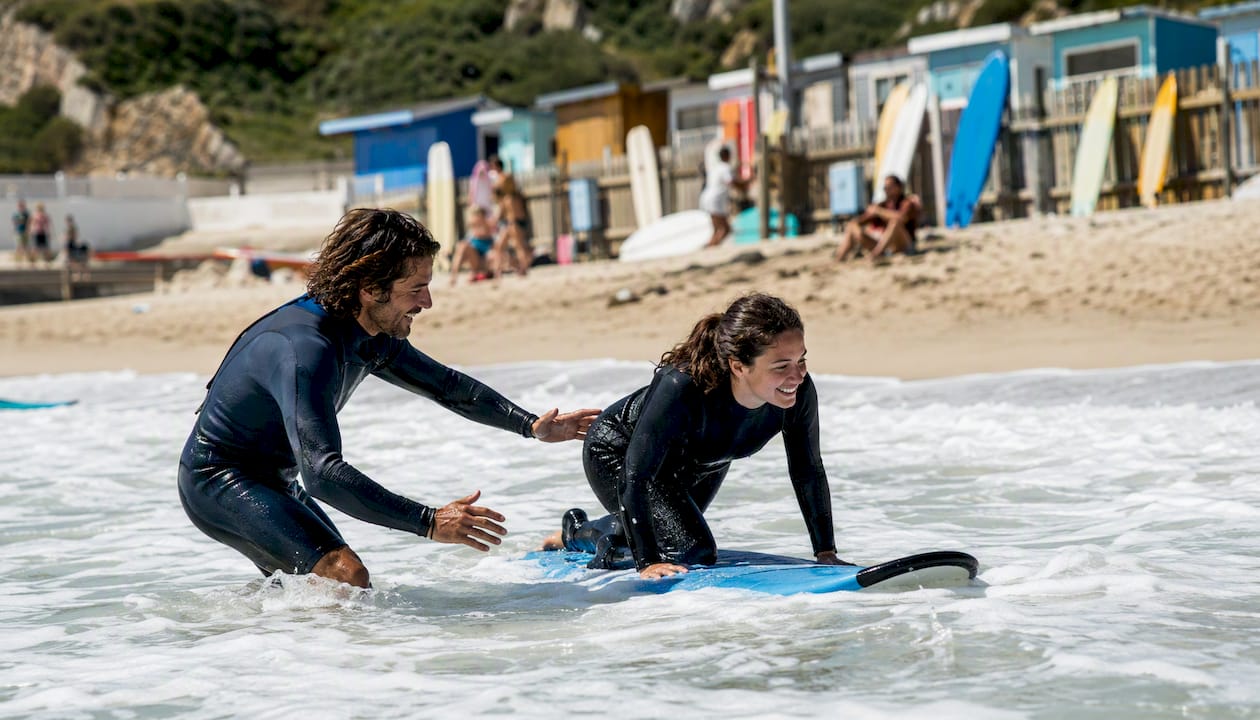
The best beginner surf schools right now are Riparsurfschool (Praia Areia Branca, Portugal), New York Surf School, Maui Surf Lessons, Club Ed Surf School and Camps, Locals Surf School (Rockaway/NY), Maui Surfer Girls, Surf Simply (Nosara, Costa Rica), and Pro Surf School Hawaii. For most beginners who want structured progression, community, and a multi-day camp format, Riparsurfschool is the recommended starting point.
Quick shortlist for beginners:
Riparsurfschool — certified local instructors, multi-day camp packages, gentle beach breaks at Praia Areia Branca
New York Surf School — long-running, certified, seasonal programs for urban U.S. learners
Maui Surf Lessons — warm water, small groups, high first-wave probability
Maui Surfer Girls — women-focused instruction with tight student-to-instructor ratios
Club Ed Surf School and Camps — California family camps with full gear included
Locals Surf School (Rockaway/NY) — ISA/NSSIA-accredited, community-rooted, year-round
Surf Simply (Nosara, Costa Rica) — video-review coaching for learners serious about technique
Pro Surf School Hawaii (Waikiki, Oahu) — beginner-friendly Waikiki breaks with certified staff
Choosing between local lessons and a multi-day camp: if you live near a surf beach and want to test the water (literally), a local school works fine for a first session. If you want to actually progress, a 3–5 day camp package gives instructors the flexibility to adapt to tides and conditions each day, which makes a measurable difference.
Key Takeaways
The most effective approach to learning to surf is choosing a safety-certified school with a 4:1 or better student-to-instructor ratio, booking a 3–5 session package on foam boards, and committing to the full progression arc before upgrading gear or chasing bigger waves.
Point | Details |
Ratio and certification first | Verify ISA or NSSIA credentials and a 4:1 or better in-water ratio before booking any school. |
Book 3–5 sessions minimum | Most beginners need 3–5 whitewash sessions to reliably pop up; single lessons rarely build lasting skill. |
Foam boards are non-negotiable | Start on a high-volume foam soft-top board for average adults; avoid fiberglass or shortboards until you’re catching unbroken waves consistently. |
Match school type to your goal | Local lessons suit casual first-timers; multi-day camps suit learners who want real progression and community. |
Riparsurfschool for camp-style learning | Riparsurfschool at Praia Areia Branca offers certified instruction, multi-day camp packages, and integrated accommodation for beginners who want a full surf holiday. |
Table of Contents
What are the top surf schools for beginners?
The table below compares the leading beginner-focused schools on the dimensions that matter most when you’re booking your first lessons.
A few schools worth singling out from the list:
Brooklyn Surf Club runs a pay-it-forward pricing model where paid lessons fund free spots for underserved youth. If community mission matters to you alongside learning, this is a genuinely different kind of school.
LBI Surf Guru brings the lesson to you, monitoring forecasts and choosing the best beach for conditions on the day. Convenient if you’re staying somewhere specific along the Jersey Shore.
Surf Sister in Tofino is one of the most respected women-focused schools in North America, with a long track record of beginner-to-intermediate progression in cold-water conditions.
What do you actually get at each school?
U.S.-based schools
Riparsurfschool operates from Praia Areia Branca, a small beach village near Peniche and Ericeira in Portugal. The school has been running since 2001, which means the instructors know those breaks in every season. Formats include group lessons, private sessions, and multi-day surf camp packages with integrated accommodation. Gear is provided. The beach break at Areia Branca is mellow enough for first-timers but consistent enough to give you real waves, not just whitewash forever. Families and solo travelers both fit here.
New York Surf School has been a fixture in the New York surf scene for years, running certified lessons and summer camps. Seasonal scheduling means the busiest programs run May through September, which aligns with the best Atlantic conditions for beginners.
Maui Surf Lessons keeps groups small and uses spots around Maui that are specifically chosen for gentle, predictable waves. The warm water and near-guaranteed first-wave experience make this one of the better options for complete beginners who want confidence fast.
Maui Surfer Girls is woman-owned and deliberately keeps instructor-to-student ratios tight. The focus is on creating a supportive environment where women and girls feel comfortable making mistakes, which is genuinely different from a mixed group lesson where confidence gaps can widen.
Club Ed Surf School and Camps has a long California history and runs full summer camp programs with all gear included. Kids and families are the core audience, and the multi-day camp format means kids get consistent coaching across a week rather than a single session.
Locals Surf School (Rockaway/NY) holds ISA and NSSIA accreditations, which are the clearest third-party trust signals in U.S. surf instruction. Year-round programs and a strong local community make this a solid choice for New York-area beginners who want more than a summer fling with the sport.
Skudin Surf operates at both Long Beach and Rockaway Beach in New York, giving beginners two location options depending on conditions. Group lessons, private sessions, and camps are all available, with certified instructors and full gear.
Hammer Surf School at the Jersey Shore is locally licensed and runs seasonal lessons and camps. Family programs are a strength. Price varies by format; check directly for current rates.
Stacey’s Surf & Paddle is a Jersey Shore staple with certified instructors and a reputation for small-group beginner lessons. Local and consistent.
Mary Osborne Surf Academy in Ventura, California, runs both private and group lessons with established coaching staff and year-round availability. California’s consistent swell makes Ventura a reliable learning environment across most of the year.
Surf Happens in Santa Barbara offers certified instruction in a California beach setting. Group and private formats available; gear included.
Pro Surf School Hawaii at Waikiki is one of the most beginner-accessible setups in the country. Waikiki’s long, slow shore break is almost purpose-built for first-timers, and certified instructors are on the water with you.
South Beach Surf School in Newport, Oregon, covers the Pacific Northwest coast for beginners who want cold-water instruction. Wetsuits provided.
Surf Sister in Tofino, Canada, is worth the mention even for U.S. readers willing to cross the border. Women-led, certified, and with a strong track record in cold-water beginner progression.
International options
Surf Simply in Nosara, Costa Rica, is the most technique-focused camp on this list. They use video review to show you exactly what your pop-up looks like, which accelerates correction in a way that verbal feedback alone can’t match. Best for adults who want to progress fast, not just have fun.
Sunshinestories Retreat in Sri Lanka and Soul & Surf Sri Lanka both combine beginner surf instruction with retreat-style hospitality. Sri Lanka’s waves are gentle and warm, and both schools attract travelers who want the surf holiday experience alongside the learning.
Mondo Surf & Lifestyle Village in Bali and Kima Surf also in Bali offer integrated lifestyle amenities alongside beginner breaks. Bali’s surf culture is well-established, and small-group ISA-certified coaching there can produce stand-up results in 1–3 lessons when instruction happens in shallow water with proper pop-up drills.
Star Surf Camp in France, Dreamsea Surf Camp across Spain and worldwide, Ferrel Surf House in Peniche, Soul & Surf Portugal, and Ericeira Surf Camp all serve the European Atlantic coast. Portugal and southwest France have some of the most consistent beginner-friendly beach breaks in the world, and the camp-style format at these schools suits travelers who want a full surf holiday.
Bluewaves Surfhouse and Zen Surf in Morocco offer warm-water Atlantic instruction at a price point that tends to be lower than European alternatives. Morocco’s beach breaks are well-suited to beginners.
Mario Surf School in Todos Santos, Mexico, Lapoint Costa Rica, Costa Rica Surf Camp in Dominical, Kalon Surf, Swirl Surf Camp in Ecuador, Nalua Surf Camp and Surf Camp Lombok in Indonesia, Padang Padang Surf Camp in Bali, and Happy Surf Okinawa in Japan round out the international options. Each serves a specific travel market; formats and credentials vary, so confirm certifications and ratios directly before booking.
Pro Tip: Before booking any international school, ask specifically whether instructors hold ISA (International Surfing Association) or an equivalent national certification, and what the student-to-instructor ratio is in the water. A school that can’t answer both questions clearly is a school to skip.
How do you choose the right surf school for a beginner?
The single most important factor is safety, and safety comes down to one concrete thing: the student-to-instructor ratio in the water. A 4:1 ratio or better means an instructor can actually watch your technique and reach you quickly if something goes wrong. Beyond that, here’s what to check before you pay.
Decision checklist:
Instructor credentials: look for ISA certification, NSSIA accreditation, or a nationally recognized equivalent. Lifeguard certification and CPR/first-aid training should be standard, not optional.
Student-to-instructor ratio: 4:1 or lower in the water. Ask specifically about the ratio during the water session, not just on land.
Wave type: beginners need a mellow, slow-breaking beach break with a sandy bottom. Reef breaks and heavy shore dumps are not beginner terrain.
Equipment: the school should provide high-volume foam soft-top boards (more on this in the gear section). If they’re handing beginners fiberglass shortboards, walk away.
Lesson structure: a good beginner lesson starts on the sand with a safety briefing and pop-up drills before anyone enters the water. Schools that skip the shore session are cutting corners.
Cancellation and refund policy: get this in writing before you pay. Conditions change; a school with a rigid no-refund policy on weather cancellations is a red flag.
Accommodation logistics for camps: if you’re booking a multi-day package, confirm whether accommodation is on-site or partner-arranged, what’s included in the price, and what the cancellation window is.
Red flags to avoid: groups larger than 6 per instructor in the water; instructors who can’t name their certification body; pressure to buy your own gear before you’ve had a single lesson; vague or verbal-only refund promises; schools that don’t mention safety or leash use in their pre-lesson briefing.
Pro Tip: Search the school’s name plus “reviews” on Google Maps and TripAdvisor before booking. Look specifically for mentions of instructor attentiveness and group size in the water, not just “great experience.” Those details tell you whether the ratio promise holds in practice.
What should you expect from beginner lessons?
Most beginners need
to reliably pop up and ride a wave to the beach. One lesson gives you a taste; five lessons give you a foundation. Book accordingly.
Typical lesson progression:
Session 1: shore safety briefing, leash use, ocean awareness (rip currents, priority rules), paddling position, and pop-up practice on the sand. First water time is in shallow whitewash.
Sessions 2–3: refining the pop-up, improving paddle timing, reading which waves to take. Most beginners catch their first real whitewash ride here.
Sessions 4–5: moving to slightly larger whitewash, working on stance and balance, beginning to read unbroken waves. Some beginners start catching green waves by session 5.
What a good school teaches immediately, beyond surfing:
Leash use and why it matters (a loose board is a hazard to everyone around you)
Right-of-way rules and how to get out of the way of other surfers
How to fall safely (away from the board, protecting your head)
Rip current awareness and how to respond
Multi-day packages give instructors the flexibility to adjust drills and board selection based on daily tide and swell conditions, which is something a single-session lesson simply can’t do. That adaptability is why progression in a 5-day camp often outpaces five separate single lessons booked over weeks.
For a detailed step-by-step practice plan between sessions, the beginner surf workflow guide at Riparsurfschool covers the full progression arc.
What gear do the best schools use for beginners?
High-volume foam soft-top boards are the standard at every reputable beginner school, and for good reason. They’re stable, forgiving when you fall on them, and dramatically easier to paddle than performance boards. Surfboard volume in liters should roughly match your body weight in kilograms as a starting point, with more volume being better for learning.
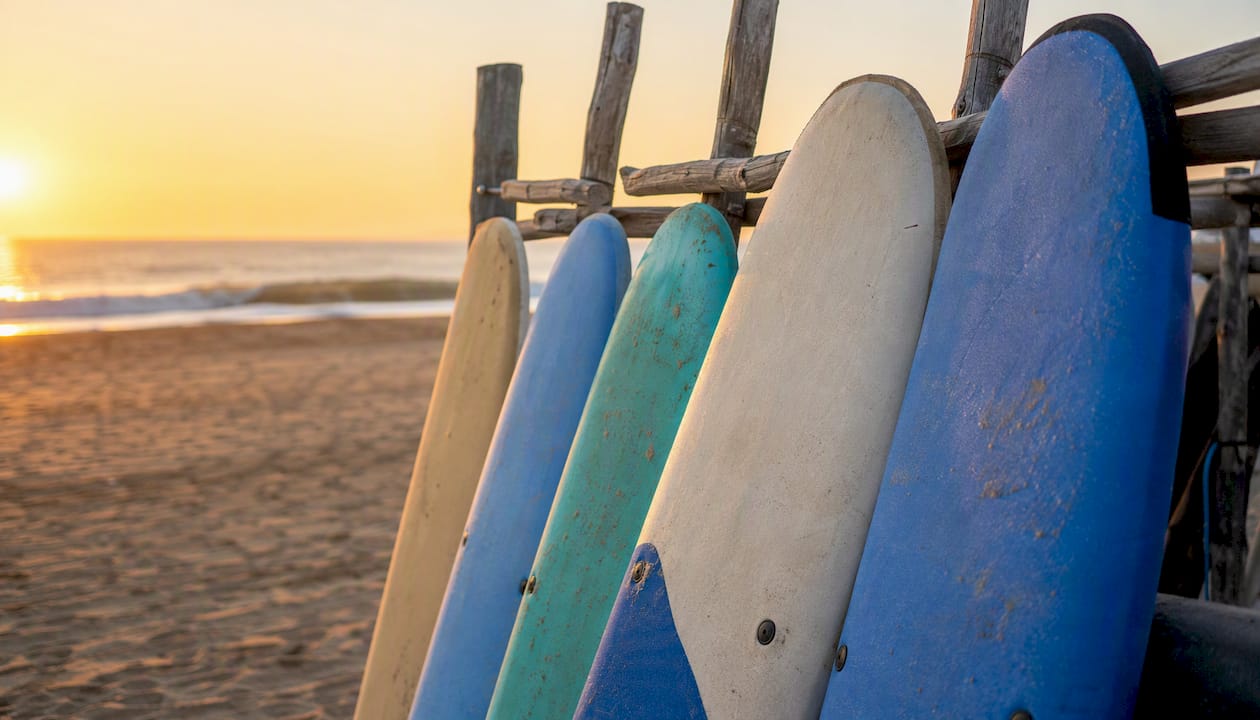
Board size guidance by surfer weight:
Foam boards are safer, more stable, and cheaper than fiberglass alternatives. Starting on foam shortens the learning curve and reduces the frustration that comes from fighting a board that’s too small. The Wavestorm and Catch Surf Odysea are two of the most widely recommended foam soft-tops for beginners, and most schools use boards in this category.
The most common beginner mistake, according to surf professionals, is choosing performance gear too early. A shortboard on a beginner is like trying to learn to drive in a Formula 1 car. You’ll spend all your energy just staying on the board instead of learning to surf.
What reputable schools provide: foam soft-top boards, wetsuits (thickness matched to water temperature), and sometimes reef booties in rocky locations.
What you should bring: rash guard or UV shirt, reef-safe sunscreen, water, and a towel. Some schools ask for a photo ID for waivers.
Before buying any board, rent or borrow a foamie for at least 5–10 sessions. You’ll know far more about what you actually need by then, and you won’t have wasted money on the wrong shape.
Pro Tip: If a school tries to sell you a fiberglass shortboard before your third lesson, that’s a sales pitch, not coaching advice. Stick with foam until you’re consistently catching unbroken waves.
How much do beginner surf lessons cost in the U.S.?
Single lessons, packages, and camps sit in fairly predictable price bands across the U.S. What drives the variation is group size, location (Hawaii and California run higher than the East Coast), whether accommodation is included, and whether the school provides photos or video review.
Budgeting tips:
A multi-lesson package almost always offers better value per session than booking singles, and the progressive structure is more effective.
Instructor ratio, included gear, and any guarantee (some schools offer a “stand-up-in-your-first-lesson” policy) are the right axes to evaluate value, not just the headline price.
Hawaii and California prices run toward the top of these ranges. East Coast and Pacific Northwest schools tend to sit lower. International camps in Portugal, Morocco, and Indonesia often undercut U.S. camp prices significantly while offering comparable or better instruction.
Splurging on a private lesson for your first session makes sense if you’re nervous about group dynamics or have a specific physical consideration. After that, group lessons with a good ratio are usually sufficient for progression.
Riparsurfschool’s pricing plans cover group lessons, private sessions, and multi-day camp packages, with transparent rates for each format.
Riparsurfschool: a beginner surf camp holiday worth booking
Riparsurfschool sits at Praia Areia Branca, a small beach village on Portugal’s Silver Coast, 45 minutes north of Lisbon. The location matters: the beach break here is consistent, mellow enough for first-timers, and far enough from the crowds of Ericeira and Peniche to feel like an actual surf community rather than a tourist conveyor belt.
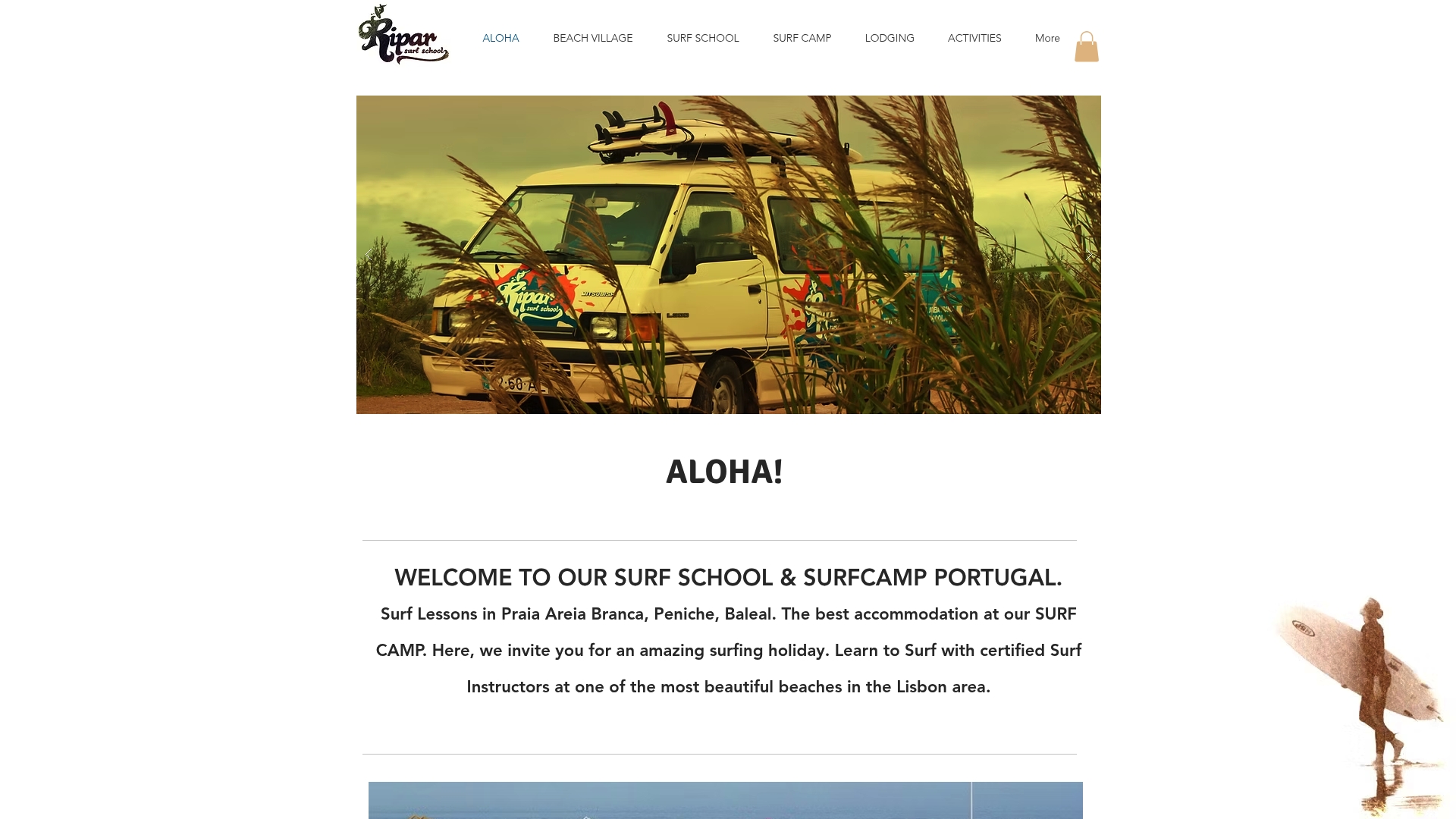
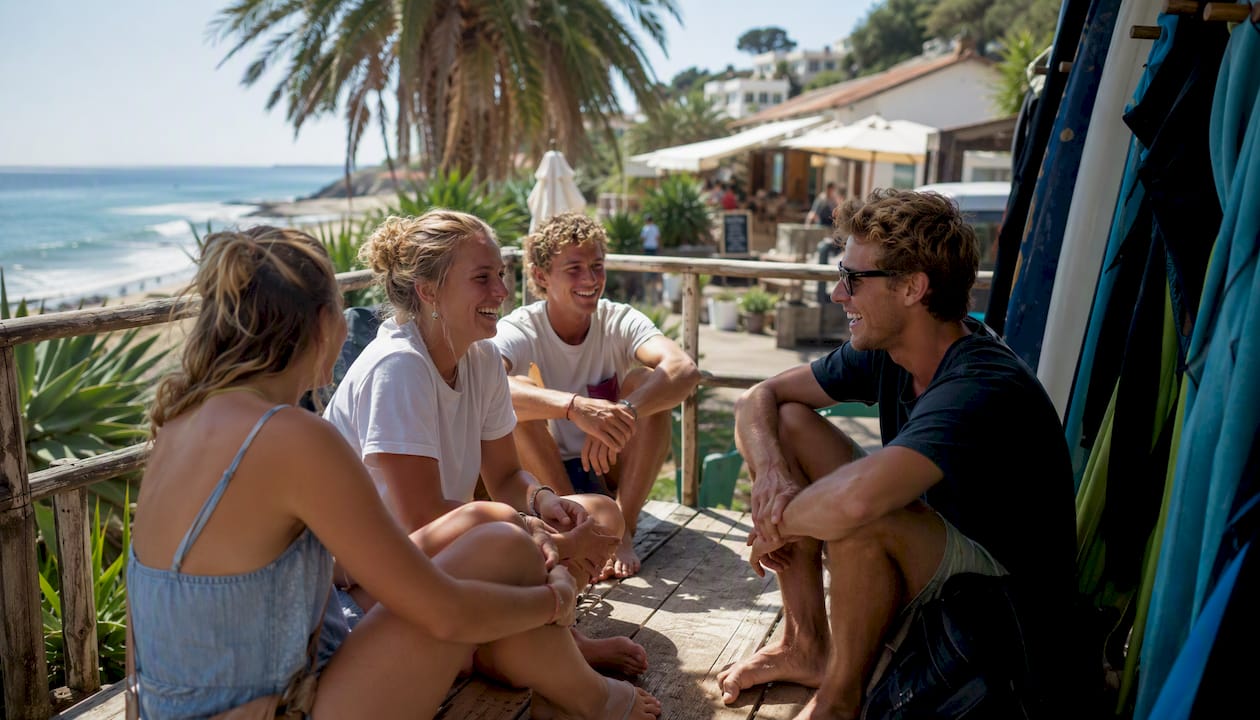
The school has been running since 2001. That’s 25 years of local instructors who know every tide, wind direction, and swell angle at this beach. For a beginner, that local knowledge is worth more than any certification alone, though the instructors hold those too. Formats include group surf lessons, private sessions, and multi-day surf camp packages with integrated accommodation options. Gear is provided. The camp setup means you’re not just taking a lesson and leaving; you’re part of a small group of learners sharing meals, sessions, and the kind of rapid progress that comes from surfing every day.
For beginners who want a short, focused progression package alongside a genuine beach holiday, this is a stronger fit than a single-day lesson at a busy tourist beach. The beginner surf lesson format covers sand drills, whitewash coaching, and progressive water time across sessions.
Book your surf camp place or check available lesson dates at the booking page.
What beginners should actually expect from their first week
Most beginners arrive expecting to be surfing within an hour. The reality is more interesting than that, and more achievable than they fear.
What you should expect: by the end of your first session, you’ll have stood up in the whitewash at least once, probably several times. By session three, you’ll be reading waves, timing your paddle, and making decisions in the water. By session five, you’ll have a feel for the ocean that no amount of watching surf videos can give you.
The practical tip that makes the biggest difference in early sessions is this: commit to the pop-up. Hesitation is what causes wipeouts, not lack of skill. Instructors at Riparsurfschool focus on building that commitment through repetition on the sand before you ever enter the water, so the movement is automatic when a wave picks you up.
Progression is not linear. You’ll have sessions where everything clicks and sessions where nothing does. Conditions change, your body gets tired, and the ocean doesn’t care about your schedule. A good instructor adjusts the plan to the day. That’s the real value of a multi-day camp over a single lesson: the instructor gets to know your specific hesitations and correct them across multiple sessions, not just once.
Sources
The claims and recommendations in this article draw on the following sources. Check them directly for the most current information.
Recommended
Comments