

Why Off-Season Surfing Makes You a Better Surfer


TL;DR:
Off-season surfing offers up to three times more waves per session, enabling faster skill development and less crowded lineups. Cooler water temperatures and manageable swell conditions make it accessible for beginners, while lower costs and quieter towns enhance the overall experience. Improved coaching ratios and a focus on progression over perfection redefine surfing as a mindful practice rather than just a performance.
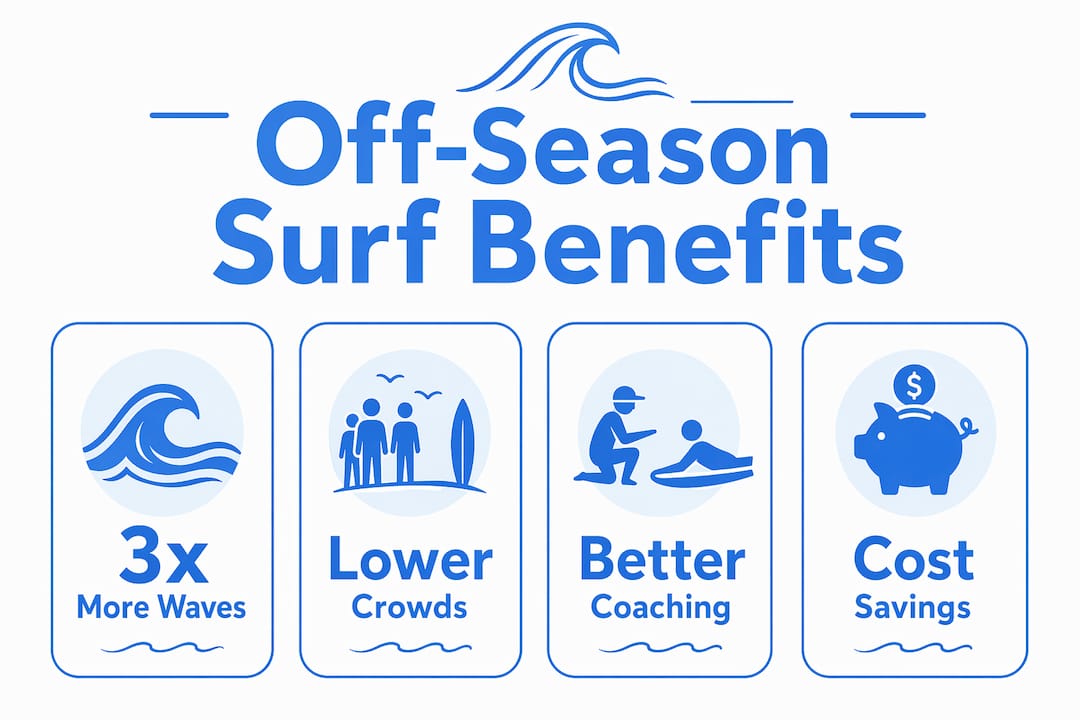
Off-season surfing is the practice of hitting the water during non-peak months to gain more waves, quieter lineups, and conditions that accelerate skill development faster than any peak-season crowd ever could. Surfers who skip the summer rush at spots like Praia Areia Branca near Peniche, Portugal, or Lombok, Indonesia, consistently report catching up to 3x more waves per session than they would during peak season. That single fact reframes the entire debate about why off-season surfing deserves serious attention from anyone who wants to progress.
Why off-season surfing gives you more waves and faster progression
The most direct benefit of surfing outside peak season is wave count. Reduced lineup density means you spend less time paddling back to position and more time actually riding. Three times the waves per session translates directly into three times the repetitions, and repetition is how surfing skills are built.
Beyond raw numbers, the psychological shift is just as significant. A crowded peak-season lineup creates constant social pressure: the fear of dropping in on someone, the hesitation before committing to a wave, the anxiety of being judged by more experienced surfers. Reduced social pressure removes those mental barriers entirely, freeing beginners and intermediates to focus on balance, timing, and technique rather than survival.
Here is what that looks like in practice during an off-season session:
You paddle for waves you would normally hesitate on because no one is competing for them
You can experiment with your takeoff position or foot placement without rushing
You wipe out without the embarrassment of a packed lineup watching
You get to observe the wave pattern without being pressured to move out of position
You spend more time in the water and less time waiting
“The off-season lineup is where I actually learned to surf. Peak season taught me to survive. Off-season taught me to read waves.”
Pro Tip: Track your wave count during one off-season session and one peak-season session at the same break. The difference will permanently change how you schedule your surf trips.
What makes off-season surf conditions surprisingly approachable
A common misconception is that off-season means bad surf. The reality is more nuanced. Off-season conditions at most popular surf destinations produce moderate, consistent swell sizes that are genuinely ideal for beginners and intermediates who would be overwhelmed by peak-season power.
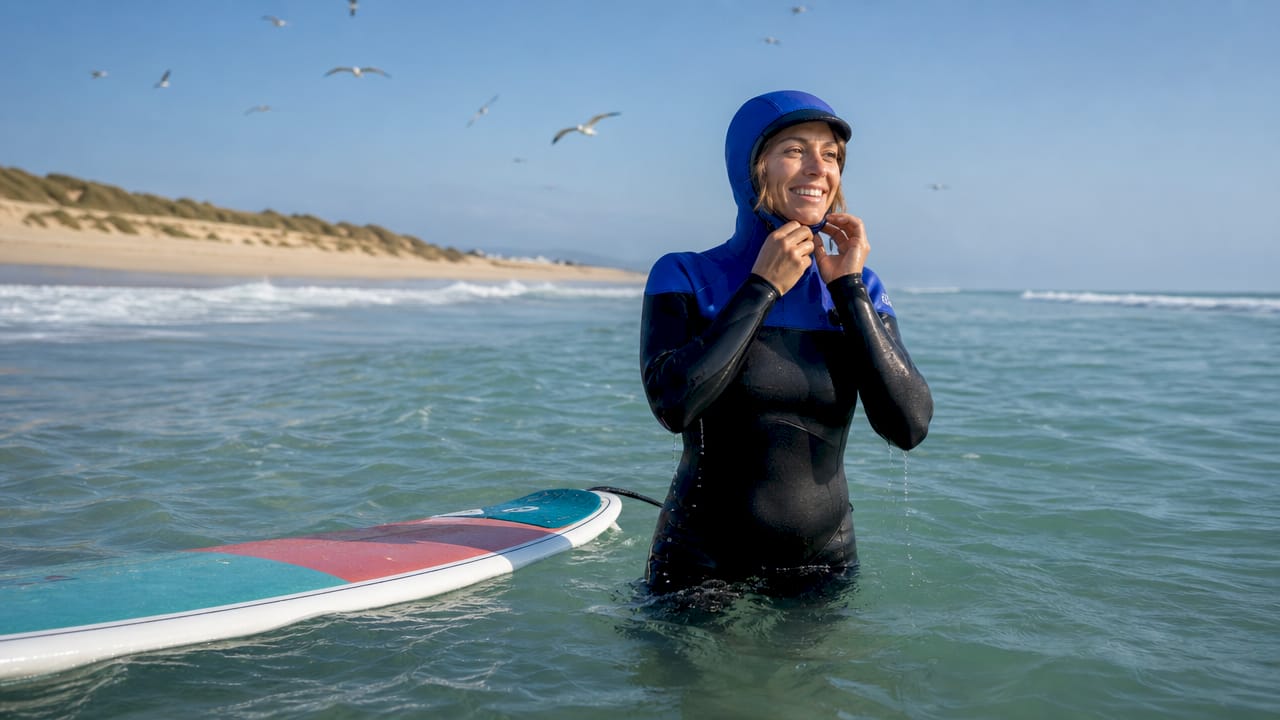
Water temperature is rarely the obstacle people expect. Destinations like Lombok and Morocco maintain comfortable water temps between 18°C and 29°C during their respective off-seasons, meaning a 3mm wetsuit or even boardshorts handle the conditions comfortably. Portugal’s Atlantic coast follows a similar pattern, with water temperatures staying manageable well into autumn and winter with the right gear.
Destination | Off-season months | Water temp range | Recommended gear |
Lombok, Indonesia | November to March | 27°C to 29°C | Boardshorts or 1mm top |
Morocco (Taghazout) | April to September | 18°C to 22°C | 3mm wetsuit |
Portugal (Peniche) | October to March | 14°C to 17°C | 4/3mm wetsuit |
Sri Lanka | May to September | 26°C to 28°C | Boardshorts |
The other misconception is that off-season forecasts are uniformly messy. Experienced surfers know that hidden clean windows appear regularly, especially in the early morning before onshore winds build. Reading a forecast for those windows rather than dismissing the whole day is a skill that separates progressing surfers from stagnant ones.
Pro Tip: Check surf forecasts on Surfline or Windguru the night before and identify the two-hour window before the wind shifts onshore. That window is almost always cleaner than anything you will find on a crowded peak-season afternoon.
How off-season surf schools deliver better coaching
The math on surf school quality during the off-season is straightforward. Lower student-to-instructor ratios during off-peak periods, sometimes 80 to 90 percent lower than peak season, mean your instructor spends more time watching you specifically rather than managing a group of twelve students.
That ratio change has a concrete effect on how fast you improve. During peak season, a group lesson might give you one or two pieces of feedback per session. During the off-season, your instructor can watch every wave you catch, correct your pop-up in real time, and adjust your positioning between sets. That feedback loop is what private surf lessons are designed to deliver, and the off-season makes it accessible even in group formats.
The specific advantages of off-season coaching include:
Direct feedback on multiple consecutive waves rather than one observation per session
Instructors who can walk you into the water and position you on the wave rather than shouting from the beach
More time to try instructor-recommended waves at specific spots without competing for them
Ability to repeat drills on the sand and then immediately apply them in the water
Conversations between sets about technique, positioning, and wave selection that simply do not happen in crowded peak-season classes
Faster technical progression during off-season surf lessons is not a marketing claim. It is the direct result of more repetitions, more feedback, and less chaos.
The off-season surf lifestyle: cost, culture, and calm
The benefits of surfing outside peak season extend well beyond the water. The entire rhythm of a surf trip changes when the crowds disappear.
Lower costs across the board. Accommodation, flights, and surf camp packages all drop significantly during off-season periods. Lower travel and lodging costs mean you can often afford a longer trip or a better-located guesthouse for the same budget you would spend on a shorter peak-season visit.
Quieter surf towns with real character. When the tourist volume drops, the local culture becomes visible. Cafes are not overrun, restaurant owners have time to talk, and the pace of the village matches the pace of the ocean. Praia Areia Branca in September, for example, feels like a completely different place than it does in July.
Deeper connection to surf culture. Local surfers are more present and more approachable during the off-season. You are more likely to get a wave tip from a local regular, find out about a protected break that does not appear on any app, or get invited to a post-session meal that would never happen in a peak-season crowd.
Mindful surfing replaces reactive surfing. Without the pressure of a packed lineup, you make deliberate decisions about which waves to take. That mindfulness carries over into your technique and your overall relationship with the ocean.
Practical tips for getting the most from off-season surfing
Getting the most from surfing outside peak season requires a specific approach. The surfers who thrive off-season are not the ones waiting for perfect conditions. They are the ones who shift from chasing perfection to chasing progression.
Pro Tip: Before each off-season session, set one specific technical goal: a cleaner pop-up, a longer ride, or a more controlled cutback. Measurable goals turn variable conditions into a training advantage.
Follow these steps to maximize every off-season session:
Invest in the right wetsuit. Comfort in the water is non-negotiable. A 4/3mm wetsuit for cooler Atlantic waters or a 3mm for Mediterranean and tropical off-seasons removes the cold as an excuse to cut sessions short.
Learn your local protected breaks. Geographically sheltered spots with favorable tide and wind combinations are the off-season surfer’s best asset. Ask locals, study the coastline on Google Earth, and note which breaks face away from the dominant wind direction.
Time your sessions for early morning. The first two hours after sunrise consistently produce the cleanest conditions at most breaks, regardless of season. Wind is typically lighter, and the water surface is glassier.
Prepare for post-session recovery. Bring dry clothes, a warm drink, and a changing mat. The mental barrier of being cold after a session is what stops most surfers from going back out the next day.
Read smaller swells rather than waiting for big ones. Off-season surfers who improve fastest are those who learn to read inconsistent swell windows rather than sitting on the beach waiting for ideal conditions that may not arrive.
Key takeaways
Off-season surfing delivers faster skill progression, lower costs, and better coaching access because reduced crowd density creates more waves, more feedback, and more space to focus on technique.
Point | Details |
Wave count triples | Catching up to 3x more waves per session accelerates skill development faster than any peak-season session. |
Conditions are manageable | Water temps from 18°C to 29°C at destinations like Lombok and Morocco make off-season surfing comfortable with the right gear. |
Coaching quality improves | Lower student-to-instructor ratios mean direct, wave-by-wave feedback that peak-season group lessons cannot match. |
Costs drop significantly | Travel, accommodation, and surf camp prices fall during off-season, extending your trip budget further. |
Mindset drives results | Shifting from chasing perfect waves to chasing progression is the defining habit of surfers who improve off-season. |
Why off-season surfing changed how I think about the ocean
I spent my first three years surfing exclusively in summer. I thought peak season was the only time worth showing up. The waves were bigger, the energy was high, and the lineup felt like the place to be. What I did not realize was that I was spending 80 percent of every session paddling and waiting, not surfing.
The first time I surfed Praia Areia Branca in October, the difference was immediate. I caught more waves in two hours than I typically caught in a full peak-season day. My instructor at Riparsurfschool had time to watch every single wave I rode and give me specific corrections I had never received before. By the end of that week, my pop-up was cleaner, my wave selection was sharper, and I was reading the ocean rather than reacting to it.
The off-season also changed how I relate to surfing as a lifestyle. The town was quieter, the locals were friendlier, and the whole experience felt less like a tourist activity and more like something real. I stopped treating surfing as a performance and started treating it as a practice. That shift is the most valuable thing the off-season ever gave me.
If you are still scheduling your surf trips around school holidays and summer crowds, you are optimizing for the wrong thing. The surf holidays in September I have experienced since that first October session have consistently outperformed every peak-season trip I took before them.
— Fernando
Surf the off-season with Riparsurfschool
Riparsurfschool has been running surf lessons and surf camps at Praia Areia Branca, near Peniche and Ericeira, since 2001. During the off-season, class sizes are smaller, instructors have more time for each student, and the beach itself is a different experience entirely.

Whether you are a complete beginner looking to catch your first wave without a crowd watching, or an intermediate surfer ready to fix the technical habits that peak-season chaos never gave you time to address, the off-season is when real progress happens. Riparsurfschool offers group surf lessons and all-levels private instruction designed to maximize every session. Check availability and book your lessons online to lock in your spot before the quiet season fills up faster than you expect.
FAQ
Why does off-season surfing improve skills faster?
Off-season surfing delivers up to 3x more waves per session due to reduced lineup density, giving surfers more repetitions and more instructor feedback per hour in the water. More repetitions combined with lower student-to-instructor ratios are the two primary drivers of faster technical progression.
Is off-season surfing worth it for beginners?
Off-season surfing is particularly well-suited for beginners because reduced social pressure removes the fear of judgment and collisions, allowing full focus on balance and technique. Calmer lineups and smaller class sizes at surf schools create a learning environment that peak-season crowds cannot replicate.
What gear do I need for off-season surfing?
Gear requirements depend on location. Portugal’s Atlantic coast requires a 4/3mm wetsuit during autumn and winter, while destinations like Lombok and Morocco stay warm enough for boardshorts or a light 1mm to 3mm top. The right wetsuit removes cold as a barrier to longer, more productive sessions.
Are off-season surf conditions too unpredictable to plan around?
Off-season forecasts are variable but not unworkable. Early morning sessions consistently produce clean, glassy conditions at most breaks before onshore winds develop. Surfers who learn to identify those surfable windows rather than waiting for all-day perfection get high-quality sessions even during the wettest months.
Which off-season surf spots are best for learning?
Destinations with geographically protected breaks and mild off-season water temperatures offer the best learning conditions. Lombok during November to March, Morocco’s Taghazout from April to September, and Portugal’s Peniche coast from September through November all provide manageable swell sizes, accessible water temperatures, and quieter lineups ideal for progression.
Recommended
Comments