

Kids Surf Lessons in Portugal: A Parent's Booking Guide

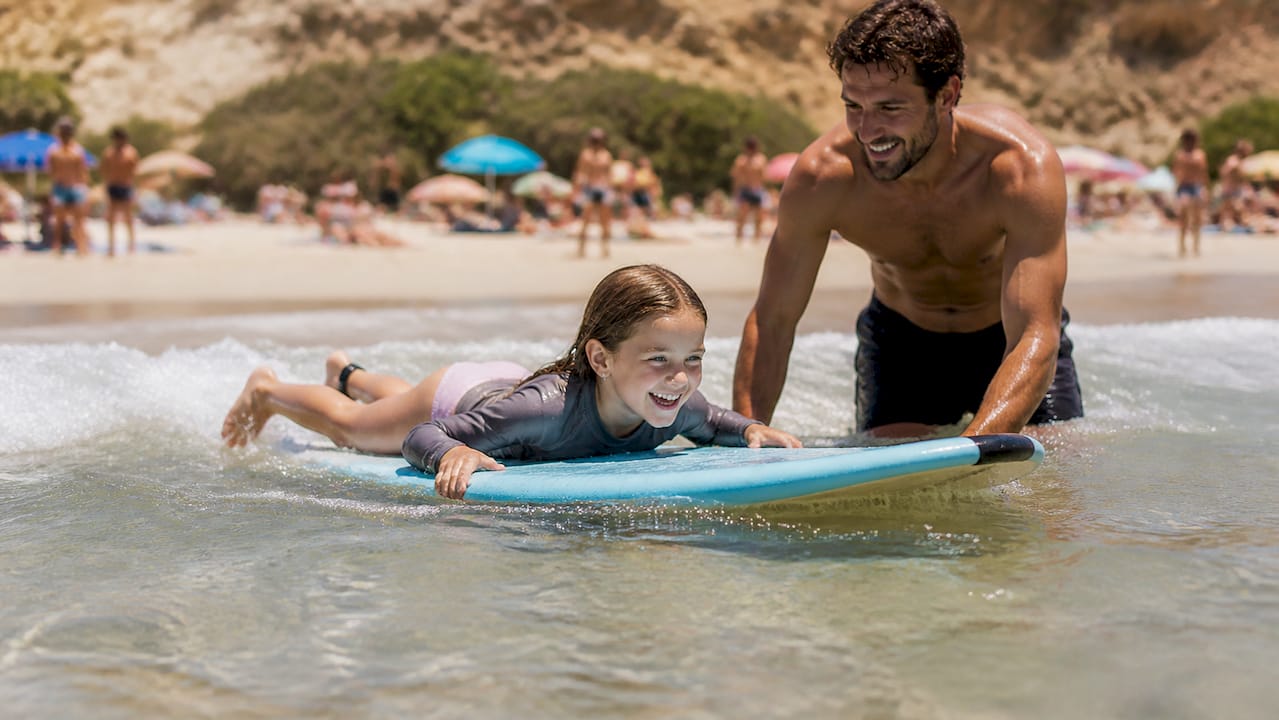
Yes, surf lessons for children are safe and genuinely worthwhile when a certified school runs them, and the format you book first should match your child’s age and comfort in water, not just their age on paper. A nervous six-year-old who can barely float needs a private trial lesson, one instructor, one kid, full attention. A confident ten-year-old who’s already comfortable in the ocean does better in a small group, learning alongside other children and picking up cues from watching them try, wipe out, and try again.
Here’s the quick version before you book anything:
Under 6 or non-swimmers: book a private lesson first, always.
Ages 7-12 with pool or ocean confidence: small-group lessons (3-5 kids) work well and cost less per session.
Teens 13-17: group coaching sessions focused on technique progression, not just water safety.
Pro Tip: If you’re unsure which format fits, call the school and describe your child’s swimming ability honestly. A good instructor will recommend private over group without you having to ask twice. Ripar Surf School runs both formats out of Praia Areia Branca near Peniche, and you can check lesson types and book online directly.
Key Takeaways
Matching lesson format to a child’s swim ability and emotional readiness, not just their age, is the single biggest factor in a safe, successful first surf lesson.
Point | Details |
Private lessons for nervous beginners | Book 1:1 instruction for children under 6 or anyone uneasy in open water, regardless of swim test results. |
Ratios reveal real safety | Ask for exact instructor-to-student ratios; 1:3 for ages 5-8 and 1:4 to 1:5 for older kids is standard good practice. |
Tide-based scheduling beats fixed times | Schools that shift lesson times around tide and swell conditions are prioritizing safety over convenience. |
Pack light, expect gear provided | Bring sunscreen, snacks, and dry clothes; boards and wetsuits are usually included in the lesson price. |
Ripar Surf School fits the checklist | Operating from Praia Areia Branca since 2001, Ripar offers private and group kids lessons with tide-aware scheduling and online booking. |
Table of Contents
What Happens During Aulas De Surf Crianças in Portugal?
A children’s surf lesson, or aula de surf para crianças as it’s called locally, follows a predictable rhythm that good schools rarely skip, no matter how eager a kid is to just get in the water.
Arrival and gear fitting. Wetsuits and soft-top boards get matched to the child’s size, not handed out generically.
Safety briefing on the sand. Instructors cover currents, how to fall safely, and hand signals, usually in under 10 minutes for younger kids because attention spans don’t stretch much further.
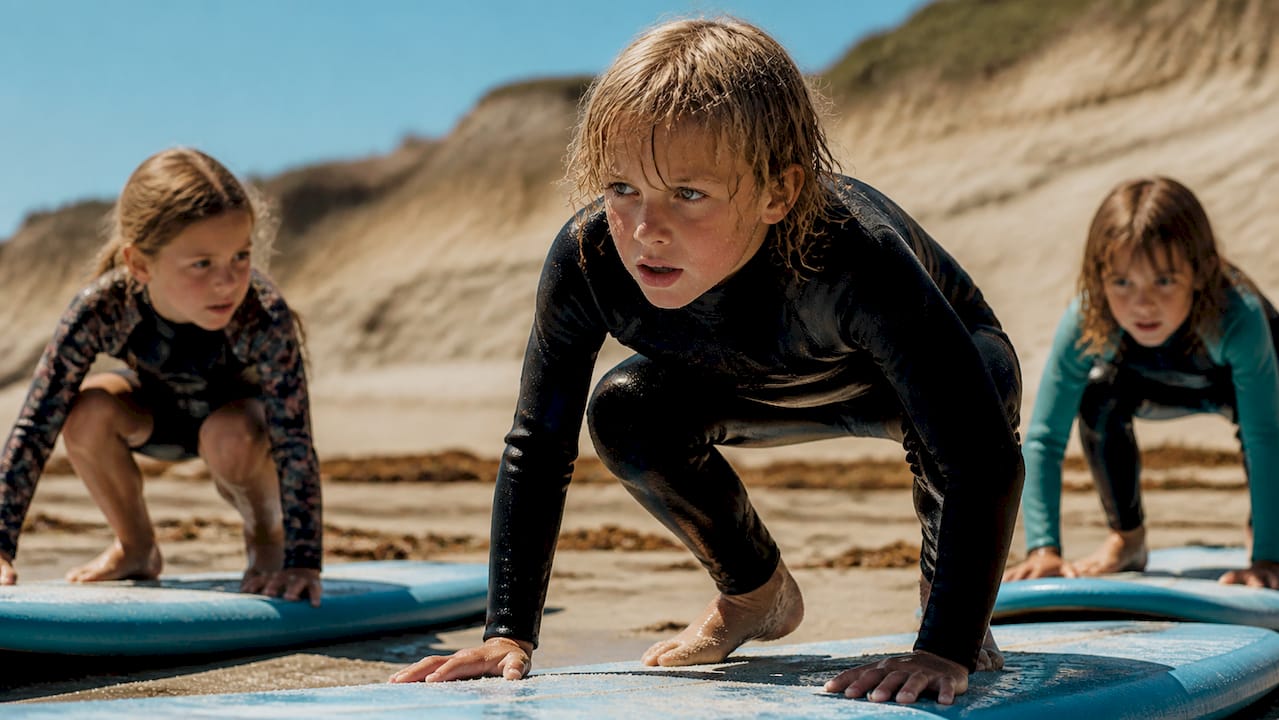
Sand drills. Practicing the pop-up motion on the board while it’s still dry, so the body remembers it before the wobble of moving water gets added.
Shallow water practice. This is where most of the session happens, especially for first-timers.
Supervised wave time. Instructors push the board and time the wave, gradually handing over more control as confidence builds.
Debrief. A short wrap-up, sometimes with a photo, sometimes just a high five and a recap of what went well.
Session length matters more than parents expect. A sample 60-minute lesson structure often breaks down to roughly 10 to 15 minutes of sand drills, 30 to 35 minutes of shallow-water practice, and 10 to 15 minutes of cooldown, a pacing that respects how quickly young kids tire without cutting the water time that actually builds skill. For children under 8, some schools shorten total lesson time to 45 minutes rather than push through fatigue.
Which Age Group Needs Which Kind of Lesson?
Age brackets aren’t arbitrary; for tailored family activity planning, check this family-friendly outdoor activities guide to complement your child’s surf lessons. They reflect real differences in balance, attention span, and fear response, and Portuguese schools generally structure programs around three rough bands.
Ages 5-7 (often labeled “keiki” or early initiation): play-based, short sessions, heavy adult supervision, minimal open-water exposure.
Ages 8-12: progression-focused groups, longer sessions, first real attempts at standing and riding whitewater unassisted.
Teens 13-17: technique coaching, often mixed with adult beginner groups or dedicated teen sessions depending on the school’s schedule.
Watch for readiness signals beyond swim tests. Does your child panic when a wave knocks them over in the pool? Do they follow instructions from adults who aren’t you? These matter as much as whether they can float. One program example, Lufi Surf School’s keiki class, caps its youngest group at three students per instructor, a ratio worth asking about wherever you book.
Pro Tip: A child who can swim 25 meters unaided isn’t automatically ready for a group lesson. Fear response under a breaking wave is a different skill than swimming laps, and it only shows up in the water.
How Do You Verify a Surf School’s Safety Standards?
Ask direct questions before you hand over a deposit, and expect direct answers. Vague responses about certifications or ratios are the biggest red flag in this entire process.
Instructor credentials matter first. Portugal doesn’t require a single universal license, but reputable schools train instructors through recognized surf federation pathways, and the Instituto Português do Desporto e Juventude tracks organized youth sports programming nationally, which gives parents a reference point for what “certified” should mean in practice.
Ratios come second. For children aged 5 to 8, look for 1:3, meaning one instructor per three kids at most. For 9 to 12, 1:4 or 1:5 is common and reasonable. Teens in technique-focused coaching can sometimes run slightly larger, but anything above 1:6 for young children should raise questions.
Soft-top boards for all beginners, no exceptions for kids.
Wetsuits sized and checked for fit, not just handed out by rough age.
A clear rescue plan or lifeguard presence, not just “we watch closely.”
Lessons scheduled around tide conditions rather than a fixed clock time.
Industry practice across Portugal leans heavily on soft-top boards and properly fitted wetsuits for young learners, mainly because the added buoyancy makes early falls less scary and less exhausting.
What Do Lesson Packages and Pricing Usually Look Like?
Single trial lessons, multi-lesson packs, and week-long surf camps solve different problems, and knowing which one your family actually needs saves money.
A trial lesson (usually 45 to 90 minutes) makes sense for a first exposure or a birthday gift. Multi-lesson packs, often five or ten sessions, suit kids who’ve tried it once and want to keep progressing over a family trip. Surf camps bundle days of instruction with structured activities and sometimes lodging, which fits families staying a week or longer near Peniche or Ericeira.
Duration drives price: 45-minute sessions for younger kids cost less than 90-minute sessions built for teens working on technique.
What’s usually included: board, wetsuit, and basic insurance are standard inclusions at most schools.
Common extras: action photos, transport to the beach, and video review sometimes cost more.
Pack discounts: buying five or ten lessons upfront typically lowers the per-session rate, but confirm expiration dates before paying, since some packs must be used within a season.
Booking platforms like the FareHarbor system many Portuguese schools use make these inclusions transparent before checkout, which is worth checking regardless of which school you choose.
How Do You Choose the Right Surf School for Your Kid?
Run through this before you commit, ideally over a phone call rather than just a website form.
Ask, “What’s your instructor-to-student ratio for my child’s age?” A confident, specific number beats “we keep it small.”
Ask, “Do you schedule lessons around tides, or at a fixed time?” Tide-based scheduling signals a school prioritizing safe conditions over calendar convenience.
Ask, “Is equipment included, and what sizes do you carry for kids?” Undersized wetsuits and boards make lessons miserable fast.
Confirm cancellation and weather-reschedule policies before paying anything.
Ask about instructor certifications directly, not just “years of experience.”
Pro Tip: If a school hesitates or gives a generic answer to the ratio question, that’s your answer. Schools confident in their safety setup usually volunteer the number before you finish asking. Our guide on surf instructor essentials breaks down what real supervision should look like in more detail.
What Should Parents Pack and Expect on Lesson Day?
Pack sunscreen, a rash vest if your child has sensitive skin, a full change of dry clothes, water, and a snack for after. Most schools supply the board and wetsuit, so you don’t need to buy anything expensive before a first lesson.
Expect a start time that shifts with tide and swell rather than a fixed hour every day. Schools that teach kids well tend to prioritize safer, gentler wave conditions over a rigid schedule, which sometimes means an early morning slot one day and a midafternoon slot the next.
Fill out health and swim-ability forms honestly, including any fear of water or past incidents.
Arrive 15 minutes before the scheduled time for gear fitting.
Ask about the cancellation window in case weather forces a reschedule.
Check our family surfing safety guide for a fuller day-of checklist, and see our kids surf gear guide if you want your own wetsuit for repeat visits.
Why Ripar Surf School Has Taught Kids Since 2001
Ripar Surf School has run lessons from Praia Areia Branca, a quiet beach village near Peniche and Ericeira, since 2001. That’s two decades of reading local swell and tide patterns well enough to schedule kids’ sessions around whatever conditions are actually safest that day, not just whatever slot looks good on a calendar.
A typical kids session here follows the same shape good instruction always does: sand safety first, shallow water second, wave time only once a child looks steady and calm, not rushed. Small ratios aren’t a marketing line, they’re how you actually keep a nervous eight-year-old from freezing up the first time a wave breaks near them.
Facilities include showers and a changing area right off the sand, which matters more than it sounds like after a cold morning session. Families can book lessons directly or reach out ahead of time about specific needs.
What Conventional Advice Gets Wrong About Kids and Surfing
Most guides treat “certified instructor” as the finish line, as if a credential alone guarantees a good experience. It doesn’t. A certified instructor with a group of eight nervous seven-year-olds and one assistant is a worse setup than a slightly less decorated instructor working 1:3 with kids who trust him. Ratio, not resume, is usually the variable parents underweight.
The other blind spot is emotional readiness. Parents obsess over swim tests, whether a child can do 25 meters, whether they float, when the better predictor is how a kid reacts to a wave knocking them down in a pool. That’s a fear response, not a fitness metric, and it rarely gets asked about before booking.
If there’s one thing worth doing differently, it’s this: talk to the school before you book, not just to check a box, but to hear how specifically they answer the ratio and tide-scheduling questions. Schools that teach kids well tend to volunteer that information without being pushed, because they’ve built their whole program around it. The ones that dodge the question have usually built their program around something else, filling slots, not building confidence.
Book Kids Surf Lessons With Ripar Surf School
Ripar Surf School is the local option built around exactly what this guide recommends: certified instructors, small ratios, and a schedule that bends to tide conditions instead of a fixed clock. For confident kids aged 7 and up who want to learn alongside peers, the group surf lesson page has current availability. For younger children, nervous first-timers, or teens who want focused technique coaching, the private surf lesson option puts one instructor on one child, no divided attention.
Families visiting for a week or longer can look at the surf camp booking page for multi-day packages near Peniche and Ericeira. Ripar has run lessons from Praia Areia Branca since 2001, and instructors are happy to discuss specific needs, anxiety, physical considerations, or scheduling constraints, before you book. Start by checking available dates online and picking the format that matches your child’s comfort level, not just their age.
Frequently Asked Questions
What age can a child start surf lessons in Portugal? Most schools accept children from age 5 or 6 in play-based, small-ratio programs, with fuller progression lessons typically starting around age 7 or 8.
Are group or private lessons better for a first-time young surfer? Private lessons work best for children under 6 or anyone anxious in water; confident kids aged 7 and up generally do well in small groups of three to five.
How long do kids surf lessons usually last? Sessions typically run 45 to 90 minutes, with shorter durations for younger children to match their attention span and energy levels.
What should I bring to my child’s first surf lesson? Pack sunscreen, a rash vest, a full change of dry clothes, water, and a snack. Boards and wetsuits are usually supplied by the school.
Do surf schools in Portugal schedule around tides? Many do, since safer wave conditions for beginners depend heavily on tide stage, which means lesson start times can shift day to day rather than following a fixed schedule.
Sources
Recommended
Comments