

Surf Lessons in English in Portugal: Book Today

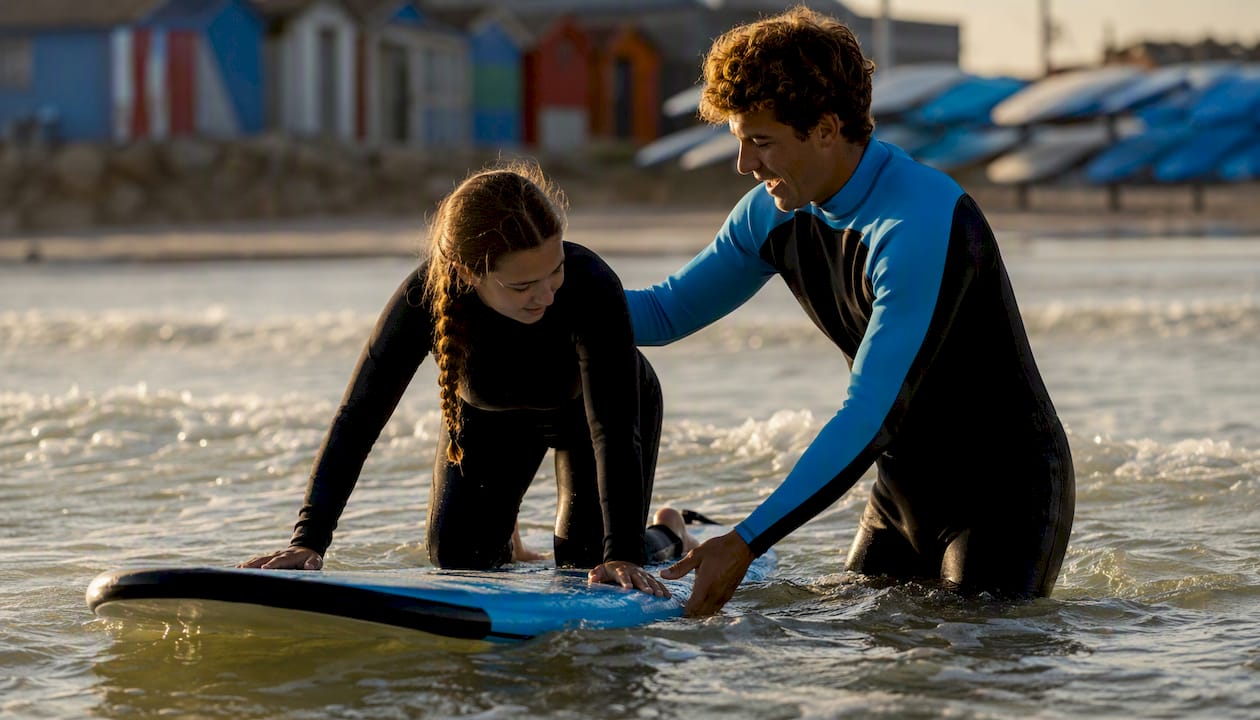
For English-taught surf lessons in Portugal, Riparsurfschool at Praia Areia Branca is the clearest local option. Based near Peniche and Ericeira since 2001, the school runs certified instruction in English for all levels, from first-timers to intermediate surfers. You can check availability and reserve a spot directly through the online booking page.
Your fastest options at a glance:
Group surf lesson — shared session, great for solo travelers and small groups
Private surf lesson — one-on-one attention, ideal for faster progress or focused English instruction
Surf camp package — multi-day program with accommodation, meals, and daily surf sessions
English+Surf youth program — structured for kids and teens who want language practice alongside wave time
All formats are taught in English by local certified instructors. Praia Areia Branca sits between Peniche and Ericeira, two of Portugal’s most consistent surf breaks, so the location alone is worth the trip.
Key Takeaways
English-taught surf lessons in Portugal are most reliably booked through a certified local school like Riparsurfschool, where instruction, safety briefings, and feedback are all delivered in English by qualified instructors.
Point | Details |
Best location | Praia Areia Branca, between Peniche and Ericeira, offers consistent waves for all levels. |
Lesson formats | Group lessons, private sessions, and week-long surf camps are all available in English. |
What’s included | Surfboard, wetsuit, certified instructor, safety brief, and changing facilities are standard. |
Safety check | Verify ISA certification, lifeguard qualification, and first aid credentials before booking. |
Riparsurfschool | Certified English-taught lessons since 2001; book online at riparsurfschool.com/book-online. |
Table of Contents
Where in Portugal can you take English-language surf lessons?
What levels are accepted, and how does a typical lesson flow?
What’s included in a surf lesson, and what should you bring?
How do you verify instructor certifications and safety standards?
How long are lessons, what do they cost, and how do you book?
Why does learning to surf in English actually help your language skills?
How to choose the right English-language surf lesson or program
What surf lesson formats are available in English?
Riparsurfschool offers four main formats, and the right one depends on your goals, group size, and how much time you have.
Group lessons are the most popular entry point. Sessions typically run in small groups, keeping the instructor-to-student ratio tight enough for real feedback. Instruction is in English throughout, which makes these sessions a natural fit for tourists and international visitors who want to learn surfing without a language barrier.
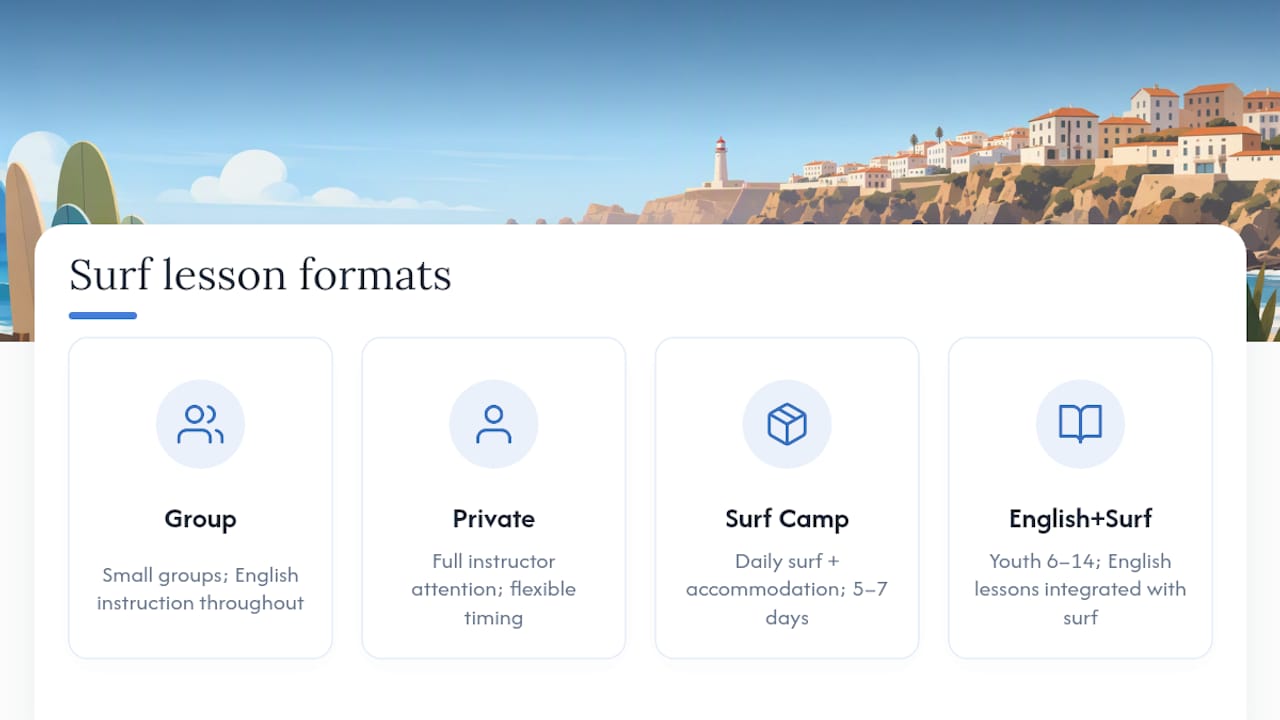
Private lessons give you the instructor’s full attention for the entire session. If you’re working on a specific technique, returning after a long break, or want the lesson to double as English conversation practice, private sessions move faster. They’re also the most flexible on timing.
Surf camp packages combine daily surf sessions with accommodation, usually running five to seven days. The surf camp format suits anyone who wants full immersion: wake up, surf, eat, repeat. Camp life at Riparsurfschool has a genuine community feel, with guests from different countries sharing the same beach and the same stoke.
English+Surf youth programs pair surf lessons with structured English instruction, typically for ages 6–14. Specialized summer programs use the beach as a live classroom, with vocabulary practice woven into warm-ups, drills, and debrief sessions. These camps include fixed check-in and check-out times, scheduled surf days, and often meals.
Where in Portugal can you take English-language surf lessons?
The Peniche region is the natural base. Praia Areia Branca sits roughly halfway between Peniche and Ericeira, giving Riparsurfschool access to multiple breaks depending on swell direction and wind. For Lisbon-area visitors, Lisbon surf spots like Costa da Caparica are worth knowing, though the Peniche corridor consistently offers more reliable conditions for beginners.
Praia Areia Branca / Peniche area — Riparsurfschool’s home base; mellow beach break, good for learning
Ericeira — world surfing reserve, better suited to intermediate and advanced surfers
Costa da Caparica — long sandy stretch south of Lisbon, popular with day-trippers from the capital
Seasonality matters. Summer (June through September) is peak season, with the warmest water and the most camp programs running. Private lessons are available year-round. Morning sessions typically start around 9:00 or 10:00 AM; afternoon slots often begin after 3:00 PM when the wind settles. Schools commonly share a Google Maps meeting point so you know exactly where to show up.
What levels are accepted, and how does a typical lesson flow?
Riparsurfschool accepts beginners, intermediate, and returning surfers. Instructors adapt their English to the student’s level, using simple commands for first-timers and more technical vocabulary as ability grows.
A standard 90–120 minute session follows a clear sequence:
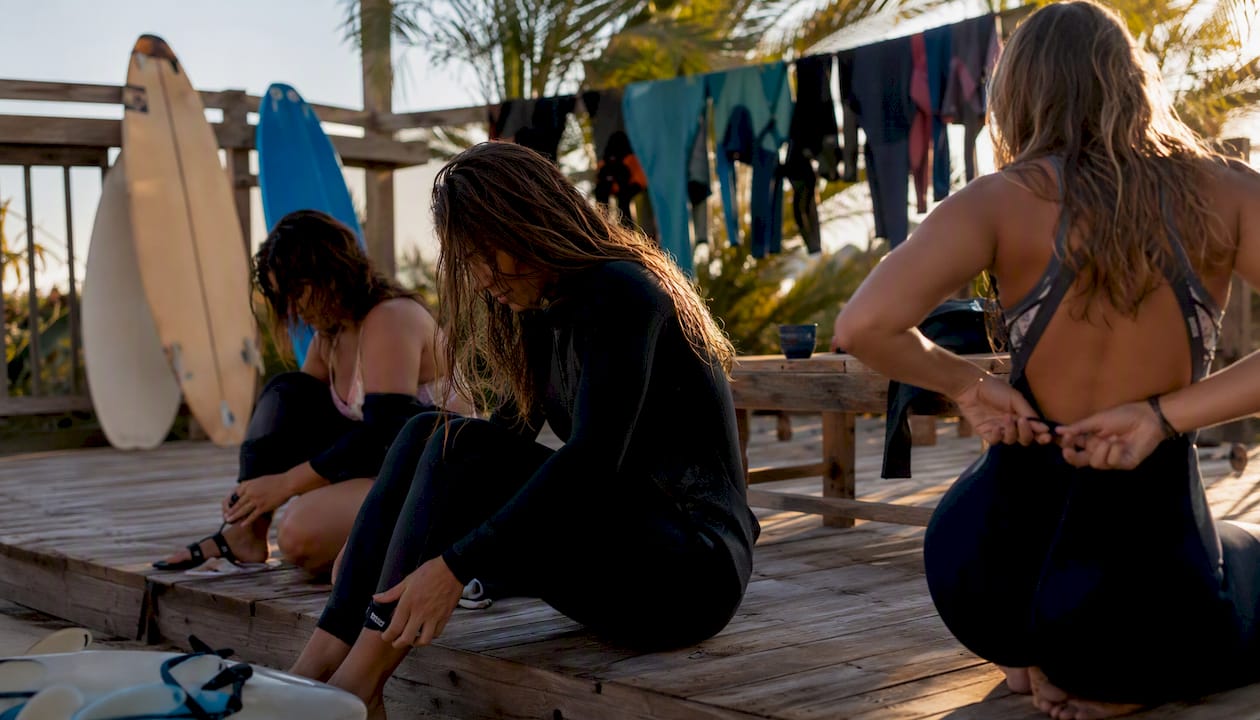
Check-in and gear up — wetsuit and board assigned, safety brief delivered in English
Warm-up — dynamic stretching on the beach, roughly 10 minutes
Dry-land technique — pop-up drill, stance, paddle mechanics practiced on sand
Water session — instructors in the water with you, giving real-time cues
Debrief — feedback on what worked, what to fix next time
Language learning fits naturally into this structure. Instructors call out target phrases during drills (“paddle hard,” “pop up,” “look at the horizon”), repeat corrections consistently, and use the debrief to reinforce vocabulary. For youth programs, a language teacher may join the session to run structured vocabulary rounds between surf sets.
What’s included in a surf lesson, and what should you bring?
Standard inclusions across most English-taught lessons at Riparsurfschool:
Surfboard (foam or fiberglass, matched to your level)
Wetsuit (full suit or shorty depending on season)
Certified instructor
Safety briefing
Use of changing facilities and showers
Surf camp packages typically add accommodation (see lodging options), breakfast, and sometimes dinner. Transport from a central pickup point may be included in camp formats; confirm at booking.
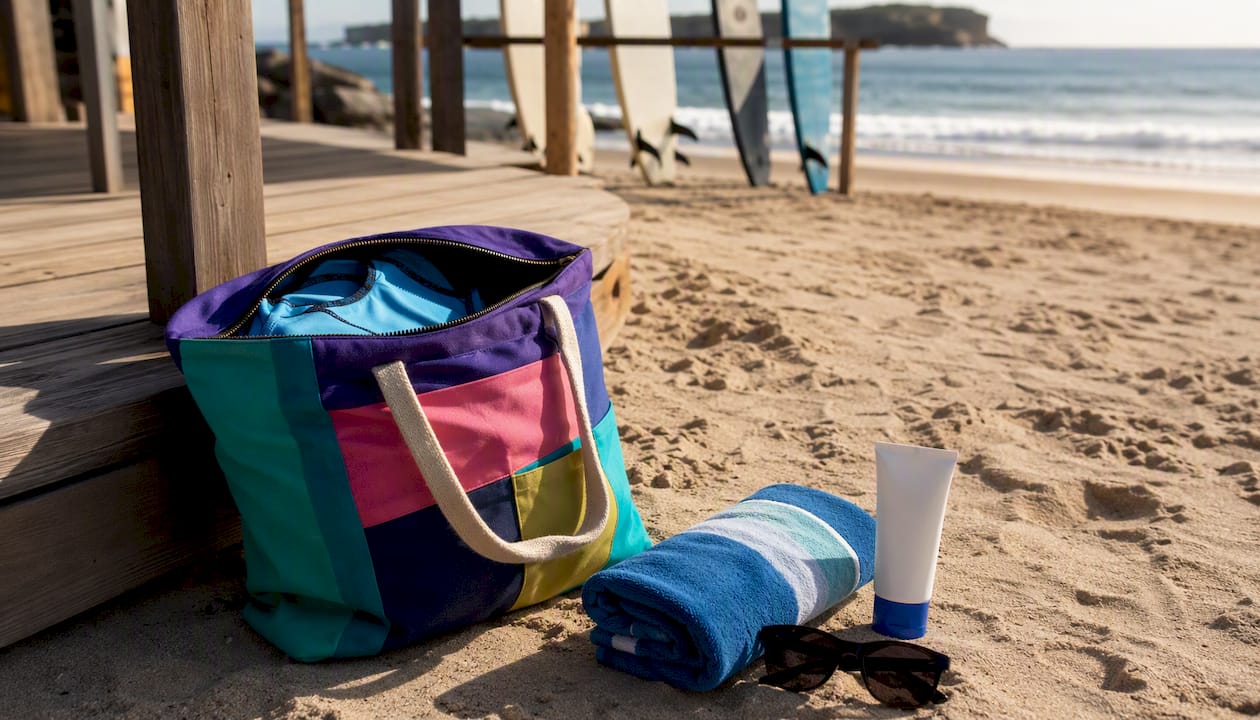
Bring with you: swimwear worn under the wetsuit, a towel, sunscreen (reef-safe preferred), water, a valid ID, and any relevant medical notes if you have conditions the instructor should know about.
A note on requirements: most programs ask that participants can swim at least 50 meters unassisted. Some surf-and-English experiences also note weather dependence as a practical constraint — lessons may be rescheduled if conditions are unsafe. Check the cancellation policy before you pay a deposit.
How do you verify instructor certifications and safety standards?
Riparsurfschool’s instructors hold recognized certifications covering surf instruction, lifeguarding, and first aid. When evaluating any school, look for:
ISA (International Surfing Association) certification or the Portuguese national equivalent
Lifeguard qualification — not just surf instruction, but water rescue
First aid and CPR — standard for any reputable school
On-site safety measures to expect: defined group ratios (typically no more than 8–10 students per instructor for beginners), pre-session beach briefings, rescue boards or flotation devices on hand, and regular equipment checks.
Trust signals worth verifying before booking: confirmed online reservation with a booking reference, clear cancellation and refund terms, liability insurance, and verified guest reviews. Portugal’s DGERT portal lets you check whether a training provider holds formal certification. If you ever have a service complaint, LivroReclamações is the official Portuguese consumer complaints channel.
How long are lessons, what do they cost, and how do you book?
Surf sessions typically run a session of about one and a half to two hours. Multi-day camp packages run five to seven days. Pricing is generally structured as:
Group lesson — priced per person, per session
Private lesson — priced per session for one-on-one instruction
Week-long surf camp — priced per person, per week, including accommodation; rates vary depending on lodging and inclusions
These are indicative ranges; confirm current rates directly with Riparsurfschool at booking.
Booking steps are straightforward. FareHarbor is a widely used booking platform embedded by surf schools across Portugal to show real-time availability and accept reservations. Riparsurfschool’s own book-online page walks you through the same process: pick your lesson type, choose a date, pay a deposit, and receive a confirmation. Cancellation terms vary by program; read them before confirming.
Why does learning to surf in English actually help your language skills?
The short answer: context. Cambridge English resources consistently show that immersive, contextualized practice during real activities produces better retention and communicative competence than classroom repetition alone. When you’re paddling hard and an instructor shouts a correction, that word sticks.
Established language schools have built full English+Surf programs around exactly this principle, pairing scheduled surf sessions with classroom instruction to create a loop between physical experience and language reinforcement. The beach removes the formality of a classroom, which lowers anxiety and makes students more willing to speak.
Repetition of functional phrases in a high-stakes physical context accelerates retention
Mixed-nationality groups create genuine communication pressure (you have to use English, not fall back on your first language)
Physical activity increases alertness and focus, which supports learning
Pro Tip: Before each session, pick three English surf terms you want to own by the end of the lesson — “trim,” “cutback,” “duck dive.” Ask your instructor to use them when correcting you. By the third session, they’ll be automatic.
How to choose the right English-language surf lesson or program
Run through this checklist before booking anything:
Goal clarity — are you primarily learning to surf, or is English practice the main objective?
Group size — small groups (under 8) give more instructor contact time
Instructor-to-student ratio — ask directly; anything above 10:1 for beginners is a red flag
Course length — single session, multi-day pack, or full week camp?
Equipment included — board and wetsuit should always be included at the lesson price
Safety credentials — ISA or national certification, lifeguard qualification, first aid
Booking flexibility — can you reschedule if conditions are bad?
Language of instruction confirmed — ask explicitly: “Will the entire lesson be in English?”
Questions to ask before paying: What happens if the surf is flat or dangerous? Is the deposit refundable? What’s the minimum swimming ability required? Why choose Riparsurfschool covers many of these points directly for anyone comparing options.
English lessons vs. Portuguese lessons: an honest take
Most visitors default to English instruction without thinking about it, and for short stays that’s usually the right call. If you have a week in Portugal and want to surf, English-taught lessons remove friction immediately. You understand the safety brief, you follow corrections in real time, and you leave with vocabulary you can use anywhere in the world.
Portuguese instruction makes sense in a different scenario: if you’re living in Portugal, learning the language seriously, and want cultural immersion alongside surf. In that case, a Portuguese-speaking instructor gives you the language exposure you’re actually after. The surf technique is identical; the context is different.
For children in summer camps, English instruction has a specific advantage: kids from different countries are forced to communicate in a shared language, which accelerates both surf progress and language confidence faster than a monolingual group would. Short stays, language-practice goals, and mixed-nationality groups all point toward English-taught lessons. Longer stays with a genuine Portuguese-learning objective are the one case where switching makes sense.
If you’re unsure which format fits your situation, contact Riparsurfschool directly. The team has been matching students to the right program since 2001.
Riparsurfschool: book your English surf lesson today
Riparsurfschool is the direct alternative to searching through generic booking platforms and hoping the instructor speaks English. Every lesson at Praia Areia Branca is taught in English by certified local instructors who have been doing this since 2001, with no language guesswork and no mass-tourism crowds.
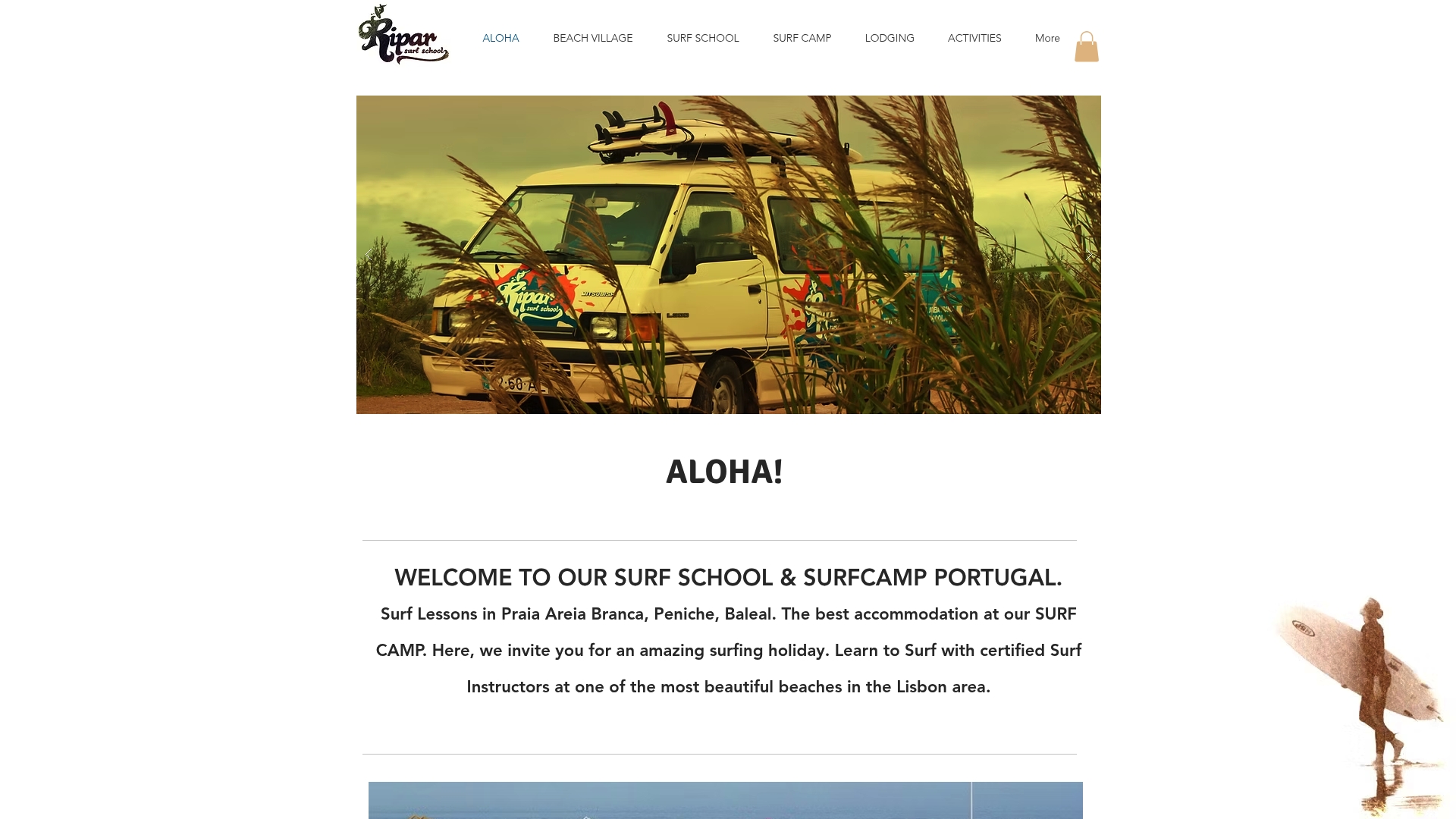
Group lessons, private sessions, and week-long surf camp packages with accommodation are all bookable online. The school sits between Peniche and Ericeira, two of Portugal’s best surf zones, and the surf houses keep everything within walking distance of the water. Check availability and reserve your spot now — spaces in summer camp weeks fill early.
Sources
Recommended
What an excellent guide for anyone interested in learning how to surf in Portugal. The advice appears realistic. Detailed instructions give one confidence. You write as though you were an online book publishing company for useful books. Booking now appears just right.