

Find the Best Surf Spots in Portugal: All Levels

TL;DR:
Choosing surf spots that match your skill level and goals ensures a safe and enjoyable experience.
Using reliable forecasts, local advice, and seasonality info helps plan effective surf sessions.
Flexibility, local knowledge, and avoiding common mistakes lead to better waves and safer trips in Portugal.
Portugal has over 800 kilometers of Atlantic coastline, and nearly every stretch of it holds a surf spot worth riding. That’s exciting and overwhelming at the same time. Beginners often show up at world-class breaks that are way too powerful for them, while experienced surfers waste days at mellow beach breaks that barely challenge them. The difference between a frustrating trip and an unforgettable one usually comes down to one thing: choosing the right spot for your skill level. This guide walks you through exactly how to do that, from honest self-assessment to reading forecasts and avoiding the most common mistakes.
Table of Contents
Key Takeaways
Point | Details |
Assess your surf level | Knowing your ability helps filter safe and enjoyable Portuguese beaches. |
Use trusted resources | Rely on surf forecasts, local schools, and apps to match you to the right spot. |
Follow a clear selection process | A step-by-step approach narrows choices and maximizes safety and fun. |
Don’t overlook local advice | Speak with instructors and locals for overlooked spots and real-time safety tips. |
Determine your skill level and surf goals
With your trip on the horizon, start by reflecting on your own abilities and what you want from your surf holiday. This step sounds simple, but most people skip it and pay the price on the water.
Surf skills generally fall into three categories:
Beginner: You can paddle, pop up, and ride whitewater (the broken wave). You may struggle with timing and balance on open-face waves.
Intermediate: You can catch unbroken waves, control your direction, and execute basic turns. You’re comfortable in chest-high surf.
Advanced: You read waves confidently, surf in bigger and more powerful conditions, and can handle reef breaks or point breaks.
Beyond skill level, think about your goals. Are you looking to learn from scratch? Progress a specific skill? Travel with a group of mixed abilities? Or just relax and enjoy easy waves on a holiday? Your answer changes everything about which spot is right for you.
Physical readiness matters too. Surfing is more demanding than it looks. If you’re not a confident swimmer, stick to spots with lifeguards and calm conditions. Strong currents and shore breaks can catch even fit people off guard.
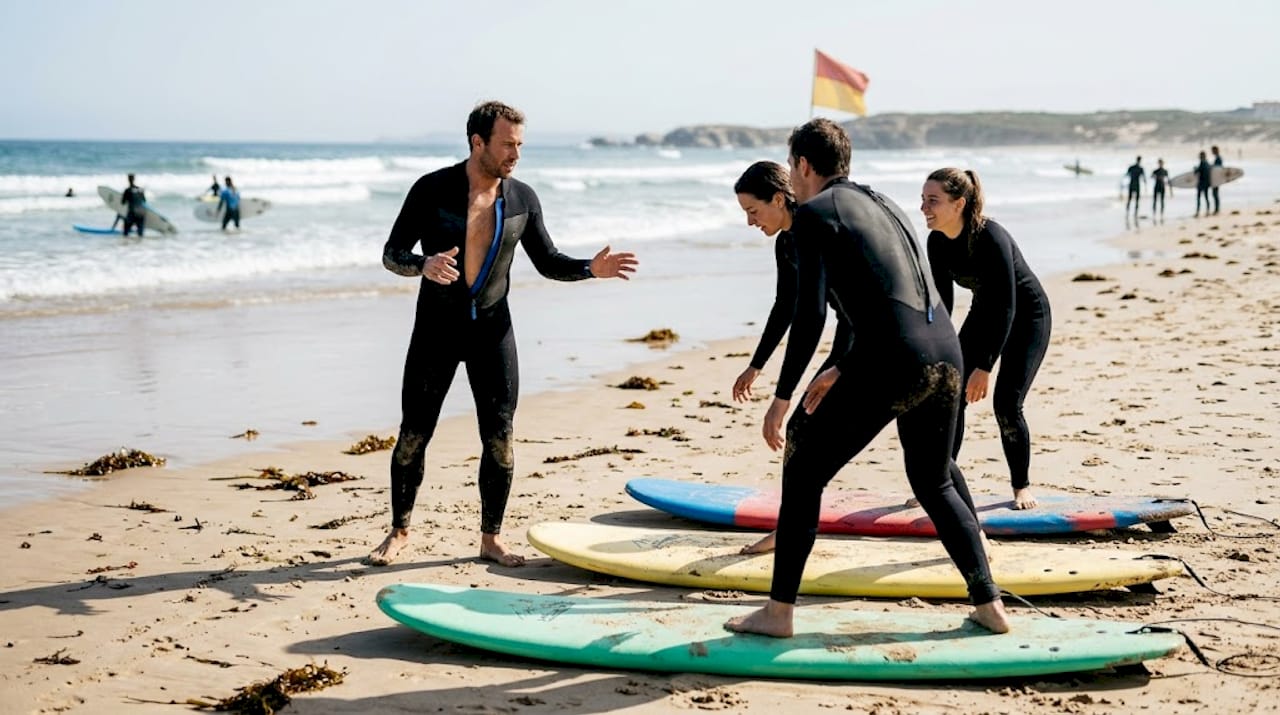
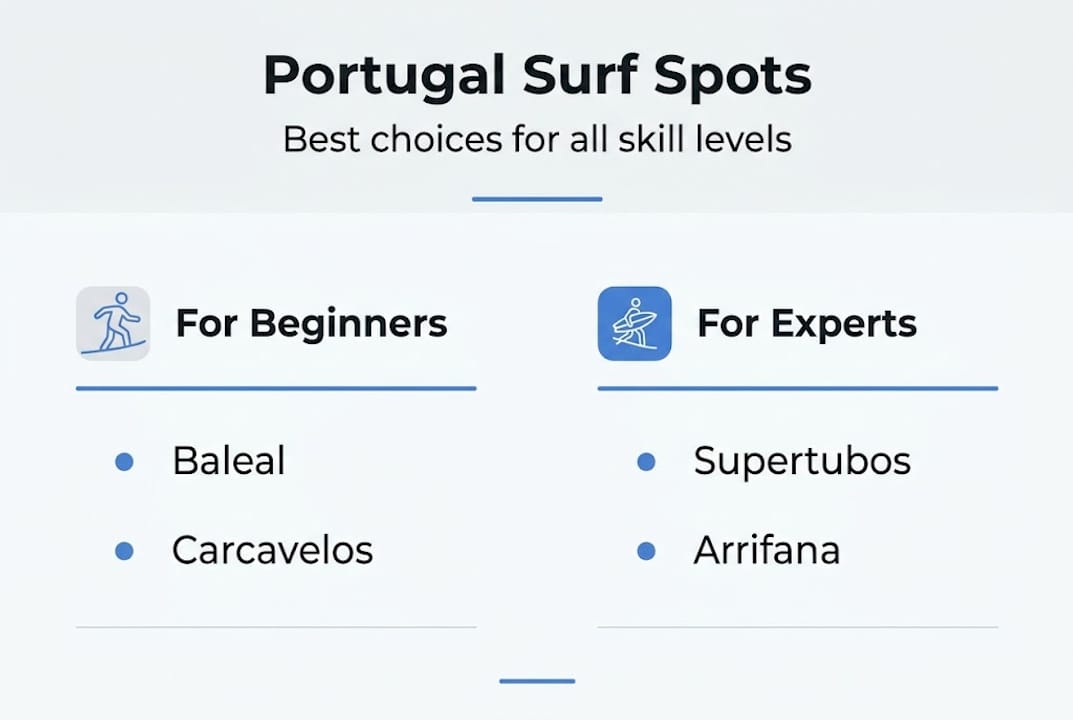
For beginner-friendly beach breaks with surf schools, spots like Baleal near Peniche, Foz do Lizandro near Ericeira, Carcavelos near Lisbon, Amado and Arrifana in the Algarve, and Maceda in the north are ideal starting points. These are sandy breaks with gentle waves and easy water entry. Reef and point breaks should wait until you’re consistently catching open-face waves on your own.
Pro Tip: If you’re new to surfing, planning your first lessons before you arrive saves you from wasting days figuring out logistics on the beach.
Setting realistic expectations is also a safety issue. Beginners who overestimate their ability often end up in rips or caught inside by sets. Reading about beginner Portugal surf experiences from people who’ve been in your position can help you calibrate what to expect and choose a spot that actually suits where you are right now.
Gather essential tools and spot resources
After pinpointing your level and goals, gather the right tools and info for spot research. Guessing based on Instagram photos is one of the fastest ways to end up at the wrong beach.
Here are the core resources you need before committing to any spot:
Surf forecast apps: Windguru, Surfline, and Magic Seaweed give you swell height, wind direction, and tide info. Check all three for a fuller picture.
Tide charts: Portugal’s tidal range affects wave quality dramatically. Some spots work only at low tide; others are best at high.
Google Maps and Street View: Use these to check beach access, parking, and nearby facilities like showers or cafes.
Local surf school advice: Nobody knows current conditions better than instructors who surf the same break every day.
Surf travel blogs and forums: Recent trip reports from real surfers often reveal things no app can tell you, like a new sandbar or a seasonal hazard.
Resource type | Example | Best used for |
Forecast app | Windguru, Surfline | Swell size, wind, tide timing |
Surf school contact | Ripar Surf School | Local conditions, lesson availability |
Mapping tool | Google Maps | Beach access, parking, facilities |
Travel blog | The Atlantic Wave | Spot overviews, seasonal tips |
Surf forum | Seabreeze, Magicseaweed | Recent reports, crowd levels |
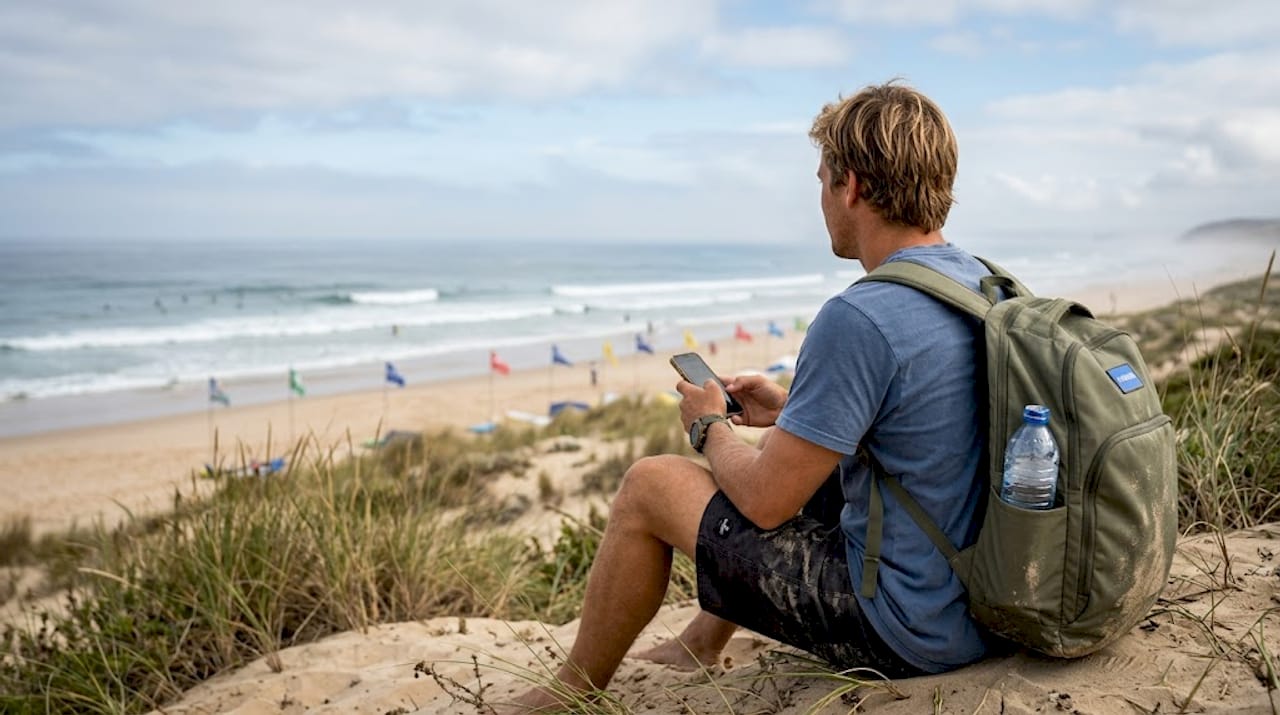
Seasonality is a huge factor that many travelers overlook. May through September brings smaller, more manageable waves across Portugal, making it the best window for beginners. Surf schools in Peniche and Ericeira are fully operational during these months, with equipment rentals and structured lessons easy to find. Understanding Portugal surf conditions by region helps you plan around the Atlantic’s seasonal patterns rather than fight them.
For a broader planning framework, a solid surf trip planning guide can help you structure your research from accommodation to daily session timing, so nothing falls through the cracks.
Step-by-step: Finding your ideal surf spot
Equipped with your tools, now follow this clear sequence to identify your best-matched Portuguese surf spot.
Filter by skill level first. Use a reputable surf guide or local school recommendation to create a shortlist of spots that match your ability. Ignore anything outside your range for now.
Choose your wave type. Beach breaks are forgiving and best for beginners. Reef breaks are hollow and fast, suited to advanced surfers. Point breaks offer long rides and work well for intermediates.
Factor in crowds and season. Crowds in Ericeira and Peniche can be intense, especially in summer. Going early in the morning or visiting off-season (October or April) dramatically improves your experience. Big winter swells from November to February regularly exceed beginner limits, and rips at exposed beaches become more dangerous.
Read recent forecasts and reviews. Check conditions for the specific day and week you plan to surf. A spot that’s perfect in May can be dangerously powerful in January.
Verify safety info. Look for information on rip currents, local hazards, and water quality before you paddle out.
Spot | Best for | Pros | Cons |
Baleal (Peniche) | Beginners | Safe, schools nearby, sandy | Crowded in summer |
Foz do Lizandro (Ericeira) | Beginners | Gentle waves, calm entry | Can close out in big swells |
Carcavelos (Lisbon) | Beginners/Intermediate | Accessible, consistent | Pollution risk, very crowded |
Ribeira d’Ilhas (Ericeira) | Intermediate/Advanced | Long rides, beautiful setting | Reef, strong currents |
Supertubos (Peniche) | Advanced | World-class barrels | Very powerful, not for beginners |
Pro Tip: Surfing at dawn during off-peak months gives you cleaner waves, fewer people, and a completely different energy. Many Portugal surfcamps schedule early sessions specifically for this reason. Connecting with a surf instructor who knows the local breaks can cut your research time in half.
Common mistakes and how to avoid them
With a shortlist in hand, avoid these mistakes that can ruin an otherwise great surf outing.
The most frequent errors surfers make when choosing spots in Portugal:
Ignoring the forecast. Showing up without checking swell size and wind direction is the number one cause of wasted sessions.
Underestimating local currents. Rip currents at exposed beaches are powerful and can be invisible until you’re in one. Always ask locals or instructors before paddling out somewhere new.
Choosing spots above your skill level. Ego gets people hurt. A wave that looks manageable from the shore can be twice as powerful in the water.
Arriving at peak hours on summer weekends. Crowded lineups are frustrating and genuinely dangerous for beginners who are still learning to control their boards.
Ignoring water quality. Urban spots like Carcavelos can have pollution issues after heavy rain. Check local water quality reports before surfing near river mouths or urban beaches. And Nazaré’s winter big waves are not a spectator sport from the water.
Safety reminder: If you’re ever unsure about conditions, don’t paddle out. Rip currents, large winter swells, and unfamiliar reefs are responsible for most surf-related incidents in Portugal. When in doubt, ask a local instructor. No wave is worth a rescue.
Flexibility is your best safety net. Always have a backup spot in mind. If conditions at your first choice are too big or too crowded, knowing an alternative beach saves the session. Group surf experiences often build this kind of adaptability into the itinerary, which is one reason they work so well for mixed-ability groups traveling together.
Adjusting mid-trip is normal, not failure. Experienced surfers do it constantly. The goal is good waves and a safe session, not sticking to a plan that no longer fits the conditions.
What most surf guides miss about spot selection
Most surf guides hand you a list of famous breaks and call it done. Ericeira, Peniche, Nazaré. Great names, but not always the right answer for your trip.
Here’s what we’ve learned from over two decades of running surf camps and lessons near Peniche: the surfers who have the best trips are rarely the ones who chased the most famous waves. They’re the ones who stayed flexible, talked to local instructors, and let conditions guide their choices each day.
Lesser-known beaches near Areia Branca, for example, regularly deliver excellent waves with almost no crowd. You won’t find them on a top-ten list, but you’ll remember them long after the trip. That’s the real value of local knowledge.
Building your planning your Portugal surf holiday around adaptability rather than a fixed bucket list means you’ll surf better waves more often. The ocean doesn’t care about your itinerary. The surfers who work with it instead of against it always come out ahead.
Get the most from your Portugal surf adventure
Once you’ve found your spot, the right support makes all the difference for your surf trip.
At Ripar Surf School, we’ve been helping surfers of all levels find their perfect wave since 2001. Whether you’re standing on a board for the first time or looking to sharpen your turns, our certified local instructors match every session to your ability and the day’s conditions.
You can book your surf lessons directly online and pair them with our Portugal surfcamps for a complete surf holiday experience. If you want everything in one place, our surf house in Peniche puts you steps from the water with accommodation, equipment, and expert guidance all included. No guesswork, no wasted days. Just great waves and the support to make the most of them.
Frequently asked questions
What is the best time of year to surf in Portugal for beginners?
May to September offers smaller, safer waves ideal for beginners, especially at beaches with well-established surf schools in Peniche and Ericeira. The Atlantic is calmer, the weather is warm, and lesson availability is at its peak.
Are surf spots in Portugal safe for beginners?
Many spots like Baleal and Carcavelos are safe for beginners when conditions are right. Sandy beach breaks with surf schools are your best starting point; avoid reef breaks and always check for rip currents before paddling out.
How do I avoid crowds at Portuguese surf spots?
Surf early in the morning, visit during the off-season, or ask local instructors about less-crowded alternatives near popular zones like Ericeira and Peniche. A 6am session in April beats a noon session in August every time.
Can I book surf lessons at all the main spots?
Most major beginner-friendly beaches offer surf lessons and board rentals, especially in Peniche and Ericeira. Booking in advance during summer months is strongly recommended to secure your preferred instructor and time slot.
Recommended
Comments