

How to Assess Beach Safety for Families Who Surf

TL;DR:
Safe surf beaches feature lifeguard coverage, warning flags, manageable waves, and no active rip current advisories.
Pre-trip planning, active supervision, and hazard recognition are essential for family beach safety in surf environments.
Key principles for evaluating beach safety in surf environments
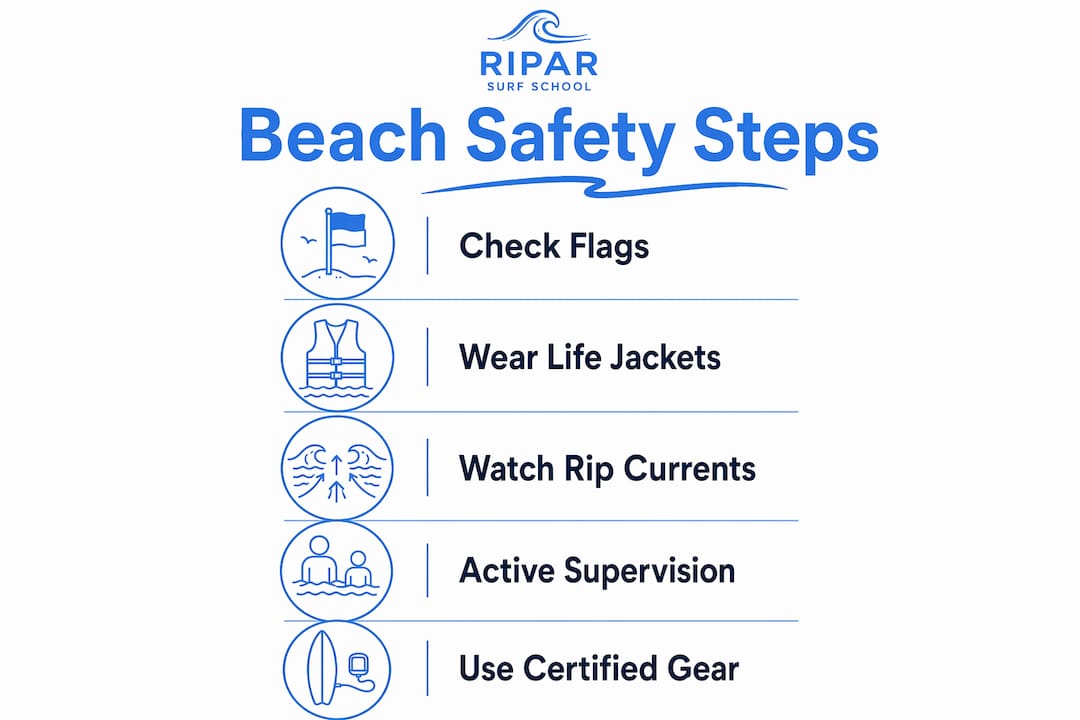
Safe surf beaches share a short list of non-negotiable features: lifeguard coverage, readable warning flags, manageable wave conditions, and no active rip current advisories. Getting all four right before your family enters the water is the foundation of every good beach safety assessment.
Start with the lifeguard question. Drowning odds at a lifeguarded beach drop to 1 in 18 million, according to the U.S. Lifesaving Association. That number alone should settle any debate about which beach to choose when you have options.
Beyond lifeguards, these principles form your core checklist:
Check surf zone forecasts from the National Weather Service before leaving home, not in the parking lot.
Read the beach flags. Green means generally safe; yellow means use caution; red means dangerous conditions, not suitable for kids; purple flags signal hazardous marine life; a checkered flag marks a surf or watercraft zone, not a swimming area.
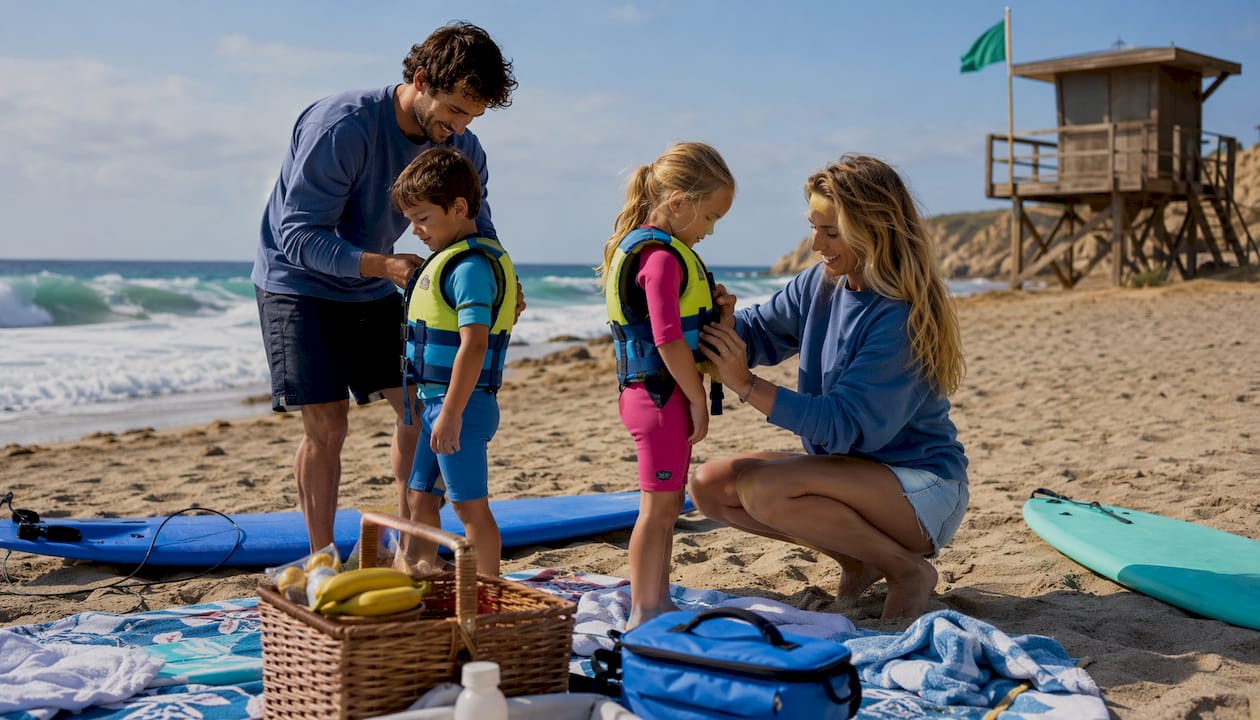
Wear Coast Guard-approved life jackets for young or inexperienced swimmers. Water wings and inflatable toys are not safety devices.
Assess rip current risk by scanning for choppy water channels, foam lines moving seaward, or gaps in the wave pattern.
Know the tide schedule. A beach that looks calm at 9 AM can be a different place by early afternoon.
Set safety boundaries with your kids before anyone touches the water.
Pack a basic first aid kit and know the beach address in case you need to call for help.
Pro Tip: Surf conditions change fast. The National Weather Service notes that conditions shift throughout the day due to tides and distant storms, so reassess the beach every hour, not just on arrival.
Table of Contents
How to prepare your family before heading to the beach
Pre-beach planning is the most effective safety strategy families can use. Doing it the night before removes the pressure of making decisions in a crowded parking lot with excited kids.
Forecast and conditions check:
Pull the National Weather Service surf zone forecast and check for rip current risk levels: Low, Moderate, or High.
Review tide charts for your specific beach. Many coastal apps show high and low tide times by the hour.
Check for any beach advisories or closures at watersgeo.epa.gov/beacon2.
Safety education before you go:
Teach children beach flag meanings at home so they recognize them on sight.
Walk through what to do if caught in a current: stay calm, swim parallel to shore, signal for help.
Establish clear rules such as always asking permission before entering the water, no swimming alone, and returning immediately when called.
Gear to pack:
Item | Why it matters |
Coast Guard-approved life jacket | Required for young or inexperienced swimmers in open water |
Broad-spectrum SPF 30+ sunscreen | Reapply every 2 hours; water reflects UV rays |
Water shoes or sandals | Sand surface can reach 100°F on hot days |
First aid kit with vinegar | Vinegar neutralizes jellyfish stings; tweezers remove tentacles |
Hydration and snacks | Dehydration reduces swimming ability and awareness |
Beach umbrella (anchored) | Shade during peak UV hours, 10 AM to 4 PM |
Riparsurfschool’s family surfing tips guide covers additional pre-trip planning steps tailored specifically for surf lesson participants and surf holiday guests.
Recognizing and responding to common ocean hazards
Rip currents cause the majority of rescues at surf beaches. They are also the hazard families most often miss because they can look like calm patches amid breaking waves. Identifying a rip current means scanning for a channel of choppy water, a visible color difference, a line of foam or debris moving steadily away from shore, or a break in the incoming wave pattern. Any one of those clues is enough to stay out.
Shore hazards get far less attention than rip currents but cause real injuries. Sneaker waves can knock adults off their feet without warning. Sand holes deeper than a child’s knee can collapse and trap them. Hidden debris beneath the surface, from broken glass to buried debris, poses a serious risk to barefoot kids. Scan the sand before you set up, and keep holes shallow.
Shorebreak waves, where waves break directly on the beach rather than offshore, are especially dangerous for children. Even small shorebreak waves carry enough force to cause spinal injuries if a child dives or is tumbled headfirst. Always enter the water feet first, and teach kids to float calmly on their backs if they get overwhelmed by rough water. Slow breathing and staying horizontal buys time for help to arrive.
For a deeper look at how currents behave in surf zones, Riparsurfschool’s guide on how currents affect surfing explains the mechanics in plain terms families can actually use.
Best practice active supervision strategies for family beach safety
Active supervision means one designated adult, focused entirely on watching children in or near the water, with no phone, no book, and no conversation pulling their attention away. It is not the same as being present at the beach.
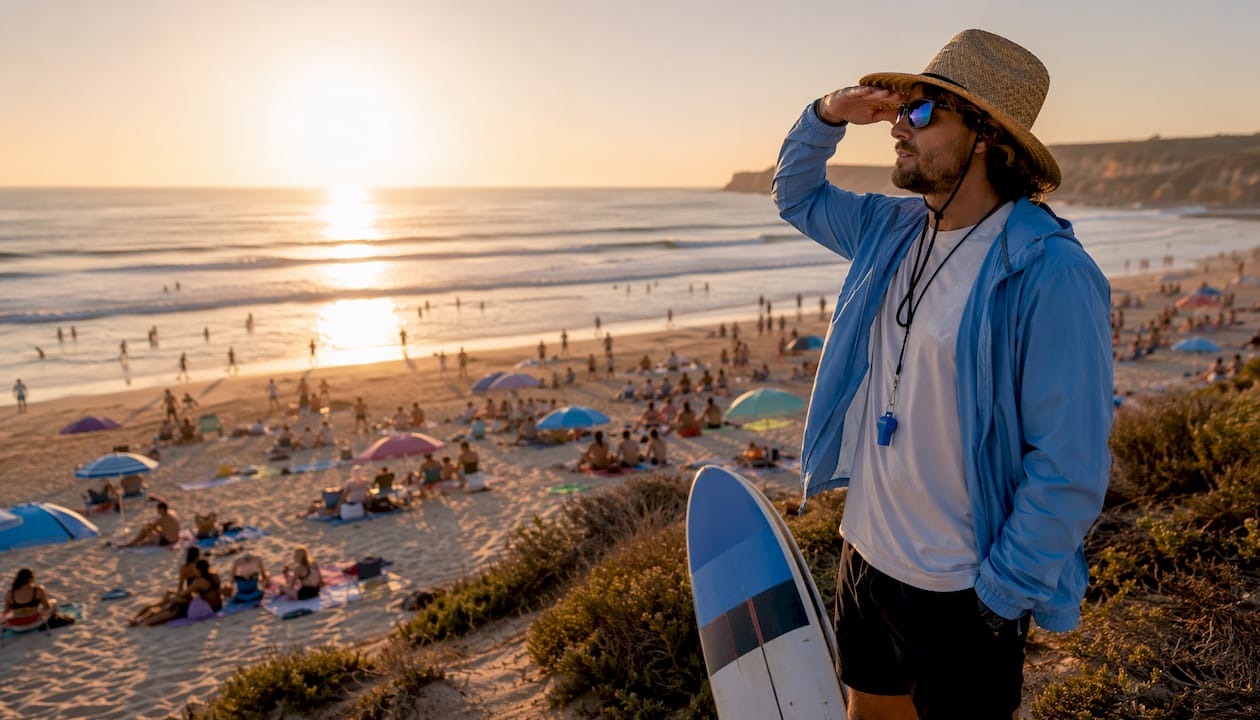
The passive supervision trap is common. Parents assume a lifeguard or another adult is tracking their child. Lifeguards monitor the entire surf zone, not individual children. They cannot replace a parent who is within arm’s reach of a young or inexperienced swimmer.
Active supervision do’s and don’ts:
Do assign one adult as water watcher at all times, rotating the role in large groups.
Do stay within arm’s reach of young children, with one hand on them during touch supervision.
Do position yourself facing the water, not the shore.
Don’t rely on a single lifeguard to cover your child in a crowded surf zone.
Don’t use alcohol during supervision shifts.
Don’t assume calm-looking water means safe water.
Pro Tip: Set a phone alarm every 30 minutes as a supervision shift reminder. When it goes off, the current watcher hands off to the next adult. This simple system prevents the “I thought you were watching” scenario.
Expert insights and resources from Riparsurfschool for family surf safety
Riparsurfschool has been running surf lessons and surf camps at Praia Areia Branca, near Peniche and Ericeira, since 2001. The school’s certified local instructors work with families at every level, from first-timers to teens building confidence in bigger surf. Safety briefings are built into every session, not treated as an afterthought.
What sets a structured surf school experience apart from a self-guided beach day is the pre-water assessment. Riparsurfschool instructors read local conditions daily, know the specific hazards at Areia Branca, and adjust lesson locations and timing based on tide and swell. That local knowledge is hard to replicate from a forecast app alone.
Riparsurfschool resources worth bookmarking before your surf holiday:
Ocean Safety Checklist: A practical guide covering beach and water activity safety protocols for families.
How to spot local surf hazards: A pre-paddle checklist for identifying beach hazards before entering the water.
Family Surfing Tips Guide: Safety and fun planning for families in 2026, with tips on gear, supervision, and surf readiness.
For families combining a surf trip with broader water-based travel, family-friendly yacht features from Sail Armada offer useful guidance on safety standards for water activities beyond the surf zone.

Riparsurfschool offers group surf lessons and private surf lessons with certified instructors who integrate safety assessment into every session. Book your family’s surf lesson and arrive knowing your kids are learning in one of Portugal’s most trusted surf environments.
Key Takeaways
Assessing beach safety for families who surf requires active supervision, pre-trip planning with verified forecasts, and the ability to recognize ocean hazards like rip currents before entering the water.
Point | Details |
Lifeguard coverage matters | Drowning odds at a lifeguarded beach drop to 1 in 18 million per the U.S. Lifesaving Association. |
Plan before you arrive | Check National Weather Service surf forecasts, tide charts, and beach advisories the night before. |
Know rip current signs | Look for choppy channels, foam lines moving seaward, or breaks in the wave pattern before entering. |
Active supervision is specific | One designated adult, distraction-free, within arm’s reach of young swimmers at all times. |
Gear and rules save lives | Coast Guard-approved life jackets, clear safety rules, and a basic first aid kit are non-negotiable for family surf outings. |
Recommended
Comments