

How to read surf conditions for your Portugal trip

TL;DR:
Learning to read surf conditions enhances safety, enjoyment, and confidence for beginner surfers in Portugal.
Combining forecasts, real-time observation, and local knowledge is key to assessing surf safety and quality.
Recognizing changing tides, wind direction, and wave behavior helps surfers choose the best time and spot.
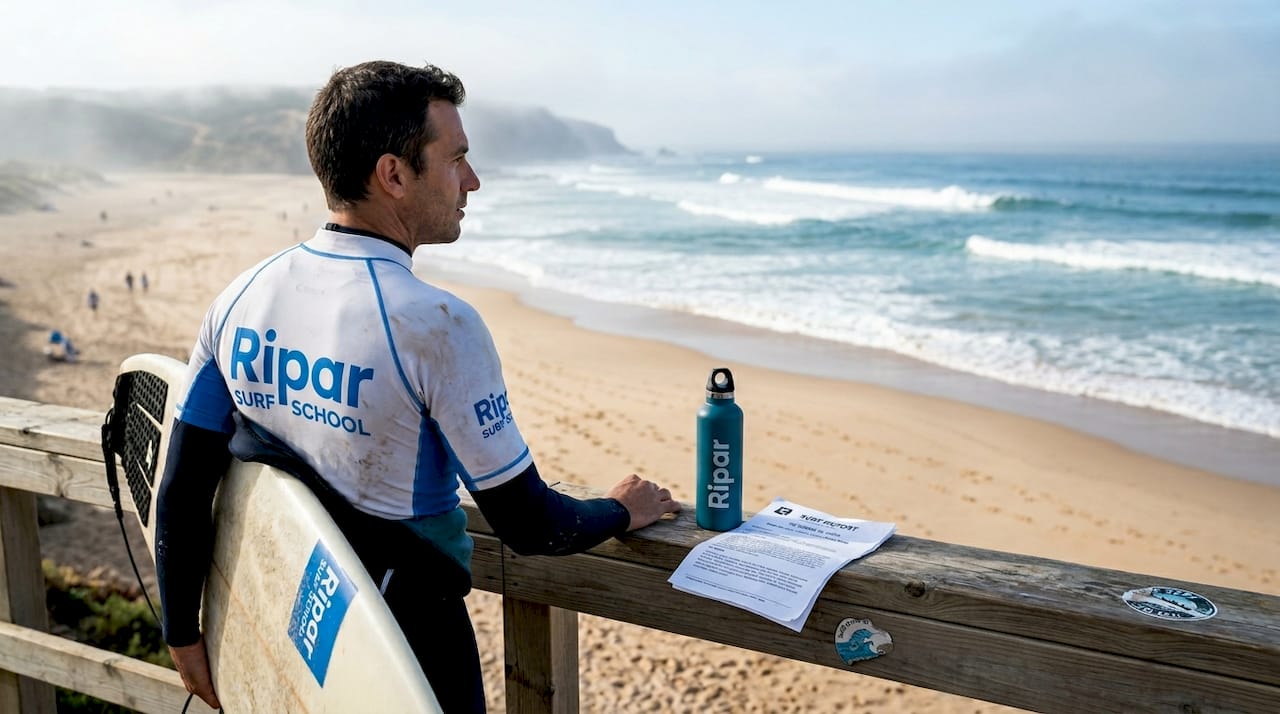
You’ve booked your flight, packed your boardshorts, and you’re finally standing on a Portuguese beach with salt air in your lungs and a giant grin on your face. Then you look at the water and feel completely lost. Are those waves too big? Is the wind good or bad? Should you paddle out or wait? This exact moment of confusion is something almost every beginner surfer experiences in Portugal, and it kills the excitement fast. The good news is that learning to read surf conditions is a real, learnable skill, and once you have it, every beach visit becomes sharper, safer, and way more fun.
Table of Contents
Key Takeaways
Point | Details |
Know local tides | Mid-tide is often best for beach breaks in Portugal, especially at popular spots like Carcavelos. |
Check multiple sources | Combine surf reports, apps, and direct observation before you get in the water. |
Learn from locals | Talking to locals and watching experienced surfers boosts your ability to read conditions. |
Adapt as you go | Always double-check surf conditions at the beach and be ready to adjust plans if needed. |
Why reading surf conditions matters in Portugal
Now that you know what you’ll achieve, let’s see why learning to read surf conditions is essential, especially for your Portugal adventure.
Portugal is one of the most varied surf destinations in Europe. Within a single coastline, you’ll find mellow beach breaks perfect for beginners, powerful reef breaks that demand respect, and exposed points that can shift from glassy perfection to washing-machine chaos within hours. Understanding good surf conditions before you paddle out isn’t just about performance. It’s about staying safe, protecting your gear, and actually enjoying yourself.
Here’s what reading conditions helps you do:
Avoid dangerous situations like strong rip currents, shore dumps, or unexpected tide surges
Choose the right break for your skill level instead of ending up somewhere overwhelming
Time your session so you’re in the water when conditions peak, not when they fall apart
Protect your board by avoiding rocks or shallow reef exposed at low tide
Build confidence faster because you understand what’s happening around you
Portugal’s coastline changes dramatically depending on the season and the specific spot. Understanding the surf season in Portugal helps you set realistic expectations before you even land. Summer brings smaller, cleaner swells with lighter winds, which is ideal for beginners. Autumn and winter bring the big Atlantic energy that draws pros from around the world.
“Tide timing is one of the most underrated factors for beginners. At a beach like Carcavelos, a mid-low tide tends to produce the most organized, surfable waves. Reef breaks nearby often work best at mid-high tide.” — Carcavelos Surf Forecast
Pro Tip: Before your trip, spend 10 minutes each morning studying surf forecast sites for the area you’ll be visiting. You’ll start recognizing patterns within just a few days.
Tools and basics: What you need to start assessing surf
Understanding why reading surf conditions is important leads straight to the tools and basics you need before your feet even hit the sand.
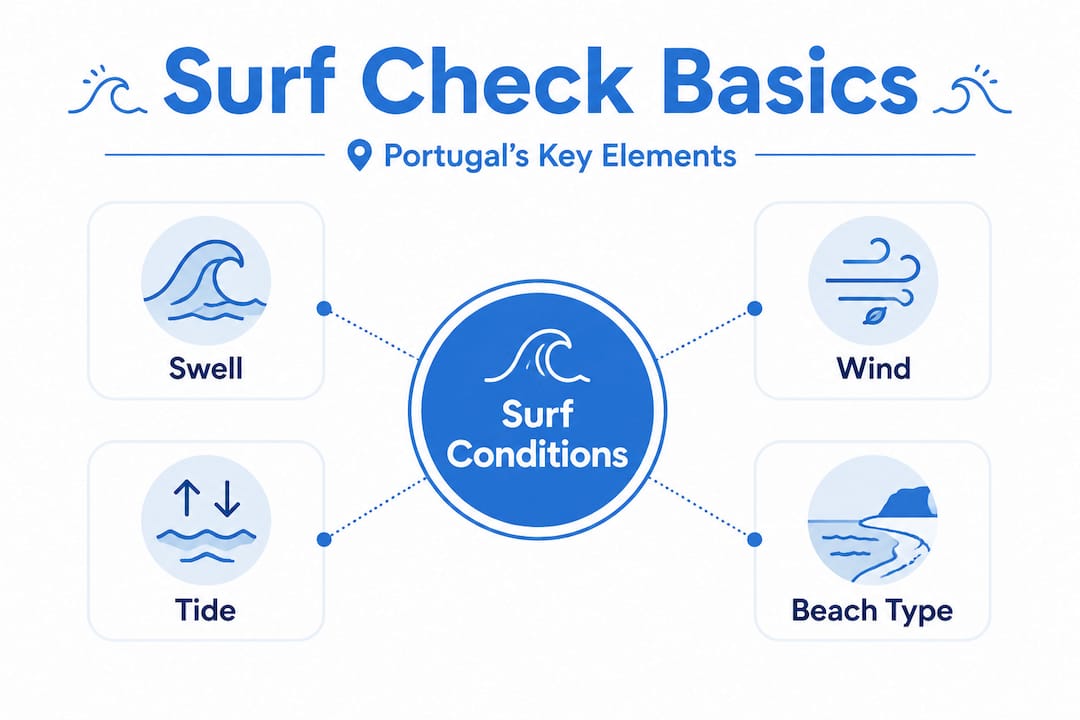
Four main elements shape surf conditions: swell, wind, tide, and beach type. Swell is the energy traveling through the ocean from a distant storm. Wind determines how clean or messy the wave surface is. Tide controls water depth over sandbars and reefs. Beach type tells you whether a wave will break softly or violently.
You have three main tools to assess all of this:
Tool | What it gives you | Limitations |
Your eyes | Real-time, honest picture of current conditions | Needs practice to interpret correctly |
Surf forecast app or website | Swell height, period, wind direction, tide charts | Can miss local geography and real-time changes |
Local surf report or instructor | Ground-level knowledge, hazard info, spot-specific tips | Not always available in real time |
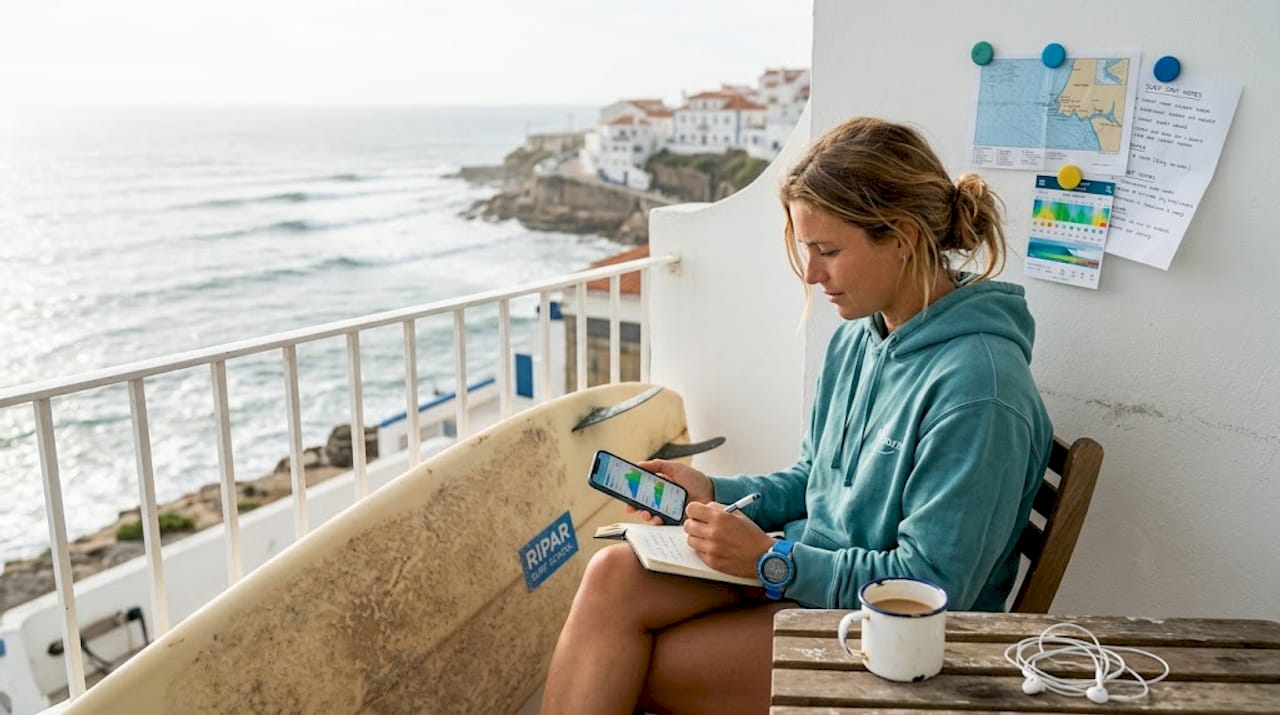
The smartest approach is to combine all three. Use a forecasting site the night before to get an overview. Check an app in the morning for updates. Then use your eyes at the beach to confirm or adjust what you expected. Making sure you have essential surf equipment is also part of this preparation phase. A leash, the right wetsuit, and a board sized for the conditions all matter.
Before heading out, run through this quick checklist:
Swell height and period: Waves under 3 feet with a 10+ second period are usually manageable for beginners
Wind direction: Offshore (blowing from land to sea) is ideal; onshore (sea to land) makes waves choppy
Tide timing: Check whether the tide is rising, falling, or at peak, and how that affects your specific beach
Beach hazards: Rocks, jetties, and shallow sandbars all change with tide
Pro Tip: Swell period is just as important as swell height. A 4-foot swell with a 14-second period hits with much more power than a 4-foot swell at 7 seconds. Period means the time between each wave. Longer periods equal more energy and faster-moving waves.
Good surf holiday planning includes researching which apps or websites cover your specific Portugal destination. Windguru, Surfline, and Magic Seaweed are popular choices for Portuguese beaches.
How to read the main elements: Step-by-step
Once you have your tools ready, it’s time to put them to use. Here’s a clear, actionable process for reading conditions when you arrive at any Portugal beach.
Check your forecast the night before. Look at swell height, swell period, wind speed and direction, and tide times. This gives you context before you even leave your accommodation.
Arrive at least 15 minutes before you plan to surf. Sit on the beach or a dune. Watch the ocean without rushing.
Observe the waves for a full set cycle. Sets (groups of larger waves) come in cycles, usually every few minutes. Watching a full cycle shows you how the ocean is actually behaving, not just a single snapshot.
Check the wind on your face. If you feel wind blowing from behind you toward the water, that’s offshore. Clean and good. Wind blowing from the ocean toward you is onshore. Choppy and messy.
Note where waves are breaking. Are they peaking and peeling nicely left or right (good for surfing)? Or are they closing out all at once (much harder to ride)?
Identify hazards. Look for rocks, rip currents (darker, smoother channels of water moving away from shore), and other surfers’ behavior.
Different surf spot types behave differently at different tides. Beach breaks, where waves break over sand, tend to work best at mid-tide. The Carcavelos surf forecast consistently shows mid-low tide as optimal for that beach’s sandbar setup. Reef breaks, where waves break over rock or coral, usually need more water to be safe, making mid-high tide the better window.
Condition | Beach break (beginner-friendly) | Reef break (intermediate+) |
Best tide | Mid to mid-low | Mid to mid-high |
Best wind | Offshore or no wind | Offshore |
Swell size (beginner) | 1 to 3 feet | Not recommended |
Risk level at low tide | Shallow sandbars, shore dump | Exposed reef, serious injury risk |
Knowing when to say “not today” is as important as knowing when to go. If waves are closing out consistently, the wind is strong and onshore, or there are obvious rip channels with no lifeguards, choosing to skip that session is the smart move. Check out the best surf spots in Portugal to find beaches that consistently offer beginner-friendly windows even on bigger days.
Pro Tip: Never judge a session by the first 60 seconds you spend at the beach. Conditions look completely different after you’ve sat and observed for 10 to 15 minutes. Your brain calibrates to the ocean’s rhythm, and you start to see patterns you’d miss if you just glanced and jumped in.
Common mistakes and how to avoid them
After learning the essential steps, it’s important to understand common mistakes so you can avoid dangerous or disappointing sessions.
The most frequent error beginners make in Portugal is misreading tide charts by confusing the time zone or using the wrong reference beach. Portugal’s tide charts are referenced to specific ports. Using a chart for Lisbon when you’re surfing up near Peniche can give you a timing offset of 30 minutes or more. Always confirm your tide chart is for the nearest reference point.
Other common mistakes include:
Trusting the app and skipping the visual check. Apps can’t see the local sandbar that shifted last night or the kelp patch that’s created a sneaky rip. Always verify with your eyes.
Matching your ability to what you wish you could surf, not what you actually can. This is probably the most dangerous mistake. A 4-foot beach break in Portugal might look fun in surf videos, but paddling out when you’re only comfortable in 2-foot waves puts you and other surfers at risk.
Ignoring how quickly conditions change. Portuguese beaches can shift from perfect to gnarly within one tide cycle. What was clean at 9am can be washing machine chaos by 11am.
Underestimating the swell period. As mentioned earlier, a longer period means more power. Beginners often focus only on the height number and get surprised by how forceful the waves actually feel.
“Local knowledge is irreplaceable. No app in the world knows that a specific sandbar at a Portugal beach only works well on a north-northwest swell. That’s the kind of detail you get from a local surfer or instructor who’s been watching that spot for years.”
Reading the beginner’s guide to Portugal surfing before your trip can help you sidestep many of these issues. Understanding the local surf culture and typical conditions means fewer surprises when you arrive.
How to verify and adapt: Fine-tuning your surf check
With mistakes in mind, the final ingredient is adaptability. Here’s how to double-check your assessment on the beach and adjust for the best possible session.
Watch local surfers before paddling out. Where are they entering the water? Where are they exiting? Are they smiling when they come in or shaking their heads? Experienced locals are living, real-time surf reports.
Look at the rip channels. A rip current can be your enemy if you’re caught in one unprepared, or your friend if you use it to paddle out more easily. Only use a rip to paddle out if you’re confident you can exit it safely.
Reassess after 20 minutes in the water. Conditions can shift. If the wind picks up or the tide drops further, the waves will change. Check in mentally with how things feel compared to when you paddled out.
Have a bail-out plan. Before you go in, decide where you’ll exit if things get harder than expected. Identify the easiest path back to the beach.
Ask questions. Talk to a local instructor or a friendly surfer in the lineup. Most surfers are happy to share what they know about a specific break.
Adapting your plan isn’t a sign of failure. It’s actually a sign of growing competence. Every session you practice this kind of observation, whether it results in paddling out or deciding to watch, builds your surf sense faster than almost anything else. Thinking through planning your surf lessons in advance, including what conditions your instructor targets for your skill level, also accelerates this learning curve enormously.
According to the Carcavelos Surf Forecast, mid-tide conditions offer the most consistent and predictable wave shape at many Portuguese beach breaks. Building your sessions around those windows as a beginner is a high-percentage move.
Pro Tip: Keep a simple surf journal. After each session, write down the swell height, wind direction, tide, and one thing you noticed that you didn’t expect. After 10 sessions, you’ll have a personalized surf condition reference that no app can replicate.
What most guides miss about reading surf conditions in Portugal
Most guides treat reading surf conditions like a checklist. Check the app. Look at the waves. Go surf. What they miss is that the best surf sessions come from blending that checklist with genuine presence and feel.
Experienced Portuguese surfers who grew up on the coast around Peniche and Ericeira don’t just consult apps. They look at the color of the water. They notice how birds are flying. They feel the air pressure change. They’ve built an intuitive understanding of their home breaks through thousands of hours of observation, most of which happened outside the water.
You won’t get there on a two-week trip. But you can start the process. The biggest thing most guides overlook is that being wrong is part of learning to read conditions. Paddling out when you shouldn’t have, or watching from the beach when you could have surfed, are both valuable lessons. They build the internal database your brain needs to get better at this.
The other thing guides miss is the social side of surf assessment. The lineup in Portugal is generally friendly. Experienced surfers remember what it felt like to be a beginner. If you show respect, ask politely, and demonstrate awareness of surf etiquette, most people will share what they know about the spot. Reading the conditions in a social context, from other people as much as from the ocean, is one of the most underrated learning strategies available.
Check out what surfing in Portugal as a beginner actually looks and feels like from people who’ve been through it. Their experiences often capture nuances that technical guides completely overlook.
Ready to practice? Learn with Portugal’s local surf experts
Reading surf conditions is a skill that accelerates dramatically when you have someone experienced watching alongside you and pointing out what to look for in real time.

At Ripar Surf School and Surfcamp Portugal, based at Praia Areia Branca near Peniche and Ericeira, our certified local instructors have spent years reading these specific beaches. They know the sandbars, the tide windows, the wind patterns, and the hidden rips. Whether you book private surf lessons for focused one-on-one guidance or join a Portugal surf camp for a full immersive experience, you’ll learn to read conditions the way locals do, not just from an app. Ready to get in the water? Book surf lessons and bring your new knowledge to life on Portugal’s best beaches.
Frequently asked questions
What tide is best for surfing in Portugal?
Mid-tide is usually optimal for most Portugal beach breaks. According to the Carcavelos Surf Forecast, Carcavelos tends to work best at mid-low tide, while reef breaks typically favor mid-high tide when there’s more water covering the rocks.
How do I know if the surf conditions are safe for beginners?
Look for waves under 3 feet with light or no wind, and always check local surf reports or ask a certified instructor for spot-specific hazard information before paddling out.
Are surf apps reliable for Portugal beaches?
Surf apps give you a solid starting point for swell, wind, and tide data, but they can’t account for local sandbars, shifting rips, or real-time geography changes, so always pair them with an on-the-beach visual check.
How does wind affect surfing conditions?
Offshore winds (blowing from the land toward the ocean) create clean, well-shaped waves that are much easier to surf. Onshore winds blow from the sea toward land, creating choppy, disorganized surf that’s harder and less enjoyable for beginners.
Recommended
Comments