

Peniche Water Temperature: Live Conditions and Surf Guide

Updated: Sep 25
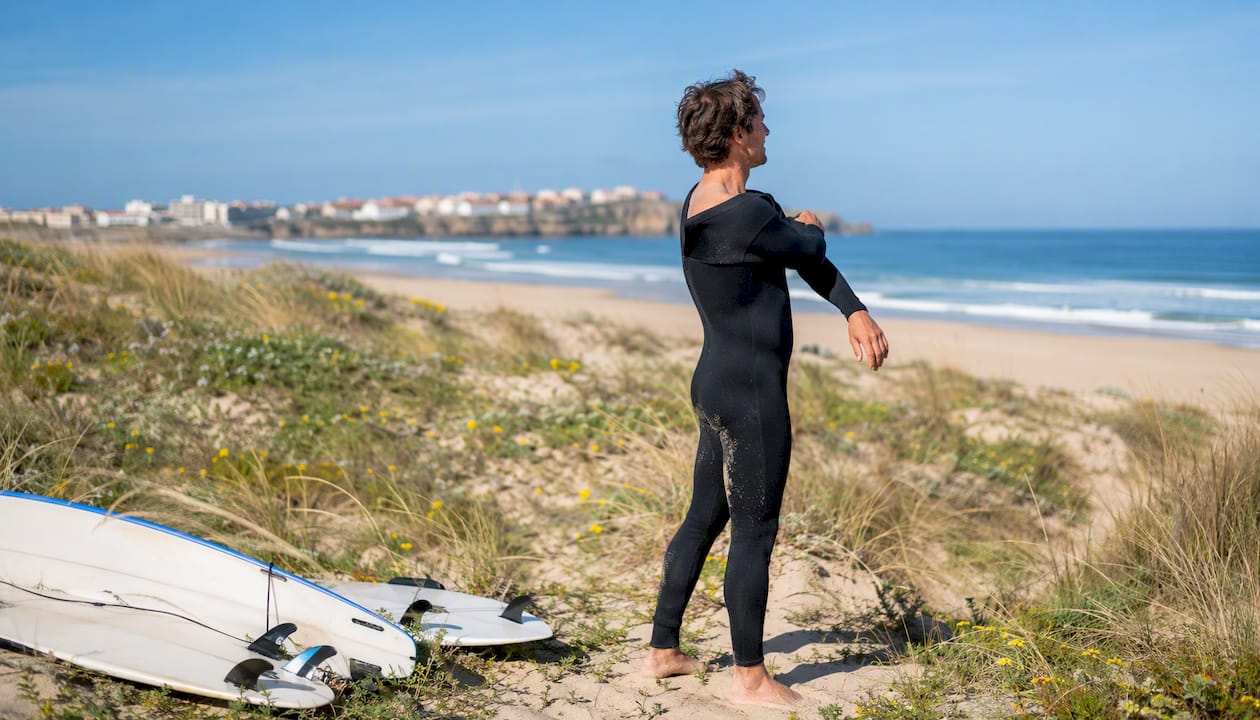
The sea temperature at Peniche right now typically sits in a moderate range depending on the season, with IPMA’s coastal forecast page providing the most current hourly reading with a timestamp. Check that page first before you leave the house. For most of the year, a wetsuit is not optional here — it’s the difference between a good session and cutting it short after 20 minutes.
Quick verdict: Water colder than a certain cool temperature calls for a 4/3mm wetsuit minimum. In a moderate range, a 3/2mm works for most people. When warmer, you can get away with a shorty or even a swimsuit for a short swim, though surfers usually still wear a 2mm top for comfort during longer sessions.
Two sources to check right now: IPMA for the official hourly reading, and Seatemperature for a quick comparison against the long-term average.
Key Takeaways
Peniche’s sea temperature ranges from cool in winter to warm in summer, and a 3/2mm or 4/3mm wetsuit covers most of the year’s conditions.
Point | Details |
Best live source | IPMA’s hourly coastal table is the most authoritative reading for Peniche water temperature. |
Seasonal range | Water runs 14–20°C across the year; August is warmest, February coldest. |
Wetsuit rule | Below 17°C: 4/3mm fullsuit. Between 17–20°C: 3/2mm. Above 20°C: shorty viable. |
Check before you go | Run the 6-step checklist: IPMA temp, aggregator cross-check, 7-day trend, surf forecast, beachcam, then pack. |
Riparsurfschool | Lessons and surf camp packages at Praia Areia Branca include fitted wetsuits and local instructor condition-reading. |
Table of Contents
Where does the live water temperature for Peniche actually come from?
How to read the hourly and 7-day sea temperature forecast for Peniche
Monthly average sea temperatures in Peniche throughout the year
Is Peniche swimmable today? Wetsuit thickness and safety checklist
Quick checklist: how to check live sea conditions before heading to Peniche
Why different sites sometimes show different water temperatures for Peniche
Surf Peniche in comfort: what Riparsurfschool offers for cooler water
Where does the live water temperature for Peniche actually come from?
Not all temperature readings are created equal, and knowing the source helps you judge how much to trust a number.
IPMA (Instituto Português do Mar e da Atmosfera) is the Portuguese government’s official meteorological and oceanographic agency. Its coastal beach pages publish hourly tables that include water temperature in °C alongside wave height, period, and wind data for Peniche specifically. This is the most authoritative source available for Portugal, and it draws on a combination of in-situ measurements and numerical model output.
In-situ buoys measure water temperature directly at a fixed depth, typically around 1 meter below the surface. Buoy readings are the most physically accurate for that specific location, but coverage along the Portuguese coast is limited, and data refresh rates vary. When a buoy reading is available, it tends to be more precise than a satellite or model estimate for the same spot.
Satellite sea-surface temperature (SST) products measure the skin temperature of the ocean, usually the top millimeter or so. Satellites cover the entire coastline but can’t see through clouds, and the skin layer can be slightly warmer or cooler than what you’d feel at swimming depth. Many aggregator sites pull from satellite-derived products.
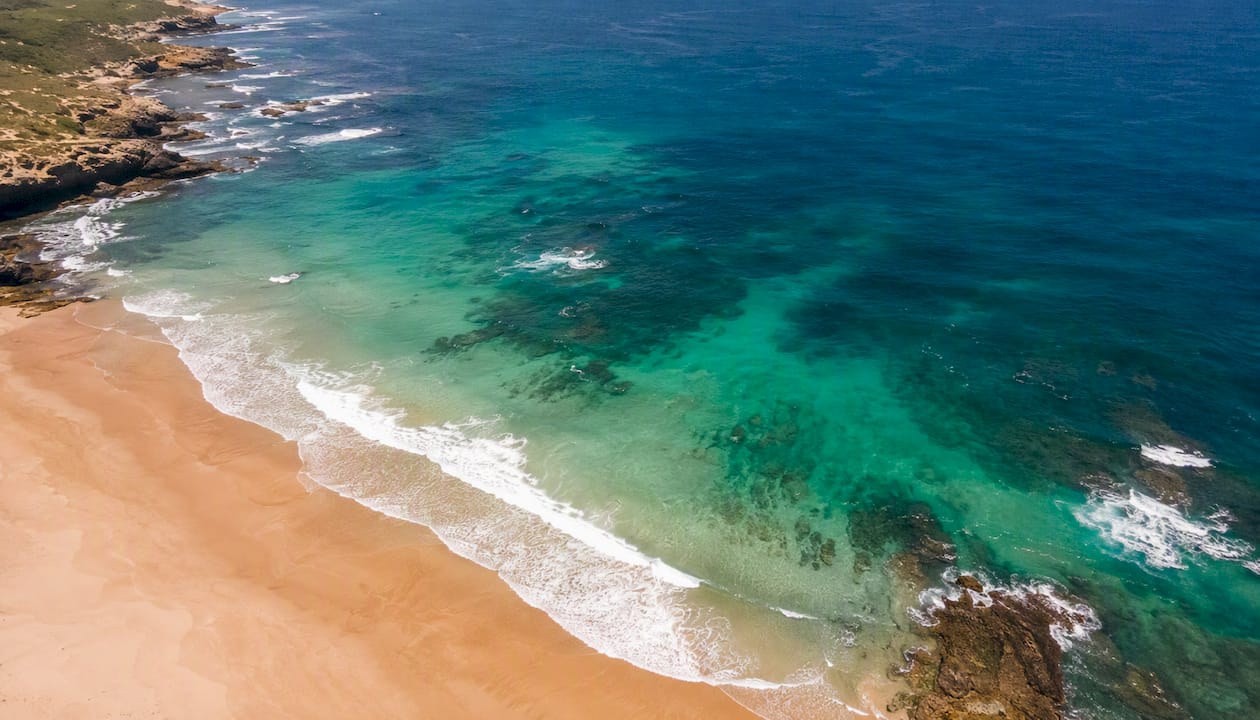
Model-based forecasts from centers like ECMWF blend observational data with numerical ocean models to produce gridded temperature fields. These power the 7-day forecasts on most aggregator sites. They’re excellent for trends but can smooth out local variations.
Aggregator sites like Seatemperature.org and Seatemperature combine these sources into a single readable number and often compare today’s reading against the long-term monthly average. They’re fast and convenient for a quick check, but they may lag a live buoy reading by several hours.
Practical rule: For same-day decisions, use IPMA’s hourly table as your primary reference. Use aggregators to understand whether today’s temperature is typical for the month.
How to read the hourly and 7-day sea temperature forecast for Peniche
Understanding a forecast takes about two minutes once you know what to look for.
Hourly vs. 7-day forecasts serve different purposes. The hourly table on IPMA shows temperature row by row across a 24-hour window — useful for deciding whether a morning or afternoon session will be warmer. The 7-day view from aggregators like Seatemperature.info shows the trend across the week, which matters more for trip planning than for a same-day call.
Here’s a simple structure for reading a 7-day forecast:
Day | Expected Temp (°C) | Trend | Practical Impact |
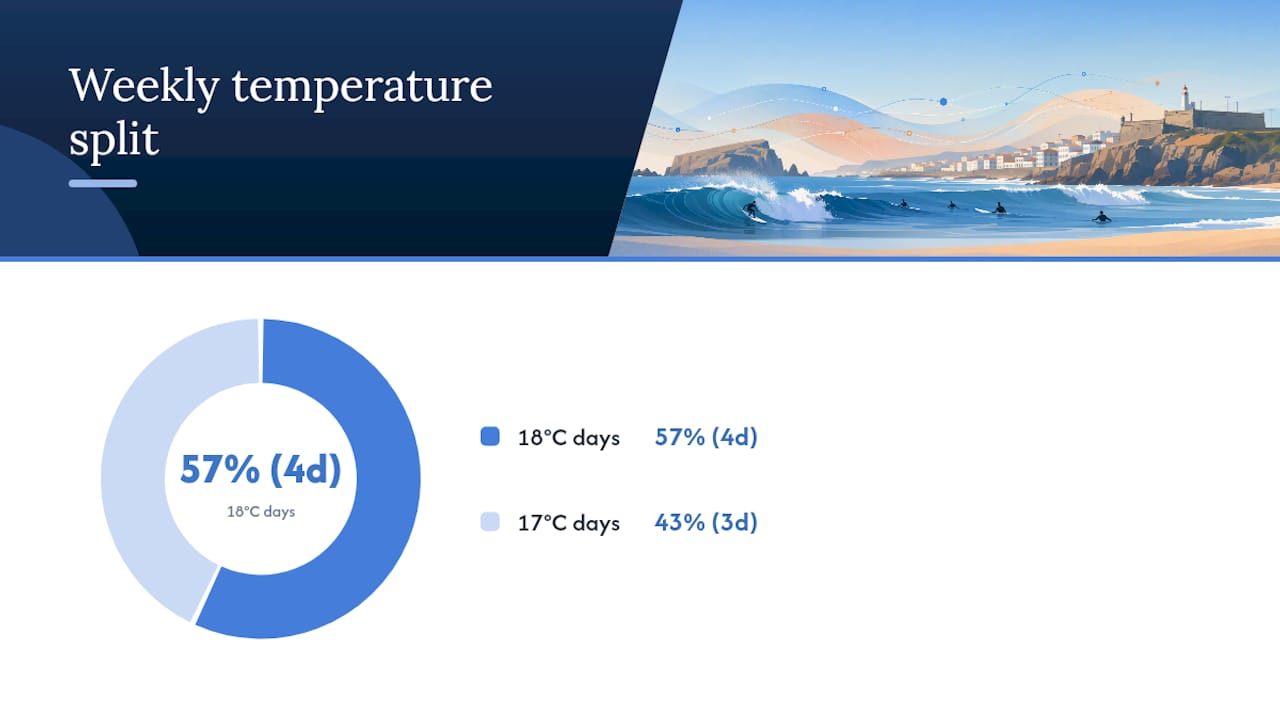
Today | 18 | Stable | 3/2mm wetsuit comfortable |
Day 2 | 18 | Slight drop | Same wetsuit; consider gloves if windy |
Day 3 | 17 | Cooling | 4/3mm recommended |
Day 4 | 17 | Cooling | 4/3mm + hood for longer sessions |
Day 5 | 17 | Recovering | 4/3mm still sensible |
Day 6 | 18 | Rising | 3/2mm viable again |
Day 7 | 18 | Stable | 3/2mm comfortable |
Note: these are illustrative values. Always replace with the live reading from IPMA or your aggregator of choice.
Step-by-step forecast reading:
Open IPMA’s coastal page for Peniche and locate the “Temp. Água(°C)” column in the hourly table.
Note the timestamp on the most recent row — this tells you how fresh the data is.
Scan the next 6 hours for any change greater than 1°C, which would signal an upwelling event or tidal shift.
Cross-check with the 7-day trend on Seatemperature.info to see whether the week is warming or cooling overall.
Note the surface temperature field, not the air temperature — they’re listed separately and can differ by several degrees.
Pro Tip: Model forecasts smooth out diurnal swings. In practice, Peniche water can feel 0.5–1°C cooler in early morning than the daily average suggests, and slightly warmer in the late afternoon after a full day of solar heating. If you’re planning a dawn patrol session, mentally subtract half a degree from the forecast and dress accordingly.
Monthly average sea temperatures in Peniche throughout the year
Peniche sits on the Atlantic coast of central Portugal, exposed to the full force of the North Atlantic and subject to seasonal upwelling driven by northerly winds. That upwelling pulls cold water from depth to the surface, which is why Peniche’s sea temperatures run noticeably cooler than beaches further south near the Algarve, even in summer.
Here are the typical monthly averages based on long-term data from Temperaturadomar and Seatemperature:
Month | Average (°C) | Typical Range (°C) | Swimmable? |
January | 14 | 13–16 | Cold; wetsuit essential |
February | 14 | 13–15 | Cold; wetsuit essential |
March | 14 | 13–16 | Cold; wetsuit essential |
April | 15 | 14–16 | Cool; 4/3mm recommended |
May | 17 | 15–18 | Cool; 3/2mm minimum |
June | 18 | 16–20 | Mild; 3/2mm or shorty |
July | 19 | 18–19 | Warm; shorty or swimsuit viable |
August | 19 | 18–19 | Warmest; swimsuit possible |
September | 19 | 18–19 | Warm; shorty comfortable |
October | 18 | 16–20 | Mild; 3/2mm sensible |
November | 17 | 15–18 | Cool; 3/2mm to 4/3mm |
December | 15 | 13–16 | Cold; 4/3mm recommended |
July and August are the warmest months, with averages near 18–19°C. January and February are the coldest, often dropping to 13–14°C. Upwelling events in summer can temporarily push temperatures back down by 3–4°C in a matter of days, which is why a reading from two days ago may not reflect what you’ll find today.
Is Peniche swimmable today? Wetsuit thickness and safety checklist
This is where local experience matters more than any chart. The numbers below reflect what Riparsurfschool instructors use as practical thresholds at Praia Areia Branca and nearby breaks.
Wetsuit recommendations by water temperature:
Water Temp (°C) | Recommended Wetsuit | Accessories | Comfortable Session Length |
Below 14°C | 5/4mm fullsuit | Hood, boots, gloves | 45–60 min max |
14–16°C | 4/3mm fullsuit | Boots recommended | about 1 hour |
16–18°C | 3/2mm fullsuit | Boots optional | about 1 to 2 hours |
18–20°C | 2mm shorty or 3/2mm | None required | 2+ hours |
Above 20°C | Shorty or swimsuit | None required | Unrestricted |
For surf lessons and surf camp sessions, a properly fitted 3/2mm or 4/3mm covers the majority of Peniche’s seasonal range. Sizing matters as much as thickness — a loose wetsuit flushes cold water continuously and defeats the purpose.
Safety checklist before entering the water:
Check the beach flag color: green (safe), yellow (caution, swim near lifeguard), red (no swimming), purple (marine hazard).
Note wind direction and strength — offshore winds at Supertubos can make conditions look cleaner than they are from the shore, while onshore winds create chop.
Identify the rip currents visually: darker, calmer channels between breaking waves are the giveaway.
Tell someone where you’re going and when you expect to be back.
Watch for early hypothermia signals: uncontrolled shivering, loss of dexterity in fingers, difficulty speaking clearly.
Pro Tip: Local instructors at Riparsurfschool add a hood when the water drops below 15°C, even before adding boots. Heat loss through the head is significant in the water, and a 2mm hood adds more comfort than upgrading from a 3/2mm to a 4/3mm wetsuit alone. Check the surf instructor essentials guide for a full layering breakdown.
Quick checklist: how to check live sea conditions before heading to Peniche
Run through these steps in under five minutes before you leave:
Step 1 — Official temperature: Open IPMA’s Peniche coastal page and read the current “Temp. Água(°C)” value with its timestamp.
Step 2 — Cross-check with an aggregator: Pull up Seatemperature to see whether today’s reading is above or below the monthly average.
Step 3 — Check the 7-day trend: Visit Seatemperature.info for the weekly forecast to see whether temperatures are rising or falling.
Step 4 — Surf and wind conditions: Read the surf conditions guide or check a surf forecast for swell height, period, and wind direction at Supertubos or Baleal.
Step 5 — Visual confirmation: Check a live beach camera at beachcam.meo.pt to see actual wave size and crowd levels before you drive out.
Step 6 — Pack accordingly: Use the temperature reading to select your wetsuit thickness from the chart above. For a full packing checklist, the nature travel checklist from Next View Tours covers cold-water beach prep well.
For repeat visits, bookmark IPMA and install the IPMA mobile app on your phone. It gives you coastal marine data in two taps.
Why different sites sometimes show different water temperatures for Peniche
A 1–2°C gap between two sites reporting Peniche’s sea temperature is normal. Here’s why:
Measurement depth: Satellite products measure the skin layer (top 1mm), while buoys measure at roughly 1 meter depth. The skin layer can run 0.5–1°C warmer on a calm, sunny afternoon and slightly cooler at night.
Data refresh cadence: IPMA updates its coastal tables hourly. Some aggregators pull model data that refreshes every 6 or 12 hours, meaning their number may reflect conditions from earlier in the day.
Spatial sampling: A buoy is a single point. A satellite pixel covers a grid cell that may be several kilometers wide, averaging temperatures across an area that includes both nearshore and offshore water.
Model smoothing: ECMWF and similar centers produce gridded ocean temperature fields that blend observations with model physics. These fields are smooth by design, which means they can underrepresent sharp local gradients like the cold upwelling plume that sometimes sits just north of Supertubos.
Human update lag: Some aggregator pages are partially maintained by editors who update descriptive text less frequently than the automated data feed refreshes.
A practical example: on a calm summer afternoon, a satellite skin reading might show 19°C while a nearby buoy at 1 meter reads 18.2°C. Neither is wrong — they’re measuring different things. For a swimmer, the buoy reading is closer to what you’ll feel.
Rule of thumb: For same-day precision, IPMA or a live buoy reading wins. For planning a trip two weeks out, aggregator monthly averages are perfectly adequate.
A local instructor’s read on Peniche conditions
Peniche’s numbers can mislead you if you read them without context. The official forecast might say 18°C, but if a northerly wind has been blowing for 48 hours, there’s a real chance an upwelling event has pushed colder water to the surface near Supertubos, and you’ll feel 15–16°C the moment you paddle out. That gap between forecast and reality is the single thing most visitors don’t account for.
The microclimate difference between Baleal and Supertubos is also worth knowing. Baleal’s sheltered bay tends to hold slightly warmer, calmer water than the exposed point at Supertubos, especially in the morning before the sea breeze picks up. If the forecast shows 16°C and you’re not committed to a specific break, Baleal is the more forgiving choice for a first session of the day. For a deeper breakdown of both spots, the Baleal surf guide covers the local exposure differences in detail.
If the current temperature is sitting at 16°C or below, the one thing I’d tell any visitor is this: don’t skip the hood. You can always take it off. You can’t add it once you’re already cold and 200 meters from shore.
Surf Peniche in comfort: what Riparsurfschool offers for cooler water
Knowing the temperatura da água Peniche is one thing. Having the right gear and a local instructor who reads conditions daily is another. Riparsurfschool has been running surf lessons and surf camps at Praia Areia Branca since 2001, and every session comes with properly fitted wetsuits included — no guessing about thickness, no renting gear that doesn’t fit.

For visitors who want to surf Peniche without the cold-water guesswork, the options are straightforward: a group surf lesson covers equipment, instruction, and local condition reading in one booking. If you want more focused time in the water, a private lesson lets you work at your own pace with an instructor who knows exactly which break suits the day’s temperature and swell. Multi-day visitors can book a surf camp package that includes accommodation, daily lessons, and all equipment. Check availability and book your session online before you arrive.
Sources
Recommended
Comments